

Updated October 31, 2026 · Written by Olivia Isabella, PetBuyLab editorial team
An elevated dog bowl lifts food and water to a more comfortable height, so your dog does not have to crane down to the floor. For tall dogs, seniors with stiff necks or sore joints, and messy eaters, a raised feeder can make mealtimes easier and tidier. But here is the honest part every buyer deserves: research has linked raised feeders to a higher risk of bloat in large and giant deep-chested breeds, so the right choice depends on your dog. This guide covers the best elevated dog bowls, how to get the height right, and when to be cautious.
Disclosure: PetBuyLab is reader supported. When you buy through links on this page we may earn a small affiliate commission, at no extra cost to you. It never changes our picks, and we do not take payment for placement. This is general guidance, not veterinary advice.
For most dogs, a raised feeder sized so the bowl sits at about lower-chest or elbow height makes eating more comfortable, and it is especially kind to tall dogs and stiff seniors. A mess-proof design like the Neater Feeder also catches spills. The one caution: if you have a large or giant deep-chested breed, talk to your vet first, as raised feeders have been linked to higher bloat risk. Use the height guide below.
- Raised bowls ease neck and joint strain for tall dogs and seniors.
- Set the bowl at about your dog’s lower-chest or elbow height.
- Research links raised feeders to higher bloat risk in giant deep-chested breeds.
- Adjustable stands grow with a puppy and suit multi-dog homes.
- Mess-proof designs catch spills, and stainless or ceramic clean best.
We judge elevated dog bowls on the right height options for different dogs, stability and a non-slip base, build quality and material, whether the design contains mess, and value. We are honest about the bloat research for deep-chested breeds and never oversell a raised feeder as right for every dog, and we cross-check verified owner reviews. We never take payment for placement. PetBuyLab is affiliate supported but editorially independent, and this is general information, not veterinary advice.
Raised Feeder Height Guide
Tell us why you want a raised feeder and your dog’s size, and this tool suggests the right height, and flags when to check with your vet first.
The bloat caution you should know
This is the one thing to understand before buying a raised feeder. Bloat, or gastric dilatation-volvulus (GDV), is a sudden, life-threatening condition where the stomach fills with gas and can twist, and it mainly affects large and giant deep-chested breeds such as Great Danes, Weimaraners, standard poodles and setters. A widely cited study found that raised feeders were associated with a higher, not lower, risk of bloat in these breeds, which is the opposite of what many owners assume. That does not mean raised bowls are bad, for small dogs, tall dogs and stiff seniors they are genuinely helpful, but if you own an at-risk breed, you should talk to your vet before raising the bowls and weigh comfort against that risk.
The 6 best elevated dog bowls
From a mess-proof all-rounder to an adjustable stand and picks for large and small dogs, here is a raised feeder for every household.




How the elevated bowls compare
| Feeder | Height | Best for | Why it stands out |
|---|---|---|---|
| Neater Feeder | Medium | Messy eaters | Catches spilled food and splashed water |
| Adjustable Stand | Adjustable | Growing or mixed | Set and change the height to suit |
| Metal Large Breed | Tall | Large dogs | Sturdy, hugely reviewed, tall stand |
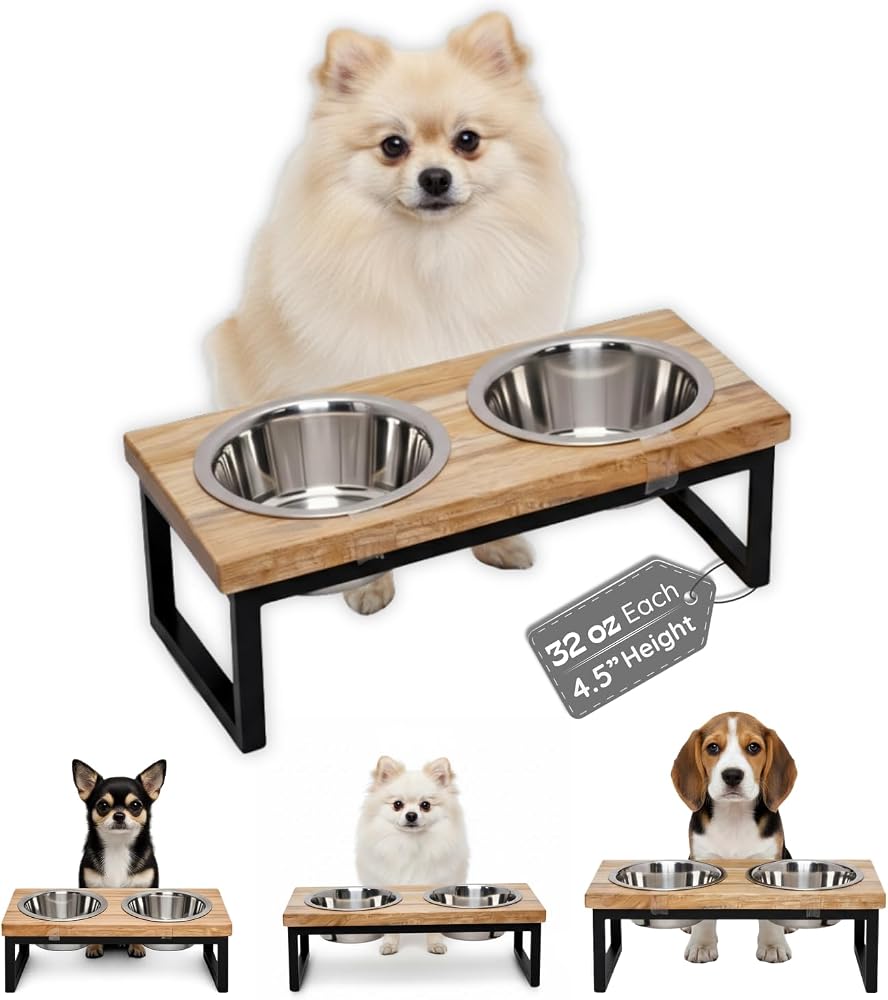
| Small Dog 4.5in | Low | Small dogs & cats | Gentle lift sized for little pets |
| SPUNKYJUNKY Ceramic | Medium | Hygiene | Ceramic bowls, easy to clean, stylish |
| Feedoo 6in Stand | Medium | Value | Simple, affordable raised stand |
What you get at each price range
Simple raised stand
A basic stand with bowls at a fixed height. Fine for a small or medium dog. Check the height suits your dog and the base does not slide.
Adjustable or mess-proof
A height-adjustable stand or a mess-catching feeder with stainless or ceramic bowls. The best balance of comfort, hygiene and a tidy floor.
Tall, sturdy feeder
A tall, heavy stand for a large dog, or a premium design with storage. Built to stay put under a big dog and raise bowls to the right height.
What to look for in an elevated dog bowl
- The right height for your dog, with the bowl at lower-chest or elbow level.
- Adjustability if your dog is still growing or you have more than one dog.
- A stable, non-slip base that will not tip or slide when your dog eats.
- Hygienic bowls, stainless steel or ceramic over plastic, ideally dishwasher-safe.
- A mess-catching design if your dog is a messy or splashy eater.
- Suitability for your breed, with vet advice first for deep-chested dogs.
How to get the raised feeder height right
The right height is the whole point, so take a moment to measure.
- Stand your dog naturally and measure from the floor to their lower chest or elbow.
- Choose a feeder whose bowl rim sits at roughly that height, not up at the shoulder.
- For a puppy or a growing dog, pick an adjustable stand you can raise over time.
- Watch your dog eat, they should reach the food with a slight, comfortable lower of the head.
- If in doubt, or for a deep-chested breed, check the height and the idea with your vet.
Elevated feeder mistakes to avoid
- Raising bowls for a giant deep-chested breed without first asking your vet.
- Setting the bowls too high, up at the shoulder, which strains the neck instead of helping.
- Choosing a light stand a big dog can push around or tip over.
- Assuming a raised feeder prevents bloat, the research suggests the opposite for at-risk breeds.
- Using plastic bowls that scratch and harbour bacteria instead of stainless or ceramic.
What vets say
Vets see clear benefits to raised feeders for the right dogs: they ease the neck and joint strain of eating off the floor, which helps tall dogs, seniors and those with arthritis or certain mobility issues. The crucial caution they raise is bloat. For large and giant deep-chested breeds, a well-known study associated raised feeders with increased GDV risk, so vets often advise these owners to feed from the floor or to discuss it individually. The sensible approach is to match the height to your dog, choose a raised feeder for comfort where it genuinely helps, and get veterinary advice before raising the bowls for an at-risk breed. This is general information, not veterinary advice.
Frequently asked questions
Are elevated dog bowls good or bad?
Do raised bowls cause bloat in dogs?
How high should a raised dog bowl be?
Which dogs benefit most from elevated feeders?
What is the best elevated dog bowl?
Are elevated bowls good for large dogs?
Should I get an adjustable height feeder?
Are ceramic or stainless elevated bowls better?
Do raised feeders help with messy eaters?
Can puppies use elevated dog bowls?
How do I stop an elevated feeder from sliding?
Will a raised bowl help my senior dog eat?
The verdict
An elevated dog bowl is a thoughtful upgrade for the right dog, easing the stoop for tall dogs and the strain for stiff seniors, and keeping the floor tidier with a mess-proof design. Set the bowl at lower-chest or elbow height, choose an adjustable stand if your dog is growing, and favour stainless or ceramic for hygiene. The one rule to respect: if you have a large or giant deep-chested breed, talk to your vet before raising the bowls, because the research on bloat risk means a raised feeder is not automatically the right call for every dog.
Keep reading

Olivia Isabella is PetBuyLab’s dog specialist and a lifelong dog owner with hands-on experience caring for senior and large-breed dogs. She researches, compares and lives with the mobility, comfort and everyday-care products she writes about, so she knows the practical details a spec sheet misses: how a ramp’s length sets the real slope a stiff-hipped dog will attempt, why surface grip decides whether a nervous dog commits, and how the wrong pick ends up unused in the garage. Every recommendation is built from manufacturer specifications, documented owner feedback and reputable veterinary sources, and is organised around a specific dog’s needs, never around commission. Her guides are informational and never a substitute for professional veterinary advice.