

Updated October 13, 2026 · Written by Olivia Isabella, PetBuyLab editorial team
A calming dog bed promises to soothe an anxious dog, and for the right dog it genuinely can help. The raised rim and soft, nest-like shape give a dog something to curl against, which can feel safe and den-like. But calming beds are not magic, and they are not a cure for real anxiety. This guide gives you the best calming dog beds, an honest answer to whether they actually work, and a quick checker to see if a calming bed is the right call for your dog, or a sign to talk to your vet.
Disclosure: PetBuyLab is reader supported. When you buy through links on this page we may earn a small affiliate commission, at no extra cost to you. It never changes our picks, and we do not take payment for placement. This is general guidance, not veterinary or behavioral advice.
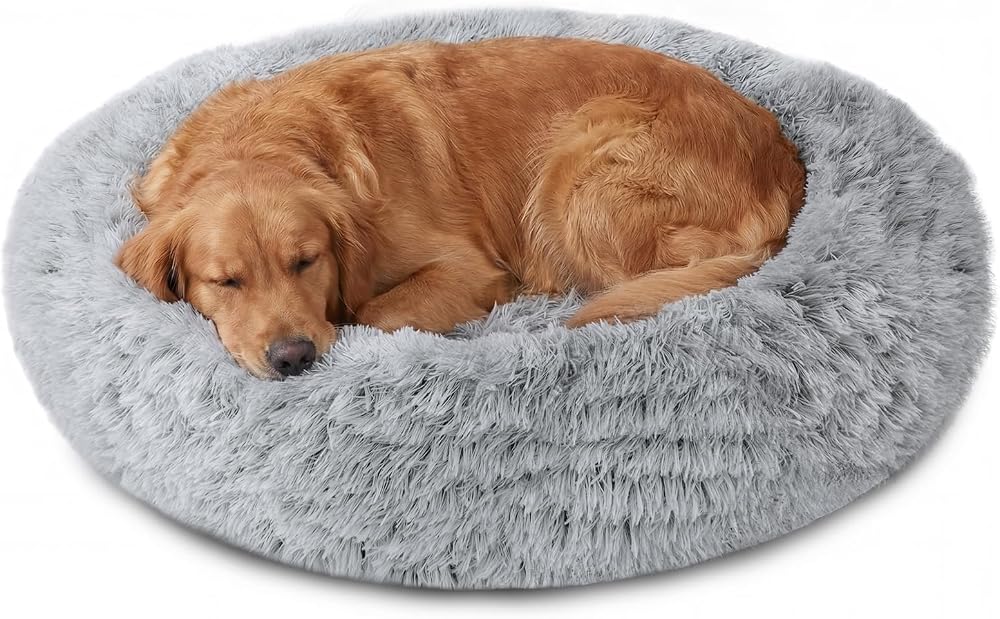
A calming dog bed is a bolstered or donut-shaped bed with a raised rim your dog can curl into. It can genuinely help a dog with mild anxiety or restlessness feel more secure, especially a dog who likes to curl and burrow. It will not fix separation anxiety, noise phobia, or pain on its own. Match the bed to your dog’s size and sleep style, and for serious anxiety, pair it with a vet or trainer. Use the checker below to see where your dog lands.
- Calming beds work by giving a den-like, curl-up shape that can soothe mild anxiety. The evidence is real-world, not clinical.
- They help most for dogs who curl and nest, and least for dogs who sprawl flat.
- A bed is not a treatment for separation anxiety, storm or firework fear, or pain. Those need a vet or trainer.
- Fit matters: donut beds run small, so check the weight limit and size up if your dog likes room.
- Choose a machine-washable cover, because an anxious dog is more likely to have accidents.
We are honest that “calming” is a loosely used marketing word, so we judge these beds on what actually comforts an anxious dog: a supportive raised rim to curl against, soft but durable fill, a true size match, and a washable cover. We cross-check verified owner reviews, favour shapes that suit how a dog really sleeps, and flag when a dog’s signs point to something a bed cannot fix. We never take payment for placement. PetBuyLab is affiliate supported but editorially independent, and this is general information, not veterinary advice.
Does your dog actually need a calming bed?
Tick the signs you see in your dog and pick how they sleep. You will get an honest read on whether a calming bed is likely to help, the right bed shape, and when the signs point to something a vet or trainer should look at instead.
Do calming dog beds actually work?
Here is the honest answer. Calming beds can help, but not the way the marketing suggests. There are no rigorous clinical studies showing a bed treats anxiety. What there is, is a sensible idea and a lot of real-world owner experience. The raised rim and round, nest-like shape let a dog curl up and lean against a soft edge, which taps into the same den instinct that makes dogs seek out enclosed, cosy spaces. For a dog with mild anxiety or a rescue settling into a new home, that sense of security can genuinely help them relax and sleep. The ASPCA’s guidance on separation anxiety is clear, though, that serious anxiety needs behavior work, and a Rover article quoting a vet warns that the word “calming” is used loosely by some makers. So a calming bed is a low-cost, low-risk thing to try for mild cases. It is not a replacement for training, a vet visit, or medication when those are needed.
The 6 best calming dog beds
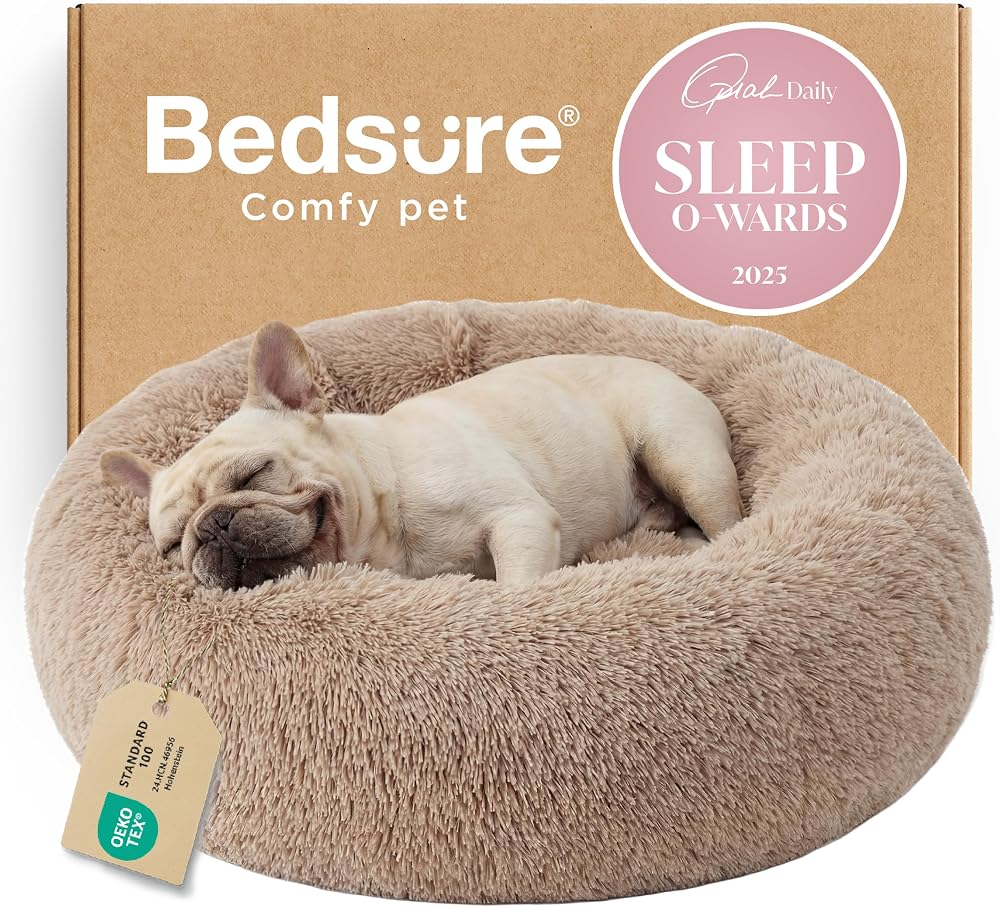
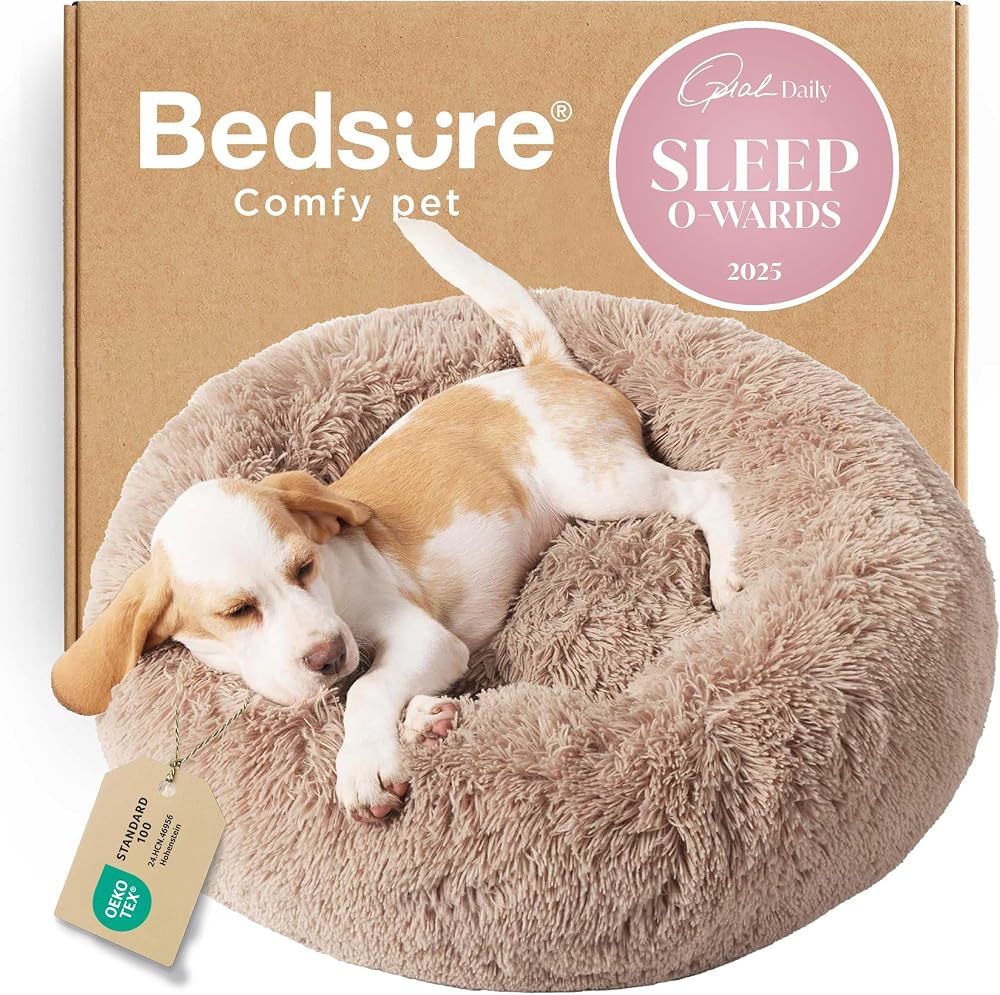
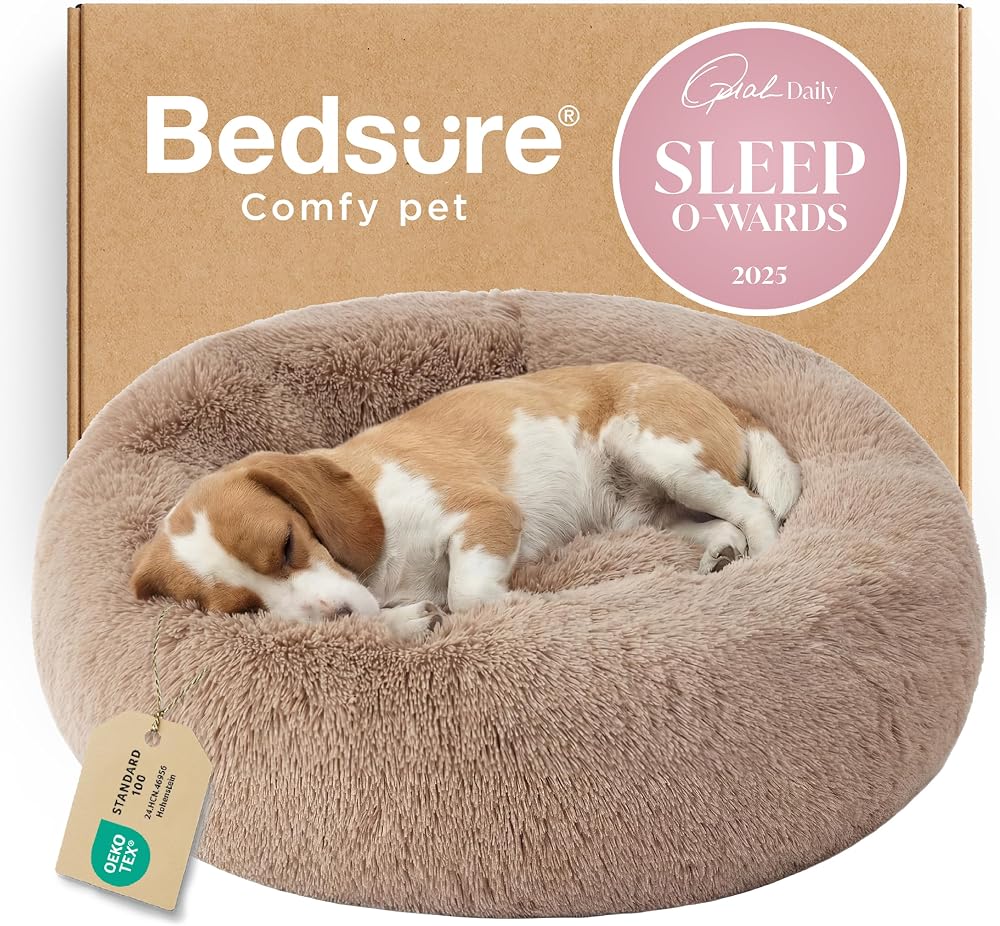
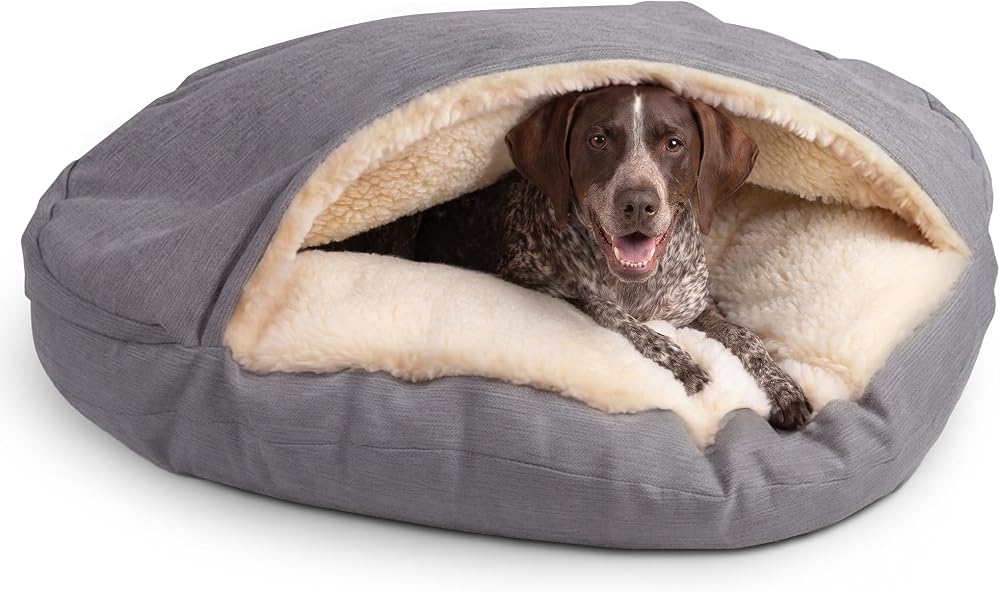
These are the calming beds that back up the promise with a proper curl-up shape, soft but durable fill, and strong owner reviews. There is a pick for most dogs, a value and a budget option, small and large sizes, and a covered cave for dogs who like to hide.

How the calming beds compare
| Bed | Shape | Best for | Why it stands out |
|---|---|---|---|
| Best Friends by Sheri | Donut | Most dogs | The original, with a deep self-warming rim |
| Bedsure Calming | Donut | Value | Great comfort for the price, washable |
| Bedsure (Small) | Donut | Small dogs | Sized and priced right for little dogs |
| Bedsure (Large) | Donut | Large dogs | A big donut with room to curl |
| Snoozer Cozy Cave | Covered cave | Burrowers | A hood to crawl under and hide |
| JOLLYVOGUE | Donut | Budget | A solid calming donut at the lowest cost |
What you get at each price range
Basic calming donut
A soft donut with a raised rim. Plenty for a small dog who likes to curl, but check the fill quality and the weight limit.
The sweet spot
A deeper rim, better fill, a washable cover, and sizes for bigger dogs. The best balance for most anxious dogs.
Cave & specialty
Covered cave beds and premium calming beds for dedicated burrowers or a dog who really wants to hide away.
Which calming bed is right for your dog?
Run the checker first, then follow the first line that matches.
Donut, cave, or bolster: match the shape to your dog
The shape matters more than the word “calming” on the label. A donut bed is a round bed with a soft raised rim, and it suits the many dogs who sleep curled in a ball. A cave or covered bed adds a hood to crawl under, which is perfect for a dog who likes to burrow and hide. A bolster bed has walls on two or three sides, giving something to lean on while still leaving room to stretch. If your dog sleeps sprawled flat on their side, a donut will feel cramped, and you may be better served by a bolster or a supportive bed. For a senior or achy dog, joint support matters more than a soft rim, so see our guide to the best orthopedic dog beds.
What a calming bed can and cannot do
It helps to be clear about this, because an anxious dog deserves the right help. A calming bed can give a dog a safe, cosy spot, help a mildly anxious or restless dog settle, and support a rescue or a new puppy adjusting to a home. A calming bed cannot cure separation anxiety, stop a fear of thunder or fireworks, or fix a behavior that is really caused by pain or a medical problem. If your dog shows strong or sudden anxiety, panics when alone, or hurts themselves trying to escape, that is a sign to speak with your vet or a qualified trainer. The bed is a comfort, not a treatment.
What to look for in a calming dog bed
- The right size. Donut beds run small and list a weight limit. Measure your dog curled up, and size up if they like room.
- A deep, supportive rim. The raised edge is the whole point, so it should be full enough to lean and rest a head on.
- A machine-washable cover. Anxious dogs are more likely to have accidents, so easy washing matters.
- Quality fill. Look for a fill that springs back, not one that flattens into a thin pad within weeks.
- A non-slip base. It keeps the bed steady, which helps a nervous dog trust it.
- The right shape for your dog. Donut for curlers, cave for burrowers, bolster or orthopedic for sprawlers and seniors.
How to help an anxious dog settle into a calming bed
A bed only helps if your dog actually uses it and feels safe there. Set them up to succeed.
- Put the bed in a quiet, low-traffic corner where your dog already likes to retreat.
- Add a worn t-shirt or a familiar blanket so it smells of home and of you.
- Reward calm visits with gentle praise and a treat, and never force your dog into it.
- Keep a steady daily routine, since predictability does more for anxiety than any product.
- For fear of storms, fireworks, or being alone, pair the bed with a plan from your vet or trainer.
Common calming bed mistakes to avoid
- Expecting a bed to cure real anxiety on its own.
- Buying a donut too small, so a curling dog has nowhere comfortable to settle.
- Choosing a donut for a dog who only ever sprawls out flat.
- Skipping a washable cover for a dog prone to stress accidents.
- Ignoring strong anxiety signs that really need a vet or trainer.
What vets and behavior experts say
The expert view is encouraging but measured. The ASPCA stresses that true separation anxiety is treated with gradual training and, in some cases, medication, not with a product alone. A vet quoted by Rover similarly cautions that not every bed sold as calming actually is, and that these beds are supplemental support rather than a fix. The takeaway for owners is reassuring and simple. A good calming bed is a kind, low-cost comfort that can help a mildly anxious dog feel safer. For anything more serious, it belongs alongside professional help, not instead of it. This is general information, not veterinary advice.
Frequently asked questions
Do calming dog beds really work?
What is the best calming dog bed?
How do calming dog beds work?
Will a calming bed help with separation anxiety?
What is the best calming dog bed for large dogs?
Are calming beds good for small dogs?
Donut bed or cave bed, which is better?
Are calming beds good for dogs that sprawl out?
How do I pick the right size calming bed?
Are calming dog beds machine washable?
Can a calming bed help a rescue or a new puppy?
Is a calming bed or an orthopedic bed better for a senior dog?
The verdict
A calming dog bed is one of the kindest, lowest-cost upgrades you can give a mildly anxious dog. The right one, matched to your dog’s size and the way they sleep, gives them a safe, den-like spot to settle. Just keep your expectations honest. A bed soothes, it does not treat, so for serious or sudden anxiety, lean on your vet or a trainer as well. Run the checker above, pick the shape that fits how your dog sleeps, and you have given an anxious dog a cosier, calmer place to rest.
Keep reading

Olivia Isabella is PetBuyLab’s dog specialist and a lifelong dog owner with hands-on experience caring for senior and large-breed dogs. She researches, compares and lives with the mobility, comfort and everyday-care products she writes about, so she knows the practical details a spec sheet misses: how a ramp’s length sets the real slope a stiff-hipped dog will attempt, why surface grip decides whether a nervous dog commits, and how the wrong pick ends up unused in the garage. Every recommendation is built from manufacturer specifications, documented owner feedback and reputable veterinary sources, and is organised around a specific dog’s needs, never around commission. Her guides are informational and never a substitute for professional veterinary advice.