

Updated November 1, 2026 · Written by Olivia Isabella, PetBuyLab editorial team
A food and water bowl is the one thing every dog uses several times a day, so it is worth getting right. The choice is simpler than the shelves suggest, and it mostly comes down to material and shape. The honest headline most brands gloss over: stainless steel is the most hygienic choice and the one most vets recommend, because plastic bowls scratch, harbour bacteria, and are linked to chin acne in dogs. Beyond that, the right shape helps flat-faced and long-eared dogs eat comfortably. This guide covers the best dog bowls for every dog and need.
Disclosure: PetBuyLab is reader supported. When you buy through links on this page we may earn a small affiliate commission, at no extra cost to you. It never changes our picks, and we do not take payment for placement. This is general guidance, not veterinary advice.
For most dogs, a stainless steel bowl with a non-slip base is the best choice, hygienic, durable, dishwasher-safe and vet-approved. Choose ceramic if you want something stylish (just as hygienic, heavier, but it can chip), and avoid plastic, which scratches and can cause chin acne. Match the shape to your dog: shallow for flat-faced breeds, tall and narrow for long ears. Use the finder below.
- Stainless steel is the most hygienic and vet-recommended material.
- Avoid plastic bowls, which scratch, harbour bacteria and can cause chin acne.
- Ceramic is stylish and hygienic but can chip if dropped.
- Flat-faced dogs do better with shallow bowls, long-eared dogs with tall narrow ones.
- A non-slip or weighted base stops the bowl sliding and spilling.
We judge dog bowls on material and hygiene, stability and a non-slip base, the right size and shape for different dogs, build quality, and how easy they are to clean, ideally dishwasher-safe. We are honest about why stainless steel beats plastic and how shape matters for certain breeds, and we cross-check verified owner reviews. We never take payment for placement. PetBuyLab is affiliate supported but editorially independent, and this is general information, not veterinary advice.
Dog Bowl Finder
Tell us what matters most and anything special about your dog, and this tool recommends the right material and shape.
Stainless steel vs ceramic vs plastic
Material is the first decision, and it matters for your dog’s health, not just longevity.
- Stainless steel is the top choice: non-porous, bacteria-resistant, nearly indestructible, dishwasher-safe and affordable. It does not scratch and trap grime the way plastic does, and it will not cause chin irritation.
- Ceramic is hygienic and stylish, heavy enough to stay put, and nice in a kitchen. The downsides are that it can chip or crack if dropped, and a cracked glaze can harbour bacteria.
- Plastic is cheap and light, but it is the least hygienic: it scratches easily, those scratches hold bacteria, and plastic bowls are linked to canine chin acne. Most vets suggest avoiding it.
The 6 best dog bowls
From a hygienic stainless all-rounder to a stylish ceramic set and a no-spill water bowl, here is the right bowl for every dog and home.


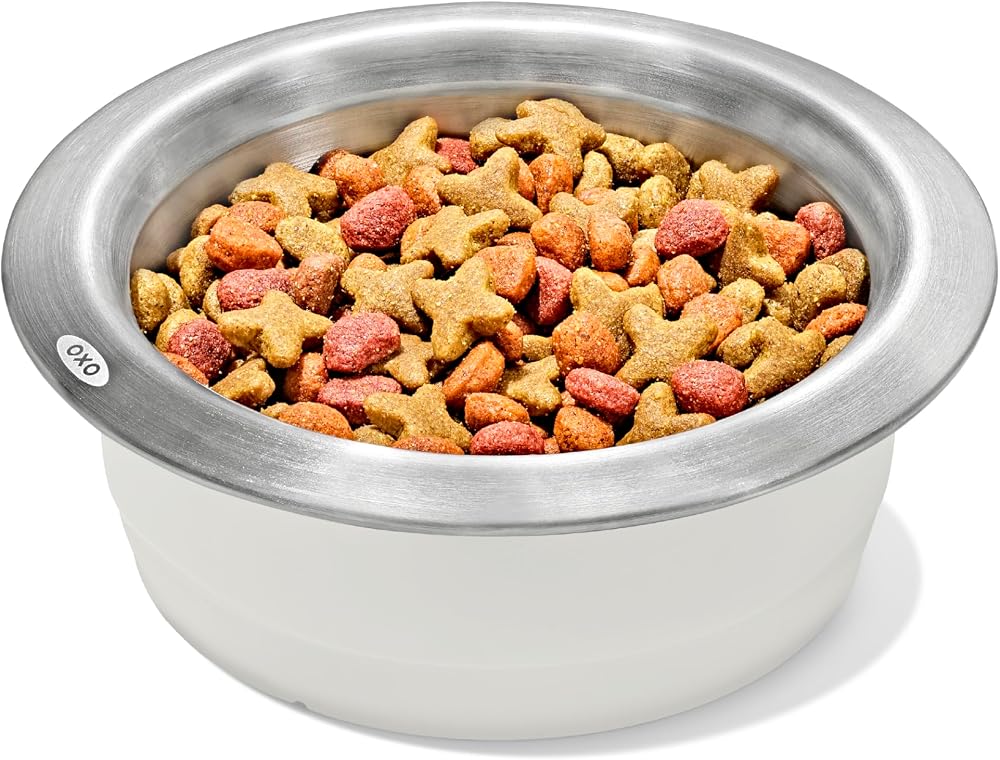
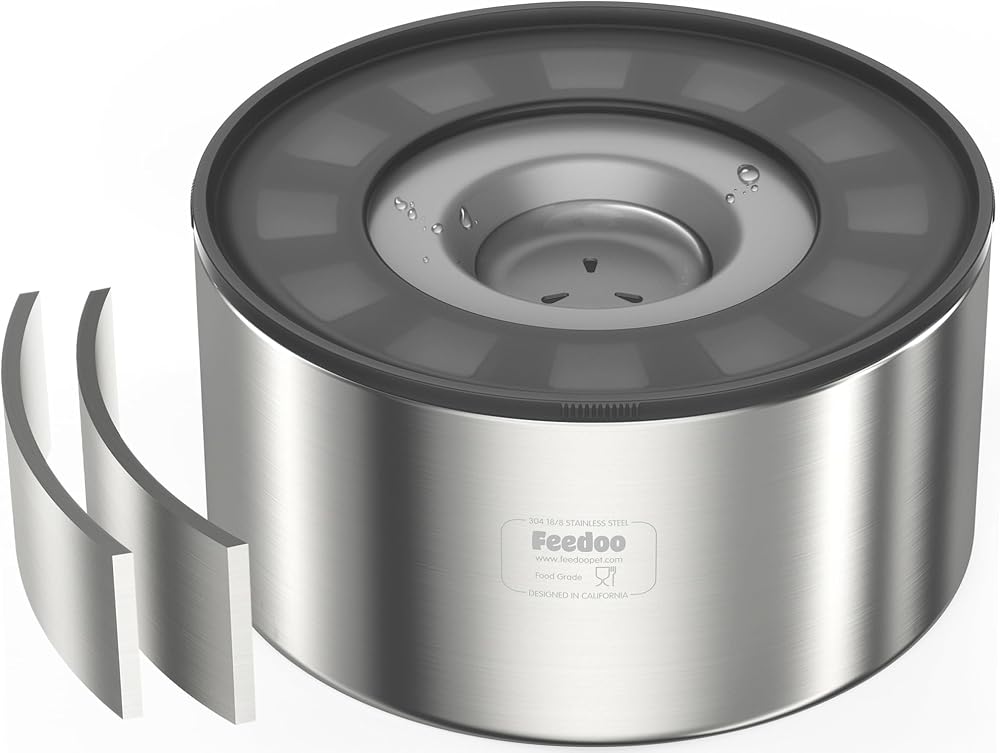

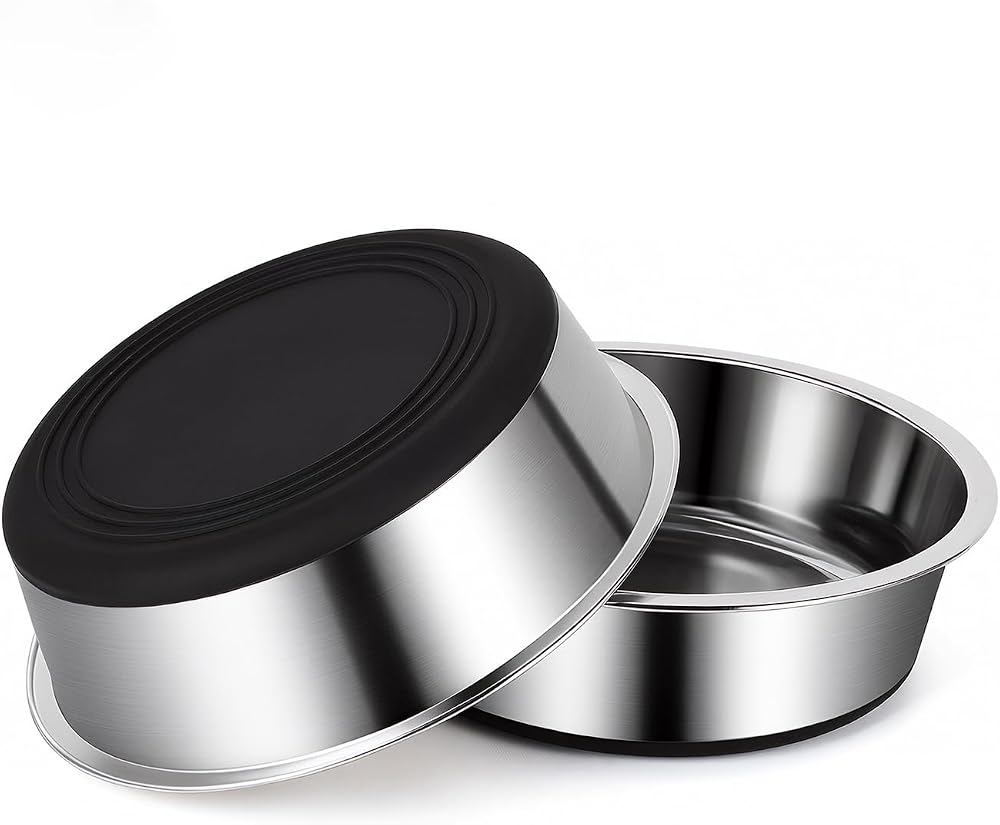
How the dog bowls compare
| Bowl | Material | Best for | Why it stands out |
|---|---|---|---|
| Gorilla Grip Set | Stainless steel | All-rounder | Non-slip base, food-grade, two bowls |
| Ceramic + Wood Tray | Ceramic | Looks | Stylish, hygienic, stays put on a tray |
| OXO Pet Nonslip | Stainless steel | Stability | Removable non-slip ring, easy clean |
| No-Spill Water Bowl | Plastic / stainless | Messy drinkers | Floating disc stops splashing and spills |
| 64oz Stainless | Stainless steel | Large dogs | Big capacity, heavy-duty, non-slip |
| Food-Grade Stainless | Stainless steel | Value | Simple, hygienic, non-slip, affordable |
What you get at each price range
Stainless bowl
A simple food-grade stainless steel bowl with a non-slip base. Hygienic, durable and cheap, the sensible everyday choice for most dogs.
Set or specialist
A two-bowl stainless set, a stylish ceramic bowl, or a no-spill water bowl. A step up in design, stability or a specific problem solved.
Ceramic set or stand
A ceramic set with a wooden tray, or a large heavy-duty bowl for a big dog. For looks, a tidy feeding station, or serious capacity.
What to look for in a dog bowl
- A hygienic material, stainless steel first, then ceramic, and avoid plastic.
- The right size, big enough for a full meal or plenty of water without overflowing.
- A non-slip or weighted base so the bowl stays put while your dog eats.
- The right shape, shallow for flat-faced breeds, tall and narrow for long ears.
- Dishwasher-safe so you can clean it properly and easily every day.
- A slow feeder or no-spill design if your dog gulps food or splashes water.
How to keep your dog’s bowls clean
Bowls get grimy fast, and a dirty bowl is a real source of bacteria, so clean them properly.
- Wash the food bowl after every meal, by hand with hot soapy water or in the dishwasher.
- Rinse and refill the water bowl daily, and wash it thoroughly every day or two.
- Scrub away any slimy film, biofilm, that builds up on the surface, especially on water bowls.
- Check stainless and ceramic for scratches or chips, and retire a cracked or heavily scratched bowl.
- Keep the feeding area clean and dry to discourage ants, flies and bacteria.
Dog bowl mistakes to avoid
- Using plastic bowls, which scratch, hold bacteria, and can cause chin acne.
- Rarely washing bowls, letting a slimy bacterial film build up, especially in the water bowl.
- Giving a flat-faced dog a deep bowl they struggle to reach into.
- Letting a long-eared dog dip their ears in a wide bowl, inviting ear infections.
- Choosing a light bowl a big or boisterous dog can shove around or tip over.
What vets say
Vets consistently recommend stainless steel bowls as the most hygienic everyday choice, because the surface is non-porous and bacteria-resistant and stands up to daily washing and the dishwasher. They caution against plastic, which scratches and can both harbour bacteria and trigger contact chin acne in some dogs, and they note ceramic is a good alternative as long as it is not chipped. Just as important as the bowl is keeping it clean: a food bowl should be washed after meals and a water bowl refreshed daily, since dirty bowls are a common and overlooked source of bacteria. Shape matters too, with shallow bowls easing eating for flat-faced breeds. This is general information, not veterinary advice.
Frequently asked questions
What is the best material for a dog bowl?
Why should I avoid plastic dog bowls?
Are stainless steel or ceramic bowls better?
What bowl is best for a flat-faced dog?
What bowl is best for a dog with long ears?
How big should my dog’s bowl be?
How often should I wash my dog’s bowls?
Do dogs need separate food and water bowls?
Are elevated bowls better than floor bowls?
What bowl is best for a dog that eats too fast?
How do I stop my dog from tipping or sliding the bowl?
Can I put my dog’s bowl in the dishwasher?
The verdict
The best dog bowl is a quietly important buy, and for almost every dog the answer is a stainless steel bowl with a non-slip base, hygienic, tough, dishwasher-safe and vet-approved. Choose ceramic if you want something that looks the part, size up and add weight for a big dog, and reach for a shallow bowl for a flat-faced breed or a tall narrow one for long ears. Skip plastic, wash the bowls daily, and your dog gets clean, healthy meals every time.
Keep reading

Olivia Isabella is PetBuyLab’s dog specialist and a lifelong dog owner with hands-on experience caring for senior and large-breed dogs. She researches, compares and lives with the mobility, comfort and everyday-care products she writes about, so she knows the practical details a spec sheet misses: how a ramp’s length sets the real slope a stiff-hipped dog will attempt, why surface grip decides whether a nervous dog commits, and how the wrong pick ends up unused in the garage. Every recommendation is built from manufacturer specifications, documented owner feedback and reputable veterinary sources, and is organised around a specific dog’s needs, never around commission. Her guides are informational and never a substitute for professional veterinary advice.