
Updated October 30, 2026 · Written by Olivia Isabella, PetBuyLab editorial team
An automatic dog feeder keeps meals on time whether you are at work, running late or still asleep, and for many dogs that steady routine is a real quality-of-life upgrade. But feeders are not all the same, and one honest warning matters most: a gravity feeder simply keeps a bowl full, with no portion control, which can lead a greedy dog straight to obesity. A programmable feeder portions each meal; a camera feeder lets you check in; a refrigerated feeder handles wet food. This guide covers the best automatic dog feeders of every type, and helps you pick the right one.
Disclosure: PetBuyLab is reader supported. When you buy through links on this page we may earn a small affiliate commission, at no extra cost to you. It never changes our picks, and we do not take payment for placement. This is general guidance, not veterinary advice.
For most dogs on dry food, a programmable electronic feeder that portions set meals on a timer is the best choice. Choose a gravity feeder only for a dog that self-regulates, since it cannot portion. For wet or fresh food use a refrigerated feeder, and to check in while you are out, a camera feeder. Always pick one with battery backup for power cuts. Use the finder below.
- Programmable feeders portion meals on a schedule. Gravity feeders do not.
- A gravity feeder suits only a dog that will not overeat, or obesity is a risk.
- Wet or fresh food needs a refrigerated or short-term feeder, not a kibble hopper.
- Choose a feeder with battery backup so a power cut does not skip a meal.
- No feeder replaces a person for trips longer than a day, mind water and welfare.
We judge automatic dog feeders on portion accuracy and scheduling, suitability for the food type, capacity for the dog’s size, reliability and battery backup, how easy they are to clean, and app or camera features where relevant. We are honest that gravity feeders do not portion and that no feeder replaces a carer on longer trips, and we cross-check verified owner reviews. We never take payment for placement. PetBuyLab is affiliate supported but editorially independent, and this is general information, not veterinary advice.
Auto Feeder Finder
Tell us what your dog eats and what you need the feeder to do, and this tool recommends the right type, and flags the pitfalls to avoid.
Gravity vs programmable vs wet feeders
The three main types do very different jobs, and mixing them up is the most common buying mistake.
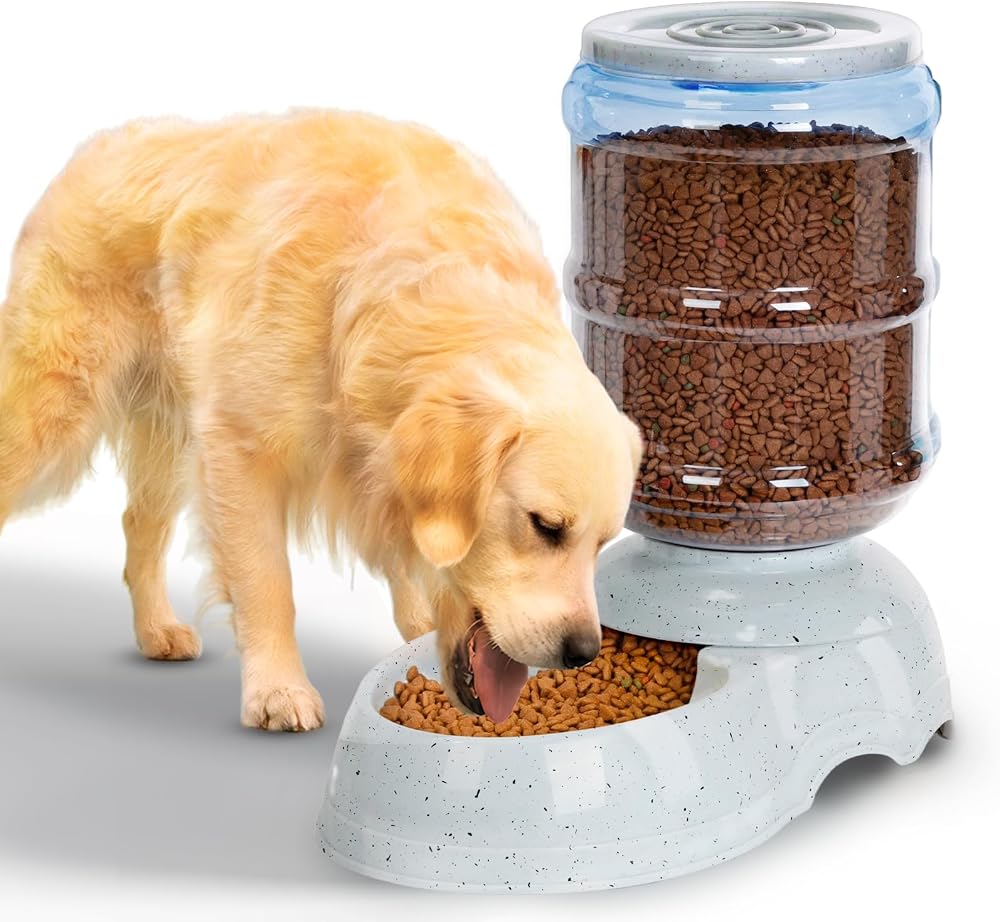
- Gravity feeders refill a bowl from a hopper as your dog eats. Cheap, simple, no power needed, but no portion control, so they suit only dogs that will not overeat.
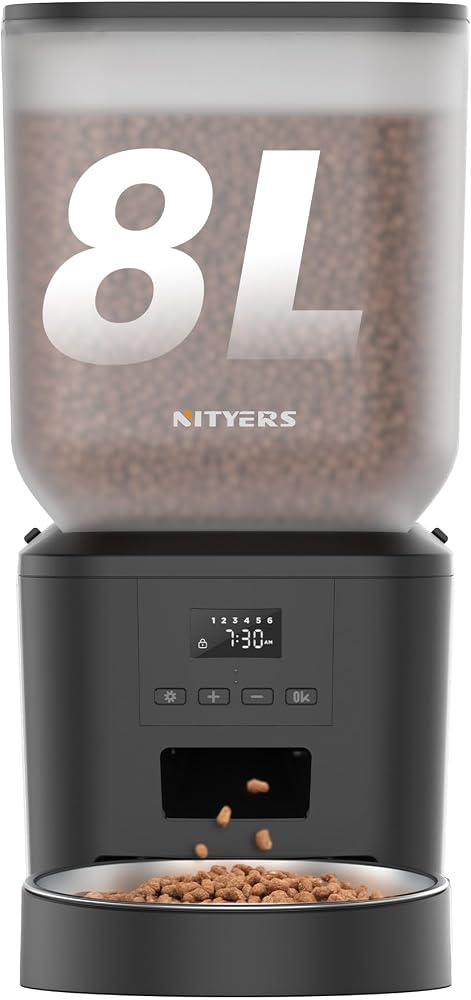
- Programmable electronic feeders dispense a set portion of dry food at set times. The best all-round choice, they manage weight and routine, and many have app control.
- Wet and refrigerated feeders keep wet or fresh food cool and serve it on a timer. Essential if your dog eats wet food and you are out for the day.
The 6 best automatic dog feeders
From a reliable programmable feeder to a camera model, a big-dog hopper, a gravity option and wet-food feeders, here is a pick for every dog and diet.





How the feeders compare
| Feeder | Type | Portions? | Best for |
|---|---|---|---|
| Programmable 8L | Electronic dry | Yes | Everyday portioned meals |
| 14L Large Breed | Electronic dry | Yes | Big dogs and big appetites |
| PETLIBRO Camera | Wi-Fi dry + camera | Yes | Checking in remotely |
| Kenond Gravity | Gravity dry | No | Self-regulating dogs, no power |
| PetSafe FreshFeed | Refrigerated wet | Yes | Wet or fresh food |
| Geeni 5-Meal | Wet or dry trays | Yes | Mixed meals, multiple servings |
What you get at each price range
Gravity feeder
A simple hopper that tops up the bowl, no power or portioning. Cheap and reliable for a dog that paces itself, but not for a dog prone to overeating.
Programmable feeder
A timed electronic feeder that portions dry meals, with battery backup and often app control. The best balance of routine and weight management.
Camera or refrigerated
A Wi-Fi camera feeder to watch and talk to your dog, or a refrigerated feeder for wet food. For remote check-ins and dogs on fresh or wet diets.
What to look for in an automatic feeder
- Portion control if weight matters, which rules out a plain gravity feeder.
- The right capacity for your dog’s size and how long between refills.
- Battery backup so a power cut does not mean a missed meal.
- The right design for the food, a refrigerated feeder for wet, a sealed hopper for dry.
- Easy cleaning, with dishwasher-safe, removable parts to avoid stale food and mould.
- Reliable dispensing that will not jam, plus app or camera features if you want them.
How to introduce an automatic feeder
Switch over gradually so the feeder becomes a trusted part of your dog’s routine.
- Set the correct portions and meal times to match your dog’s current feeding plan.
- Let your dog watch and hear it dispense a meal so the sound is not a surprise.
- Run it while you are home for a few days to check portions and that it does not jam.
- Fit fresh batteries for backup, and make sure fresh water is always available.
- Clean it regularly, and never rely on a feeder alone for trips longer than a day.
Automatic feeder mistakes to avoid
- Using a gravity feeder for a dog that overeats, which risks steady weight gain.
- Putting wet or fresh food in a dry kibble feeder, where it spoils.
- Skipping battery backup, so a power cut means a missed meal.
- Leaving a dog alone with only a feeder for days, with no one to check water and welfare.
- Forgetting to clean it, letting stale food, grease or mould build up.
What vets say
Vets support automatic feeders for keeping mealtimes consistent, which aids digestion and helps with weight management when the feeder portions correctly. The key caution they raise is free-feeding: a gravity feeder that keeps the bowl permanently full encourages overeating and is a common contributor to canine obesity, so portioned feeders are preferred for most dogs. Vets also stress that fresh water must always be available, that wet food needs cool storage, and that a feeder is a convenience for daily life, not a substitute for a carer checking on a dog left alone for an extended period. This is general information, not veterinary advice, so follow your vet’s feeding plan for your dog.
Frequently asked questions
What is the best automatic dog feeder?
Are gravity dog feeders a good idea?
Can automatic feeders handle wet food?
Do automatic dog feeders portion the food?
What happens to an automatic feeder in a power cut?
How big an automatic feeder do I need?
Can I leave my dog with an automatic feeder while on holiday?
Are camera dog feeders worth it?
How do I clean an automatic dog feeder?
Will an automatic feeder work for two dogs?
Do automatic feeders jam?
Is an automatic feeder good for weight loss?
The verdict
An automatic dog feeder brings routine and convenience, and the best one depends on your dog’s food and your needs. For most dogs on kibble, a programmable electronic feeder that portions meals is the smart choice, scaled up for a big dog or fitted with a camera if you like to check in. Reach for a gravity feeder only if your dog genuinely paces itself, and a refrigerated feeder for wet food. Whatever you choose, insist on battery backup, keep water available, and never let a feeder stand in for a carer on a long trip.
Keep reading

Olivia Isabella is PetBuyLab’s dog specialist and a lifelong dog owner with hands-on experience caring for senior and large-breed dogs. She researches, compares and lives with the mobility, comfort and everyday-care products she writes about, so she knows the practical details a spec sheet misses: how a ramp’s length sets the real slope a stiff-hipped dog will attempt, why surface grip decides whether a nervous dog commits, and how the wrong pick ends up unused in the garage. Every recommendation is built from manufacturer specifications, documented owner feedback and reputable veterinary sources, and is organised around a specific dog’s needs, never around commission. Her guides are informational and never a substitute for professional veterinary advice.