

Updated October 27, 2026 · Written by Olivia Isabella, PetBuyLab editorial team
A dog crate is not a cage, it is a den, and the right one makes house-training easier, travel safer, and gives your dog a space of their own. The wrong one is a daily fight: too small and it is cramped, too flimsy and an anxious dog escapes, wrong type and it never gets used. This guide covers the best dog crates by type, from everyday wire crates to heavy-duty, travel, and furniture-style, how to size one correctly, and a finder to match the right crate to your dog and your home.
Disclosure: PetBuyLab is reader supported. When you buy through links on this page we may earn a small affiliate commission, at no extra cost to you. It never changes our picks, and we do not take payment for placement. This is general guidance, not veterinary advice.
For most dogs, a double-door folding wire crate with a divider is the best all-round choice, because it suits home training, folds flat, and grows with a puppy. Pick a heavy-duty steel crate for an escape artist, a plastic airline kennel for flying, and a furniture-style crate if it lives in your living room. Size it so your dog can stand, turn around, and lie down, and no bigger. Use the finder below.
- Match the type to the job: wire for home, steel for escapees, plastic for flights, furniture for the living room.
- Size by your dog standing and lying down, not by their weight alone. Just big enough, not huge.
- Buy for the adult size and use the divider to shrink it while a puppy grows, so they do not potty in a corner.
- A double door and a removable tray make daily life far easier.
- A crate is a den, never a punishment. Used kindly, most dogs come to love it.
We match crates to real jobs, home, escape-proofing, travel, and living-room looks, and judge each on build quality, door and latch design, how easily it sets up and folds, and tray cleanup. We cross-check verified owner reviews, flag flimsy latches an anxious dog can pop, and we are clear a crate must never be used as punishment. We never take payment for placement. PetBuyLab is affiliate supported but editorially independent, and this is general information, not veterinary advice.
Crate Type & Size Finder
Pick what the crate is mainly for and how big your dog is, and this tool gives you the crate type, the size in inches, and a divider tip. Getting the type and size right is the whole game.
The types of dog crate
Each type is built for a different job. Picking the right one is more important than the brand.
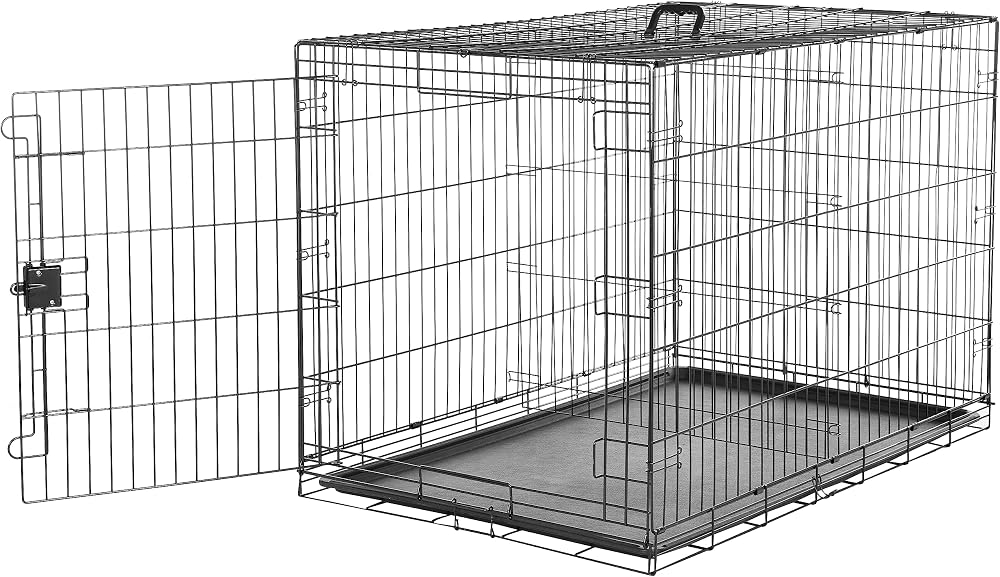
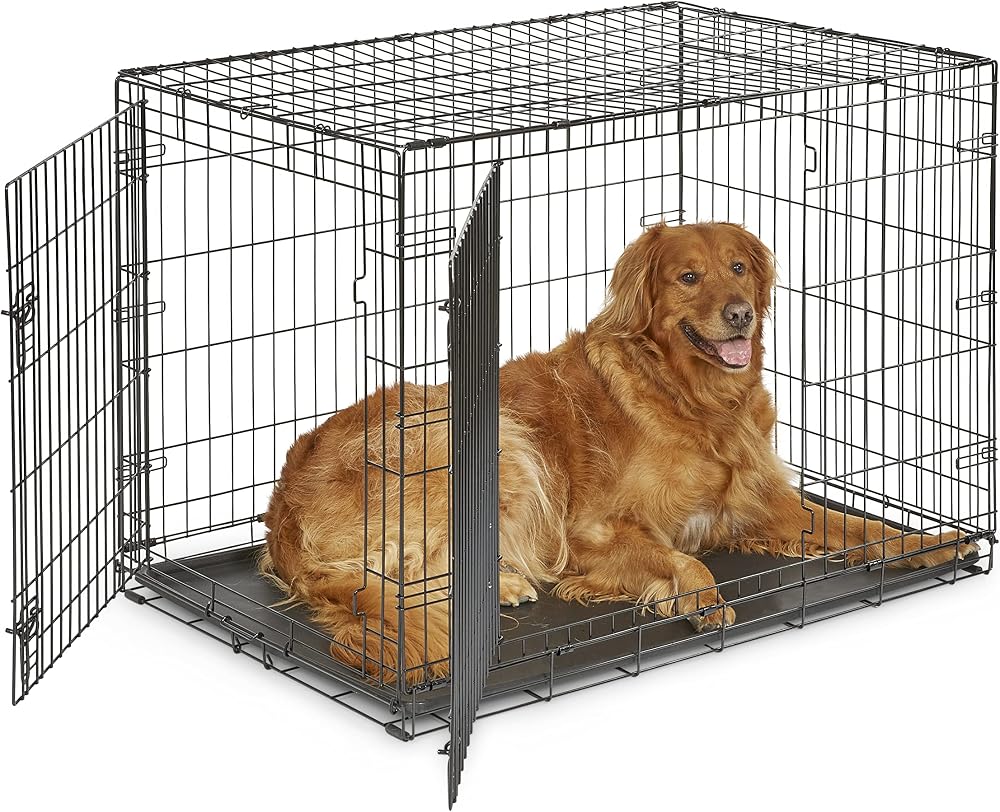
- Wire crates are the everyday default. They fold flat, have great airflow, usually include a divider for puppies, and suit home training for most dogs.
- Heavy-duty steel crates are for escape artists and strong, anxious dogs that bend or pop open a standard wire crate. Welded steel and lock-style latches are the key.
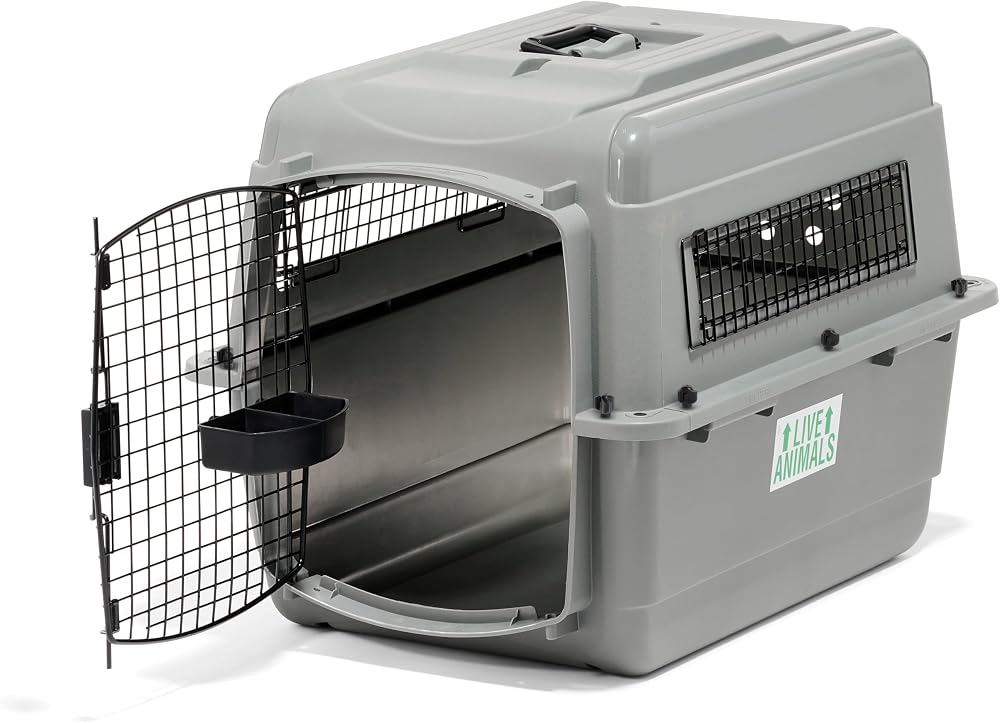
- Plastic kennels are enclosed and cosy, and the airline-grade ones are what you need to fly a dog in cargo. They feel den-like and block distractions.
- Soft-sided crates are light and foldable for calm, trained dogs and short trips. They are not for chewers or escapees, who shred them.
- Furniture-style crates are wooden crates that double as an end table or sideboard, for owners who want the crate to blend into the living room.
How to size a dog crate
The rule is simple: your dog should be able to stand up without ducking, turn around, and lie down fully stretched, and no bigger. A crate that is too large undoes house-training, because a puppy will happily sleep at one end and use the other as a toilet. Measure your dog from nose to tail base and add 2 to 4 inches for length, and measure from the floor to the top of the head (sitting) and add 2 to 4 inches for height. If you have a growing puppy, buy for their expected adult size and use the included divider to block off the extra space until they grow into it.
| Crate size | Dog weight | Example breeds |
|---|---|---|
| 24 in | Under 25 lb | Chihuahua, Yorkie, small terriers |
| 30 in | 25 to 40 lb | French Bulldog, Beagle, Cocker Spaniel |
| 36 in | 40 to 70 lb | Border Collie, Bulldog, Boxer |
| 42 in | 70 to 90 lb | Labrador, Golden Retriever, German Shepherd |
| 48 in | 90 lb and up | Great Dane, Mastiff, Saint Bernard |
The 6 best dog crates
A top pick for each type, so you can go straight to the right crate for your dog and your home.



How the crates compare
| Crate | Type | Best for | Why it stands out |
|---|---|---|---|
| MidWest iCrate | Wire, double-door | Most dogs | Folds flat, divider included, trusted |
| Amazon Basics Wire | Wire, folding | Value | The essentials at a low price |
| New World 42 in | Wire, double-door | Large dogs | Big, sturdy, hugely reviewed |
| LUCKUP Heavy-Duty | Welded steel | Escape artists | Survives strong, anxious dogs |
| Petmate Sky Kennel | Plastic | Air travel | Airline-style, enclosed and cosy |
| Furniture Crate | Wooden | Living rooms | Doubles as an end table |
What you get at each price range
Folding wire
A basic folding wire crate with a divider and tray. All most dogs ever need for home training, especially puppies.
Double-door & travel
Double-door wire crates, larger sizes, and airline plastic kennels. Sturdier build and more convenient daily use.
Heavy-duty & furniture
Welded-steel escape-proof crates and wooden furniture-style crates. Built for tough dogs or to look good in your home.
What to look for in a dog crate
- The right size. Stand, turn, lie down, and no bigger. Use a divider for a growing puppy.
- The right type for the job. Wire for home, steel for escapees, plastic for flights, wood for the living room.
- Secure latches. Anxious and strong dogs pop weak door latches, so look for slide-bolt or lock-style on tougher crates.
- A removable tray. It makes cleaning accidents far quicker.
- Double doors for flexible placement in a room.
- Easy fold-down if you will move or store it often.
Crate training basics
The crate only works if your dog feels safe in it. Build the association slowly and positively.
- Set the crate up in a family area and leave the door open so your dog can explore it freely.
- Feed meals and toss treats inside, so your dog walks in by choice and links it with good things.
- Add a comfortable, correctly sized crate pad, and a familiar blanket that smells of home.
- Build up time in short steps, and never use the crate as punishment.
- Remove collars and tags before crating, and give a puppy toilet breaks matched to their age.
For the pad itself, see our guide to the best dog crate beds and mats.
Crate mistakes to avoid
- Buying a crate too big, so a puppy potties in one corner and sleeps in the other.
- Using a flimsy wire crate for a strong, anxious dog that bends the door and escapes.
- Trying to fly with a wire crate. Airlines require an approved plastic kennel.
- Using the crate for punishment, which teaches your dog to fear and avoid it.
- Leaving a dog crated too long. A crate is a rest space, not an all-day container.
What vets and trainers say
Used well, a crate taps into a dog’s natural den instinct and genuinely helps with house-training and safety. The American Kennel Club’s crate-training guidance stresses going at your dog’s pace, never using the crate as punishment, and removing collars and tags first so nothing catches. It also notes that crates are not right for every dog: those with severe separation anxiety or panic may do better in a gated, puppy-proofed room, and senior dogs with arthritis should not be crated for long stretches. The takeaway: pick the right crate, size it properly, and introduce it kindly. This is general information, not veterinary advice.
Frequently asked questions
What is the best dog crate?
What size dog crate do I need?
Should I get a bigger crate so my puppy can grow into it?
What crate is best for an escape artist?
What kind of crate do I need to fly with my dog?
Are furniture-style dog crates any good?
Wire or plastic crate, which is better?
Is it cruel to crate a dog?
How long can a dog stay in a crate?
Do I need a crate pad or bed inside?
What crate is best for a puppy?
Can soft-sided crates work?
The verdict
The best dog crate is the one that fits the job and fits your dog. Start with the type, a wire crate for home, steel for an escapee, plastic for flights, or wood for the living room, then size it so your dog can stand, turn, and lie down, and use a divider while a puppy grows. Introduce it kindly as a den, add a proper crate pad, and the crate becomes a space your dog actually likes, not one they dread.
Keep reading

Olivia Isabella is PetBuyLab’s dog specialist and a lifelong dog owner with hands-on experience caring for senior and large-breed dogs. She researches, compares and lives with the mobility, comfort and everyday-care products she writes about, so she knows the practical details a spec sheet misses: how a ramp’s length sets the real slope a stiff-hipped dog will attempt, why surface grip decides whether a nervous dog commits, and how the wrong pick ends up unused in the garage. Every recommendation is built from manufacturer specifications, documented owner feedback and reputable veterinary sources, and is organised around a specific dog’s needs, never around commission. Her guides are informational and never a substitute for professional veterinary advice.