
Updated October 14, 2026 · Written by Olivia Isabella, PetBuyLab editorial team
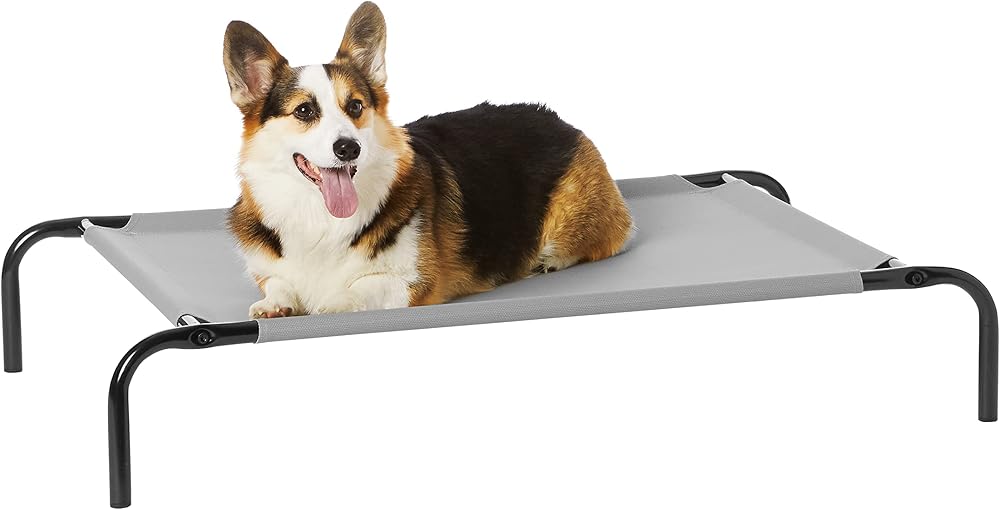
An elevated dog bed lifts your dog off the floor onto a taut, breathable surface, and that simple change does a lot. Air flows underneath to keep your dog cooler, the bed stays out of mud and drafts, and a tight frame is far harder to chew than a stuffed cushion. This guide covers the best elevated dog beds for cooling, big dogs, chewers, and the outdoors, plus the one thing most buyers get wrong: picking a frame strong enough that it will not sag. Start with the quick fit check below.
Disclosure: PetBuyLab is reader supported. When you buy through links on this page we may earn a small affiliate commission, at no extra cost to you. It never changes our picks, and we do not take payment for placement. This is general guidance, not veterinary advice.
An elevated dog bed is best for a dog who runs hot, chews soft beds, or spends time outdoors, because the raised mesh keeps them cool, clean, and off a surface that is hard to destroy. The key is matching the frame strength to your dog’s weight, so it does not sag, and picking a bed rated well above what your dog weighs. It is not the right bed for a dog who loves to curl and nest. Use the fit check below to size it right.
- Elevated beds keep a dog cooler through airflow, cleaner off the floor, and are harder to chew than cushions.
- The number one failure is sag, so match the frame strength and weight rating to your dog with room to spare.
- Heavy dogs need a steel or aluminum frame, not plastic, which cracks and bows over time.
- They suit hot climates and outdoor dogs best, and need a mat added in cold weather since airflow also means less warmth.
- They are not for dogs who like to curl, nest, or burrow into something soft. Those dogs want a calming or orthopedic bed.
- Raised Bed Strength & Fit Check
- What is the point of an elevated bed?
- The 6 best elevated dog beds
- How they compare
- What you get at each price
- Which one is right for you
- Will it sag? Frame and capacity
- Cooling, chew-proof, or outdoor
- What to look for
- Is a raised bed right for your dog?
- Get your dog to use it
- What vets say
- FAQ
- The verdict
We judge elevated beds on the things that decide whether they last: frame material and strength relative to dog weight, how taut and chew-resistant the fabric is, airflow and cooling, and weatherproofing for outdoor use. We cross-check verified owner reviews, flag the cheap frames that sag or crack, and we are honest that a raised bed is wrong for a dog who wants to nest. We never take payment for placement. PetBuyLab is affiliate supported but editorially independent, and this is general information, not veterinary advice.
Raised Bed Strength & Fit Check
Enter your dog’s weight and why you want a raised bed, and this tool tells you the frame strength to look for so it will not sag, the weight rating to buy, and whether an elevated bed is even the right call for your dog. It is the step that saves you from a collapsed cot.
What is the point of an elevated dog bed?
A raised bed earns its place for a few clear reasons. The big one is cooling, because lifting your dog onto a breathable mesh lets air move underneath and carry heat away, which is a real help for heavy-coated breeds and hot climates. It also keeps your dog clean and dry, off muddy ground outdoors and off cold, hard floors indoors. The taut surface is harder to chew and destroy than a stuffed cushion, and it is easy to hose or wipe down, so it stays hygienic. For some dogs there is a mild joint benefit too, since a firm, flat surface is easy to step onto and spreads weight evenly. The honest flip side is that a raised bed is firm and cool by design, so it is not the cosy, sink-in spot that a dog who loves to nest is looking for.
The 6 best elevated dog beds
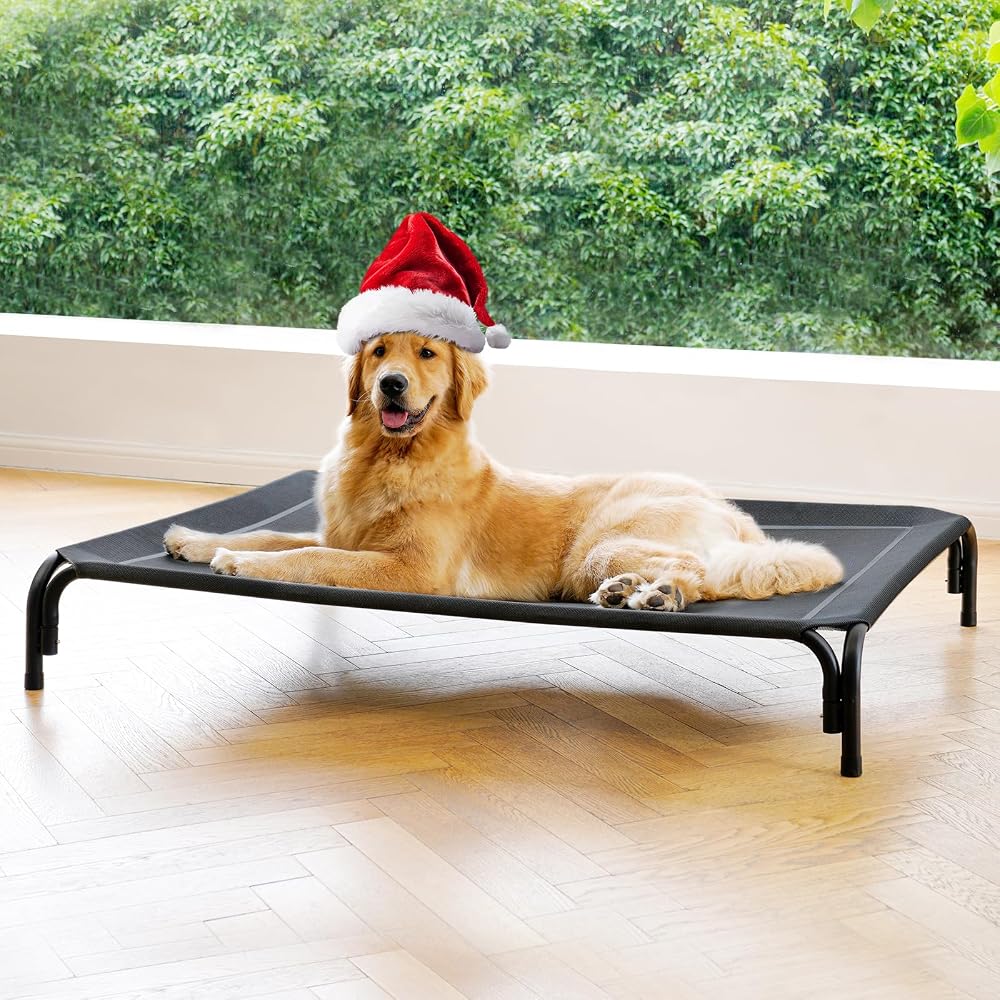
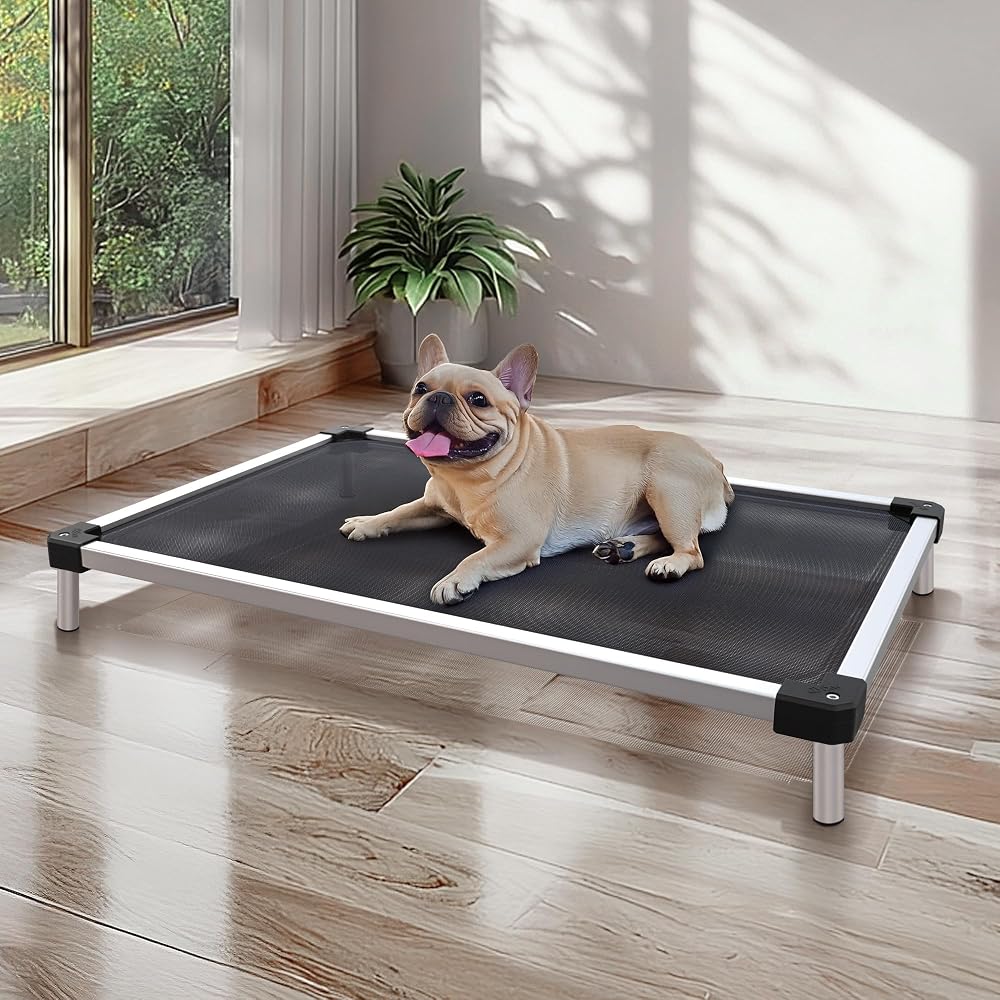
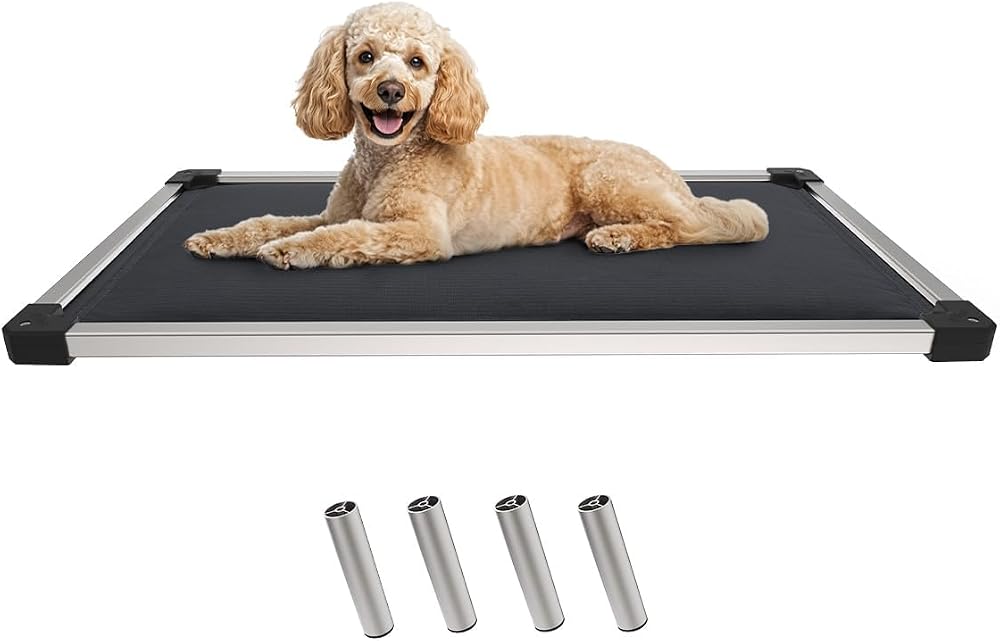
These are the raised beds that stay taut, resist chewing, and hold up outdoors, with a pick for cooling, big dogs, chewers, comfort, and small dogs. Every one earns strong owner reviews.


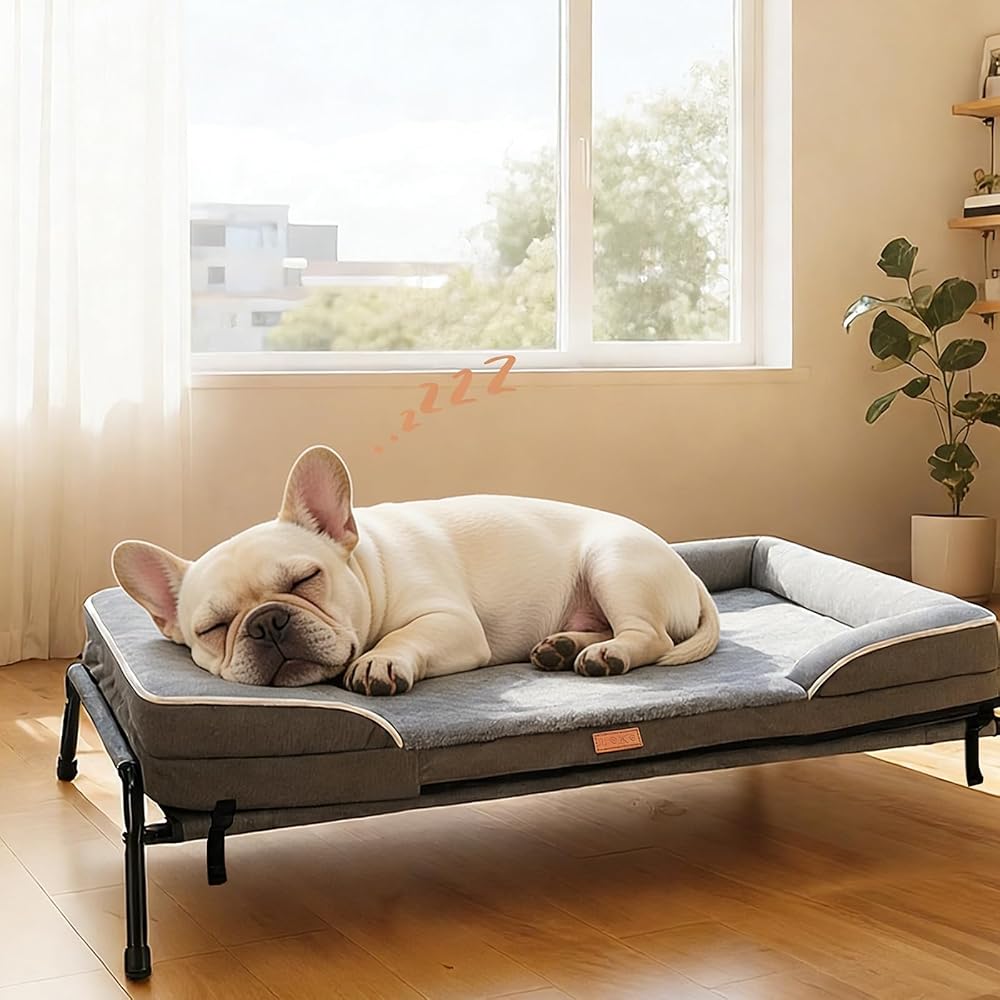
How the elevated beds compare
| Bed | Frame | Best for | Why it stands out |
|---|---|---|---|
| Amazon Basics Cooling | Steel | Most dogs | Cool, breathable, and great value |
| Bedsure Outdoor Cooling | Steel | Cooling & outdoors | Weatherproof with strong airflow |
| Raised Outdoor Cot | Steel | Large dogs | Big, sturdy platform for bigger breeds |
| FXW TitanNest Chew-Proof | Aluminum | Chewers | Aluminum frame and tough fabric |
| FXW TitanNest Padded | Aluminum | Comfort | Raised and cool with a padded top |
| Lekereise (Small) | Steel | Small dogs | Sized and priced for little dogs |
What you get at each price range
Basic cot
A simple steel-frame mesh bed. Great cooling and value for small and medium dogs, but check the weight rating so it will not sag.
The sweet spot
A sturdier, weatherproof frame sized for larger dogs and the outdoors. The best balance of strength, airflow, and durability.
Chew-proof & padded
Aluminum-frame beds that survive chewers, plus padded versions that add comfort without losing the raised, cool design.
Which elevated bed is right for your dog?
Run the fit check first, then follow the first line that matches.
Will it sag? Frame strength and weight capacity
This is where most elevated beds fail, and where the cheap ones let you down. The fabric sits under tension, so over time a weak frame bows and the fabric sags into a hammock that your dog sinks through. Two things prevent it. First, the frame material: thin plastic cracks and warps, especially outdoors, so a heavier dog needs powder-coated steel or aluminum. Second, the weight rating: do not buy a bed rated right at your dog’s weight. Give yourself a margin of at least a quarter above, so the fabric stays drum-tight when your dog flops down. The fit check above does this math for you. Replacement covers are also worth a look, since the fabric usually wears out long before the frame does.
Cooling, chew-proof, or outdoor: match the bed to your need
- Cooling: a breathable mesh top with open airflow underneath. Best in heat, and add a blanket in winter.
- Chew-resistant: an aluminum or steel frame with tight, tough fabric. No bed is chew-proof, so supervise.
- Outdoor: a weatherproof, powder-coated frame and quick-drying fabric, kept in the shade.
- Comfort: a padded raised bed adds a cushioned top while keeping the cool, off-the-floor design.
- Small dogs: a low, lightweight cot sized so little legs can hop on easily.
What to look for in an elevated dog bed
- A frame matched to your dog. Steel or aluminum for big dogs, never thin plastic.
- A weight rating well above your dog. Margin keeps the fabric taut and stops sag.
- Breathable, tough fabric. It should let air through yet resist claws and teeth.
- Non-slip, floor-safe feet. So the bed stays put and does not scratch floors.
- Easy cleaning. A surface you can wipe or hose down, ideally with a removable cover.
- The right size. Big enough for your dog to lie flat without hanging off the edge.
Is a raised bed right for your dog?
Be honest about how your dog likes to sleep, because that matters more than any feature. A raised bed is a great fit for a dog who runs hot, sprawls out flat, chews soft beds, or spends time outside. It is the wrong fit for a dog who loves to curl, nest, or burrow into something soft, since a firm, cool, flat surface gives them nothing to sink into. It is also not ideal as the only bed for a senior or arthritic dog who needs cushioning for sore joints. If that sounds like your dog, a padded raised bed is a middle ground, but you may be better served by our guides to the best calming dog beds for nesters or the best orthopedic dog beds for achy joints.
How to get your dog to use a raised bed
A firm, raised surface can feel strange at first, so give your dog a reason to love it.
- Put the bed where your dog already likes to rest, in a cool, shaded spot.
- Lure them on with treats and praise, and reward every time they settle.
- Add a light blanket on top at first if the surface feels too firm or cool for them.
- In hot weather, point out how much cooler it is by placing it in a breezy spot.
- Be patient for a few days, and never force your dog on or scold them off.
Common elevated bed mistakes to avoid
- Buying a bed rated right at your dog’s weight, so the fabric sags within months.
- Choosing a plastic frame for a big or heavy dog.
- Using a bare raised bed in winter, when your dog needs warmth, not airflow.
- Giving a raised bed to a dog who only wants to curl and nest.
- Leaving a dog unsupervised to chew a cot that is not truly chew-resistant.
What vets say about keeping dogs cool and comfortable
The strongest case for a raised bed is heat and hygiene. The American Veterinary Medical Association’s warm-weather safety guidance stresses keeping pets cool and giving them shade and airflow, which is exactly what an elevated mesh bed provides on a hot day. For older dogs, the AKC’s advice on canine arthritis is a reminder that a sore dog also needs cushioned support, so a bare cot may not be enough on its own. The sensible takeaway: a raised bed is a smart choice for cooling, cleanliness, and durability, and for an achy senior you may want to add padding or pair it with an orthopedic bed. This is general information, not veterinary advice.
Frequently asked questions
What is the point of an elevated dog bed?
What is the best elevated dog bed?
Do elevated dog beds really keep dogs cooler?
What is the best elevated dog bed for large or heavy dogs?
Will an elevated dog bed sag?
Are elevated dog beds good for chewers?
Can I use an elevated dog bed outdoors?
Are elevated beds good for senior or arthritic dogs?
Is an elevated bed good in winter?
How do I pick the right size elevated dog bed?
How do I clean an elevated dog bed?
Elevated bed or orthopedic bed, which is better?
The verdict
An elevated dog bed is the smart pick for a dog who runs hot, chews soft beds, or lives part of their life outdoors. The raised mesh keeps them cool, clean, and on a surface built to last. Just get the two things right that most buyers miss: a frame strong enough for your dog, and a weight rating with room to spare, so it never sags. Run the fit check, match the bed to your real reason for wanting one, and if your dog turns out to be a nester or an achy senior, point them to a calming or orthopedic bed instead. Get it right and you have a cool, durable bed your dog will use for years.
Keep reading

Olivia Isabella is PetBuyLab’s dog specialist and a lifelong dog owner with hands-on experience caring for senior and large-breed dogs. She researches, compares and lives with the mobility, comfort and everyday-care products she writes about, so she knows the practical details a spec sheet misses: how a ramp’s length sets the real slope a stiff-hipped dog will attempt, why surface grip decides whether a nervous dog commits, and how the wrong pick ends up unused in the garage. Every recommendation is built from manufacturer specifications, documented owner feedback and reputable veterinary sources, and is organised around a specific dog’s needs, never around commission. Her guides are informational and never a substitute for professional veterinary advice.