

Updated October 27, 2026 · Written by Olivia Isabella, PetBuyLab editorial team
The most common reason a dog ignores a brand-new bed is simple: it is the wrong size. Too small and your dog hangs off the edge, too big and it swallows the room and wastes your money. So what size dog bed do you actually need? The honest answer is to measure your dog, not guess by breed, but a good size chart gets you very close. This guide gives you a dog bed size chart by weight and breed, shows you how to measure in 30 seconds, and includes a quick size finder so you can shop with the right dimensions in hand.
Disclosure: PetBuyLab is reader supported. When you buy through links on this page we may earn a small affiliate commission, at no extra cost to you. It never changes our picks, and we do not take payment for placement. This is general guidance, not veterinary advice.
Measure your dog lying stretched out on their side, nose to tail, then add 6 to 12 inches. That total is your minimum bed length. As a rough guide: small dogs (under 25 lb) suit a 24 to 30 in bed, medium dogs (25 to 50 lb) a 30 to 36 in bed, large dogs (50 to 90 lb) a 36 to 42 in bed, and giant breeds (90 lb and up) a 48 in or larger bed. Dogs who sprawl need a size up. Use the finder below for your dog.
- Measure, do not guess: nose-to-tail length plus 6 to 12 inches is your minimum bed size.
- Breed charts get you close, but two dogs of the same breed can need different sizes.
- Sprawlers who sleep flat on their side need a size up; curlers can size down.
- Heavier dogs also need thicker foam, not just a bigger footprint, so they do not bottom out.
- When between sizes, go bigger. A too-small bed is the top reason dogs sleep on the floor.
Our sizing advice starts from how dogs actually sleep, stretched out or curled, and from the real interior dimensions beds ship in, not marketing size names that vary by brand. We cross-check bed dimensions against verified owner reviews for run-small and run-large patterns, and we always tell you to measure your own dog. We never take payment for placement. PetBuyLab is affiliate supported but editorially independent, and this is general information, not veterinary advice.
Dog Bed Size Finder
Pick the group that fits your dog and this tool gives you the bed size, the dimensions to look for, and the foam thickness so a heavier dog does not bottom out. For an exact number, pair it with our full dog bed size calculator.
How to measure your dog for a bed
This takes 30 seconds and beats any chart. Do it while your dog is relaxed.
- Have your dog lie down the way they usually sleep, ideally stretched out on their side.
- Measure from the tip of the nose to the base of the tail, in inches.
- Add 6 to 12 inches. Add 6 for a dog who curls, 12 for a dog who stretches out flat.
- That total is your minimum bed length. For a rectangular bed, also measure width across the shoulders and add a few inches.
- When your number lands between two bed sizes, choose the larger one.
Dog bed size chart by weight and breed
Use this as a starting point, then confirm by measuring. Breed examples are typical, and your individual dog may differ.
| Dog size | Weight | Example breeds | Bed size |
|---|---|---|---|
| Toy | Under 15 lb | Chihuahua, Yorkie, Pomeranian | 24 in |
| Small | 15 to 25 lb | French Bulldog, Beagle, Mini Poodle | 24 to 30 in |
| Medium | 25 to 50 lb | Border Collie, Cocker Spaniel, Bulldog | 30 to 36 in |
| Large | 50 to 90 lb | Labrador, Golden Retriever, German Shepherd | 36 to 42 in |
| Giant | 90 lb and up | Great Dane, Mastiff, Newfoundland | 48 in or larger |
The best dog beds by size
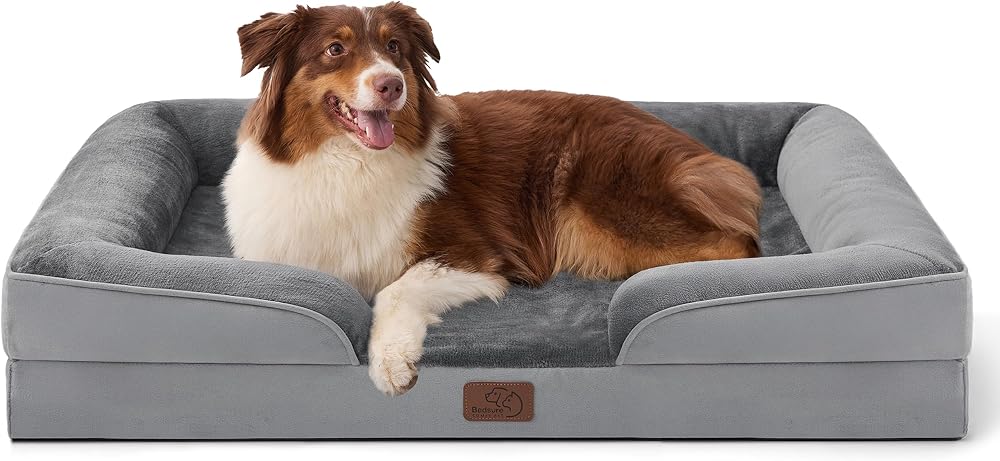
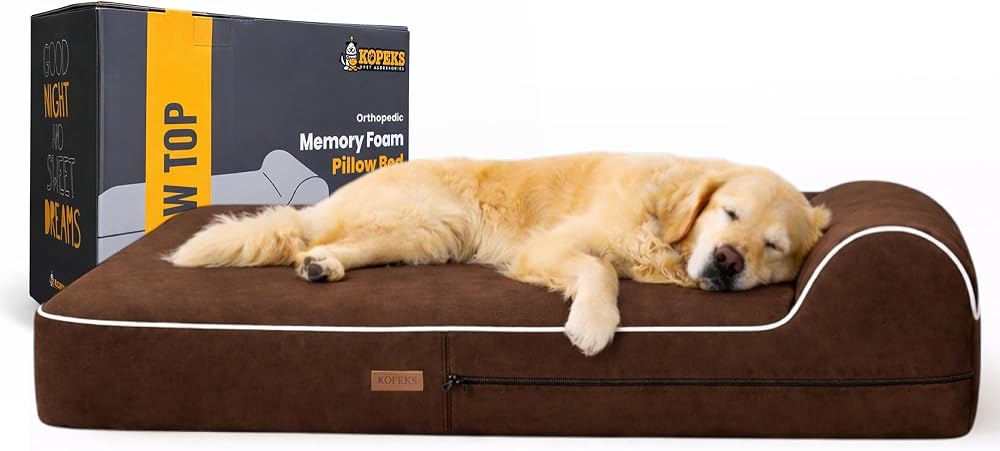
Once you know your size, here is a well-reviewed pick in each, so you can go straight to the right bed for your dog.



How the sizes compare
| Bed | Fits | Weight | Why it stands out |
|---|---|---|---|
| Bedsure Small | Toy & small | Under 25 lb | Cosy, washable, right-sized for little dogs |
| Bedsure Washable | Medium | 25 to 50 lb | Easy-clean orthopedic support |
| The Dog’s Bed | Large | 50 to 90 lb | Solid ortho foam with a headrest |
| Bedsure SupportMax | Extra-large | 80 to 110 lb | Extra-thick so big dogs do not bottom out |
| 7-Inch Extra-Thick | Giant | 100 lb and up | Deep foam for the heaviest breeds |
What you get at each price range
Small & simple
Smaller beds cost less, so toy and small dogs are cheap to bed well. Just check the dimensions against your measurement.
Medium & large
Most medium and large orthopedic beds sit here. The sweet spot of size, support, and a washable cover.
XL & giant
Extra-large and giant beds cost more because they use far more foam. Worth it so a big dog gets real support.
Special sizing cases
- Puppies: buy for their adult size, or a cheap bed now and upgrade once they stop growing and chewing.
- Sprawlers: dogs who sleep flat on their side need a size up from the chart, or a rectangular bed over a round one.
- Seniors: size matters less than a low, easy entry and thick support. See our orthopedic bed guide.
- Two dogs sharing: add their lengths, or better, give each their own bed to avoid squabbles.
- Crates: the bed must fit the tray, not your dog’s measurement. See our crate bed guide.
Getting the fit right
- Check the interior, not the label. Bed size names vary by brand, so read the actual dimensions.
- Match foam thickness to weight. A big dog on a thin bed still ends up on the floor.
- Leave room to turn. Dogs circle before they settle, so a little extra space helps.
- Mind bolster walls. On a bolster bed, the sleeping surface is smaller than the outer size.
- When unsure, size up. Dogs rarely complain a bed is too big.
Sizing mistakes to avoid
- Guessing by breed name instead of measuring your actual dog.
- Buying by the outer size of a bolster bed, forgetting the inner sleeping area is smaller.
- Getting the footprint right but the foam too thin for a heavy dog.
- Buying a puppy a single bed that will not fit them in six months.
- Choosing a round bed for a dog who only ever sprawls out flat.
Frequently asked questions
What size dog bed do I need?
How do I measure my dog for a bed?
What size bed does a Labrador need?
Should I size up or down for a dog bed?
What size dog bed for a German Shepherd?
Is a bigger dog bed always better?
What size bed for a small dog?
How thick should the dog bed be, not just how long?
What size dog bed for two dogs?
Do breed size charts actually work?
What size bed should I buy for a puppy?
How do I know if my dog’s bed is too small?
The verdict
Getting the size right is the difference between a bed your dog loves and an expensive floor decoration. Skip the guesswork: measure your dog nose to tail, add 6 to 12 inches, and match the foam thickness to their weight. Use the finder and the chart above to narrow it down, confirm with our calculator, and when you are between sizes, go bigger. Do that, and your dog gets a bed they can actually stretch out and rest on.
Keep reading

Olivia Isabella is PetBuyLab’s dog specialist and a lifelong dog owner with hands-on experience caring for senior and large-breed dogs. She researches, compares and lives with the mobility, comfort and everyday-care products she writes about, so she knows the practical details a spec sheet misses: how a ramp’s length sets the real slope a stiff-hipped dog will attempt, why surface grip decides whether a nervous dog commits, and how the wrong pick ends up unused in the garage. Every recommendation is built from manufacturer specifications, documented owner feedback and reputable veterinary sources, and is organised around a specific dog’s needs, never around commission. Her guides are informational and never a substitute for professional veterinary advice.