

Updated October 12, 2026 · Written by Olivia Isabella, PetBuyLab editorial team
If your dog is slowing down, taking longer to get up, or circling before they settle, the right bed can change their day. An orthopedic dog bed supports aching joints and spreads a dog’s weight off the pressure points that a thin bed lets them sink through. This guide covers the best orthopedic dog beds for senior and arthritic dogs, how thick the foam should be for your dog’s weight, and how to match the bed to your dog’s real problem, whether that is stiffness, accidents, overheating, or trouble climbing in.
Disclosure: PetBuyLab is reader supported. When you buy through links on this page we may earn a small affiliate commission, at no extra cost to you. It never changes our picks, and we do not take payment for placement. This is general guidance, not veterinary advice.
The best orthopedic dog bed uses solid, high-density support foam that is thick enough for your dog’s weight, so they do not bottom out onto the floor. For a senior or arthritic dog, a low entry matters as much as the foam, because a tall bolster wall is hard to climb. Match the cover to the problem: waterproof for accidents, cooling gel for dogs that run hot, and a tough cover for chewers. Use the bed finder below to get the right type and foam thickness for your dog.
- “Orthopedic” is a marketing word with no legal standard, so look at the foam, not the label.
- Real support means solid high-density or memory foam, thick enough that your dog does not sink to the floor.
- Match foam thickness to weight: roughly 3 inches for small dogs, up to 7 inches for giant breeds.
- For a stiff or arthritic dog, a low entry is as important as the foam. A high bolster wall is a barrier.
- Pick the cover for the problem: waterproof for accidents, cooling for heat, a tough cover for chewers.
We judge orthopedic beds on the things that actually relieve joints: the type and density of the foam, how thick it is relative to dog weight, and whether the dog can get in and out easily. We are blunt that “orthopedic” is an unregulated marketing term, so we favour solid support foam over loose fill that flattens. We cross-check verified owner reviews, weigh washability and cover type for seniors, and never take payment for placement. PetBuyLab is affiliate supported but editorially independent, and this is general information, not veterinary advice.
Orthopedic Bed Finder: which bed does your dog need?
Tell us your dog’s weight and the main problem you are solving, and this tool gives you the bed type to buy, the minimum foam thickness so your dog does not bottom out, and whether you need a low entry. It is the matching step the roundups skip.
Why an orthopedic dog bed helps a senior or arthritic dog
Arthritis is common in older dogs, and it is easy to miss until it is advanced. The American Kennel Club notes that a dog who struggles to rise or slows on walks may be in pain, and VCA lists reluctance to use stairs or jump onto furniture as an early sign of osteoarthritis. A supportive bed will not cure any of that, but it helps in a real way. Solid orthopedic foam spreads your dog’s weight so bony joints and pressure points are not grinding into a hard floor all night. That means less stiffness in the morning and a warmer, easier place to rest sore hips, elbows, and shoulders. This is general information, so ask your vet about your dog’s joints and any pain management.
What a real orthopedic dog bed actually is
Here is the honest part. “Orthopedic” is a marketing word with no legal definition, so plenty of cheap beds use the label over a thin slab of soft foam that flattens in weeks. A bed that truly supports joints has a few things in common. It uses solid, high-density support foam or real memory foam, not loose fiberfill or chopped-up scraps that compress. It is thick enough for your dog’s weight, so they rest on the foam and not the floor underneath. As a rough guide, small dogs want about 3 inches, large dogs 4 to 6, and giant breeds up to 7. Press the bed with your hand. If you can feel the base easily, your dog will too.
The 6 best orthopedic dog beds
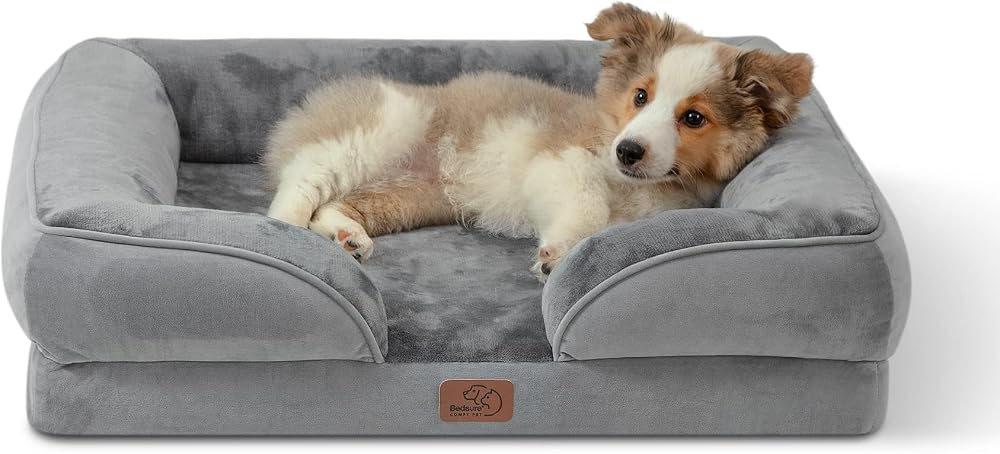
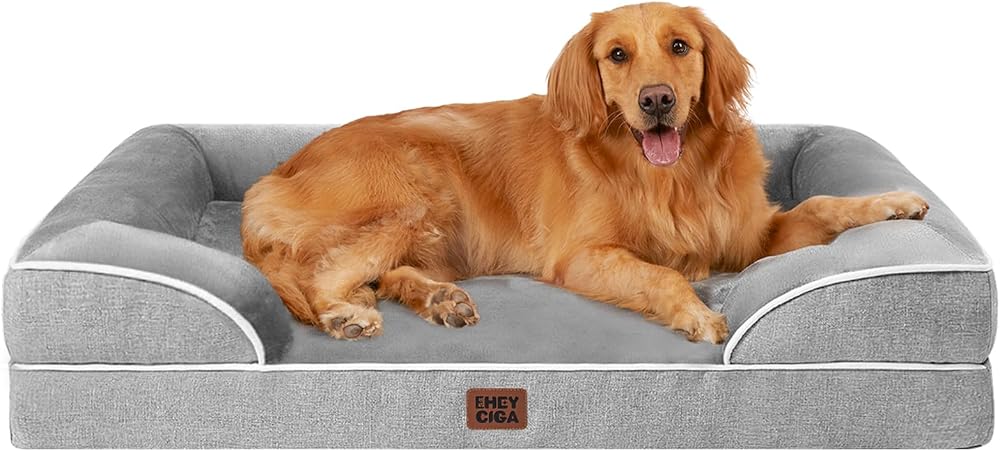
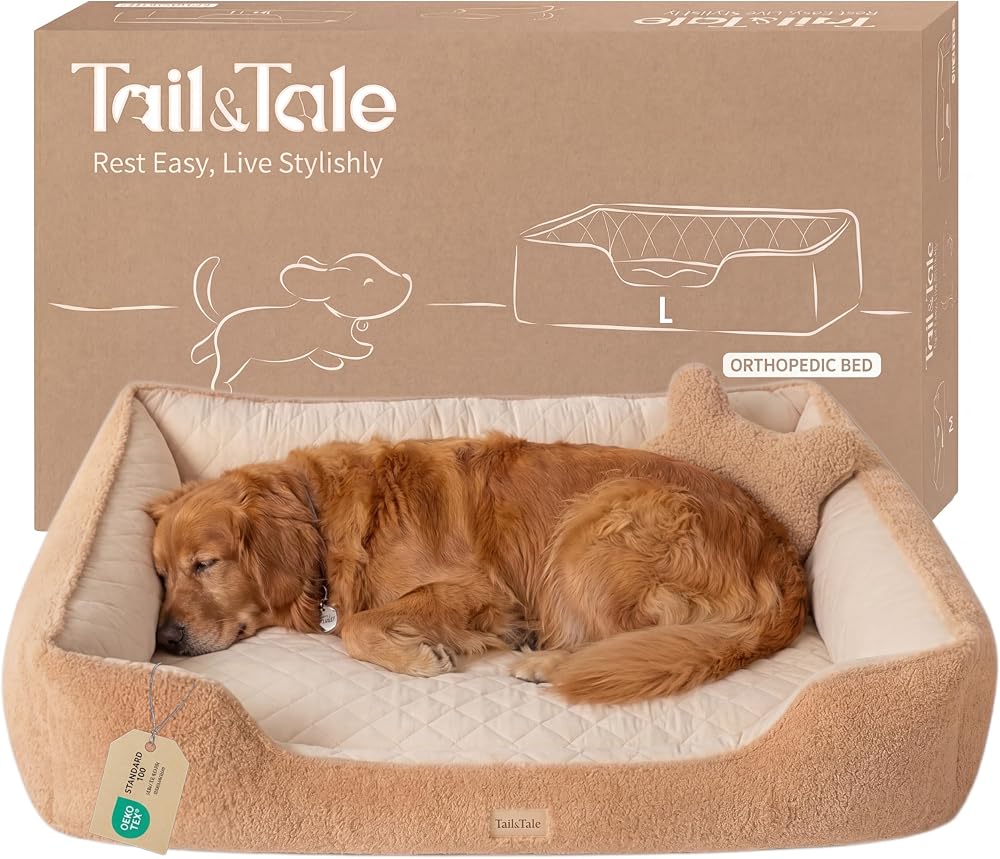
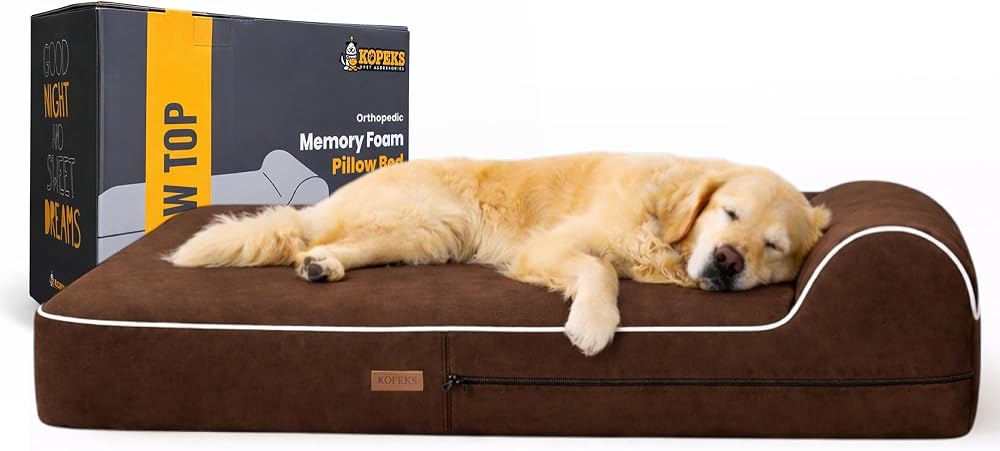
These are the beds that back up the orthopedic label with real foam, cover the common senior needs, and earn strong owner reviews. There is a pick for overall support, a budget, big and giant dogs, accidents, and dogs that overheat.


How the orthopedic beds compare
| Bed | Type | Best for | Why it stands out |
|---|---|---|---|
| The Dog’s Bed | Memory foam + headrest | Most dogs | Solid ortho foam with a supportive headrest |
| Bedsure Bolster | Bolster, washable | Value | Affordable support with walls to lean on |
| Bedsure SupportMax | Extra-thick | Large dogs | Thick foam and a huge base of happy reviews |
| EHEYCIGA Waterproof | Waterproof cover | Accidents | Liquid never reaches the foam |
| Cooling Gel | Gel-infused | Dogs that run hot | Draws heat away instead of trapping it |
| 7-Inch Extra-Thick | 7 in memory foam | Giant breeds | Deep foam so heavy dogs never bottom out |
What you get at each price range
Starter orthopedic
A bolster or basic foam bed. Good support for small and medium dogs, but check the foam thickness and read reviews for flattening.
The sweet spot
Thicker solid foam, a washable or waterproof cover, and a size for large dogs. The best balance for most senior and arthritic dogs.
Deep support
Dense headrest beds and 7-inch foam for giant breeds. The most durable support that will not bottom out under a heavy dog.
Which orthopedic bed is right for your dog?
Run the bed finder first, then follow the first line that matches.
Entry height: getting a stiff dog into the bed
This is the part most bed guides miss. A thick bed with a tall bolster wall looks cosy, but for a dog with sore hips it can be a wall they would rather not climb. If your dog is stiff, pick a bed with a low front edge or a flat orthopedic mat they can walk straight onto. If the bed sits up on a couch or a raised frame, do not make an achy dog jump. A ramp solves it. See our guides to the best dog ramps for beds and ramps for senior and arthritic dogs, which pair naturally with a good orthopedic bed.
Match the orthopedic bed to the problem
- Arthritis and sore joints: solid, thick support foam and an easy, low entry.
- Accidents or incontinence: a waterproof liner under a removable, machine-washable cover.
- Gets cold: bolster walls to curl against, off the floor, with a self-warming cover for thin coats.
- Runs hot: cooling gel foam, and avoid deep memory foam that holds heat.
- Anxious or likes to burrow: a bolstered orthopedic bed with raised sides. Note that most calming donut beds are soft fill, not orthopedic, so choose a bolstered ortho bed instead.
- Chews beds: a tough cover and supervision. No foam bed is chew-proof, and swallowed foam is dangerous.
What to look for in an orthopedic dog bed
- Foam type. Solid high-density or memory foam, not loose fiberfill that flattens fast.
- Thickness for the weight. Thicker for heavier dogs, so they never sink to the floor.
- Removable, washable cover. Seniors have accidents, so a cover you can machine wash is essential.
- A waterproof inner liner. It protects the foam even if the outer cover is only washable.
- A low entry if your dog is stiff. The grandest bolster is no help if your dog cannot get in.
- A non-slip base. It keeps the bed from sliding when an unsteady dog steps on.
- The right size. Big enough to stretch out flat. Our size calculator gives exact dimensions.
How to get your dog to use a new orthopedic bed
A brand-new bed can smell and feel strange, so some dogs ignore it at first. A little patience wins them over.
- Put the new bed in the exact spot where your dog already likes to sleep.
- Lay an old blanket or their current bed cover on top so it smells familiar.
- Reward your dog with calm praise and a treat every time they step onto it.
- Keep the old bed nearby for a few days, then quietly phase it out.
- Give new memory foam a day or two to air out and reach full loft before you expect them to love it.
Common orthopedic bed mistakes to avoid
- Trusting the word “orthopedic” instead of checking the foam and its thickness.
- Buying a bed too thin for a heavy dog, so they bottom out onto the floor.
- Choosing a tall bolster wall for a dog who struggles to climb in.
- Skipping a waterproof cover for an incontinent senior.
- Putting a big dog on a small bed that does not let them stretch out flat.
What vets say about joint support
Veterinary groups are clear that comfort and soft, supportive resting surfaces are part of managing an arthritic dog. The AKC’s guidance on canine arthritis and VCA’s advice on spotting osteoarthritis early both stress watching for stiffness and trouble rising, and getting a plan from your vet. A good orthopedic bed is one simple, drug-free piece of that plan. It is not a treatment on its own, so pair it with your vet’s advice on weight, exercise, and pain relief. This is general information, not veterinary advice.
Frequently asked questions
What is the best orthopedic dog bed?
Do orthopedic dog beds really help arthritis?
What does “orthopedic” actually mean in a dog bed?
How thick should an orthopedic dog bed be?
What is the best orthopedic bed for a large or heavy dog?
What is the best orthopedic dog bed for incontinence?
Are memory foam dog beds too hot?
What bed is best for a dog that cannot get up easily?
Memory foam or egg-crate and shredded foam, which is better?
How do I wash an orthopedic dog bed?
How do I get my dog to use a new orthopedic bed?
Is an orthopedic bed worth it for a senior dog?
The verdict
A great orthopedic dog bed is not about the word on the box. It is solid foam, thick enough for your dog’s weight, in a cover that fits their life, set at a height they can actually reach. Get those right and an aching senior gets a warmer, kinder place to rest sore joints. Use the bed finder to match the type and thickness to your dog, size it with our calculator, add a ramp if the bed sits up high, and you have done one of the simplest, most caring upgrades there is.
Keep reading
- Best Dog Beds: The Complete Guide to Every Type
- Best Washable & Waterproof Dog Beds
- Best Elevated Dog Beds (cooling & raised)
- Best Calming Dog Beds (for anxiety)
- Best Dog Ramps for Beds (pair with a high bed)
- Best Dog Ramps for Senior and Arthritic Dogs
- Dog Bed Size Calculator
- How to Get Your Dog to Use a Ramp

Olivia Isabella is PetBuyLab’s dog specialist and a lifelong dog owner with hands-on experience caring for senior and large-breed dogs. She researches, compares and lives with the mobility, comfort and everyday-care products she writes about, so she knows the practical details a spec sheet misses: how a ramp’s length sets the real slope a stiff-hipped dog will attempt, why surface grip decides whether a nervous dog commits, and how the wrong pick ends up unused in the garage. Every recommendation is built from manufacturer specifications, documented owner feedback and reputable veterinary sources, and is organised around a specific dog’s needs, never around commission. Her guides are informational and never a substitute for professional veterinary advice.