
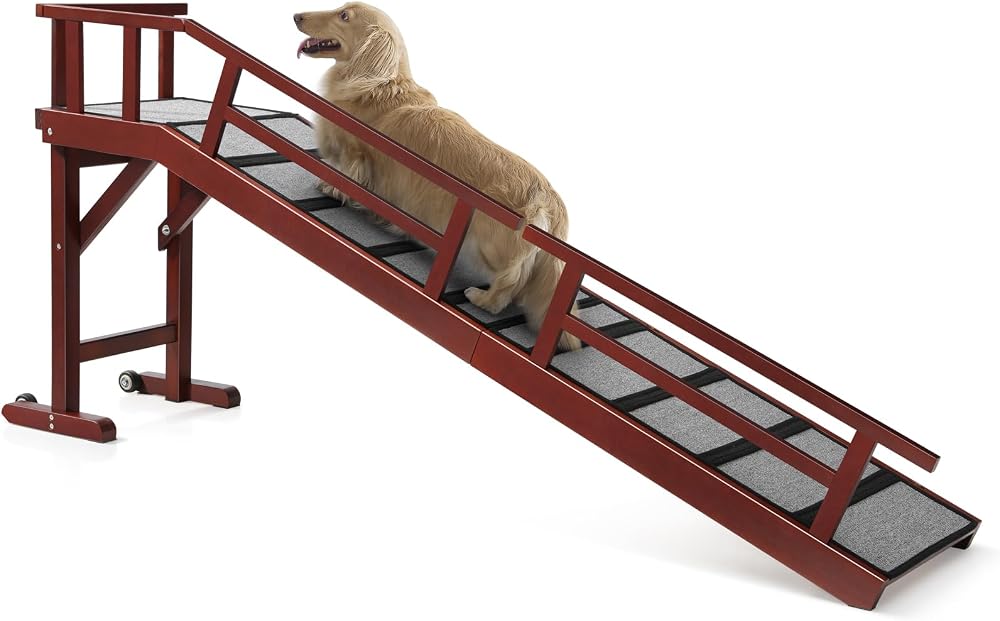
Updated September 30, 2026 · Written by Olivia Isabella, PetBuyLab editorial team
If your dog scrambles to get onto the bed, lands hard coming off it, or simply cannot make the jump anymore, a bed ramp fixes it. Beds sit high enough that the repeated jump up and drop down wears on the joints and spine, especially for senior, small, long backed, and large dogs. This guide covers the six best dog ramps for beds in 2026, matched to your bed height and your dog, plus how to pick the right slope and get your dog using it.
Disclosure: PetBuyLab is reader supported. When you buy through links on this page we may earn a small affiliate commission, at no extra cost to you. This never changes which products we recommend.
For most beds, a solid wooden ramp with a gentle slope and a washable cover is the best all around pick. For a high bed, choose an adjustable ramp or a longer one so the angle stays easy. For a small dog, a low, compact ramp with side rails is safest, and if you want one ramp for both the bed and the couch, pick a height adjustable model.
- Jumping off a bed is a hard landing; a ramp removes that impact and protects joints and the spine.
- Match the length to your bed height. The taller the bed, the longer or more adjustable the ramp needs to be for a gentle slope.
- Side rails, a non slip surface, and a stable base matter most for older, nervous, or small dogs.
- Wood ramps are sturdier and often adjustable; foam ramps are softer and lighter but suit lighter dogs.
- An adjustable ramp can serve the bed and the couch, which saves buying two.
Why a bed ramp helps your dog
A bed is one of the most frequent jumps your dog makes, often several times a day. Coming down is the harder part: landing from bed height sends a jolt through the front legs, shoulders, and spine every single time. For senior dogs with stiff joints, small dogs for whom the drop is huge relative to their size, long backed breeds prone to disc problems, and heavy dogs whose weight multiplies the impact, that adds up fast. A ramp turns the jump into a gentle, four-on-the-floor walk, which protects the joints and can prevent injuries before they start.
The 6 best dog ramps for beds
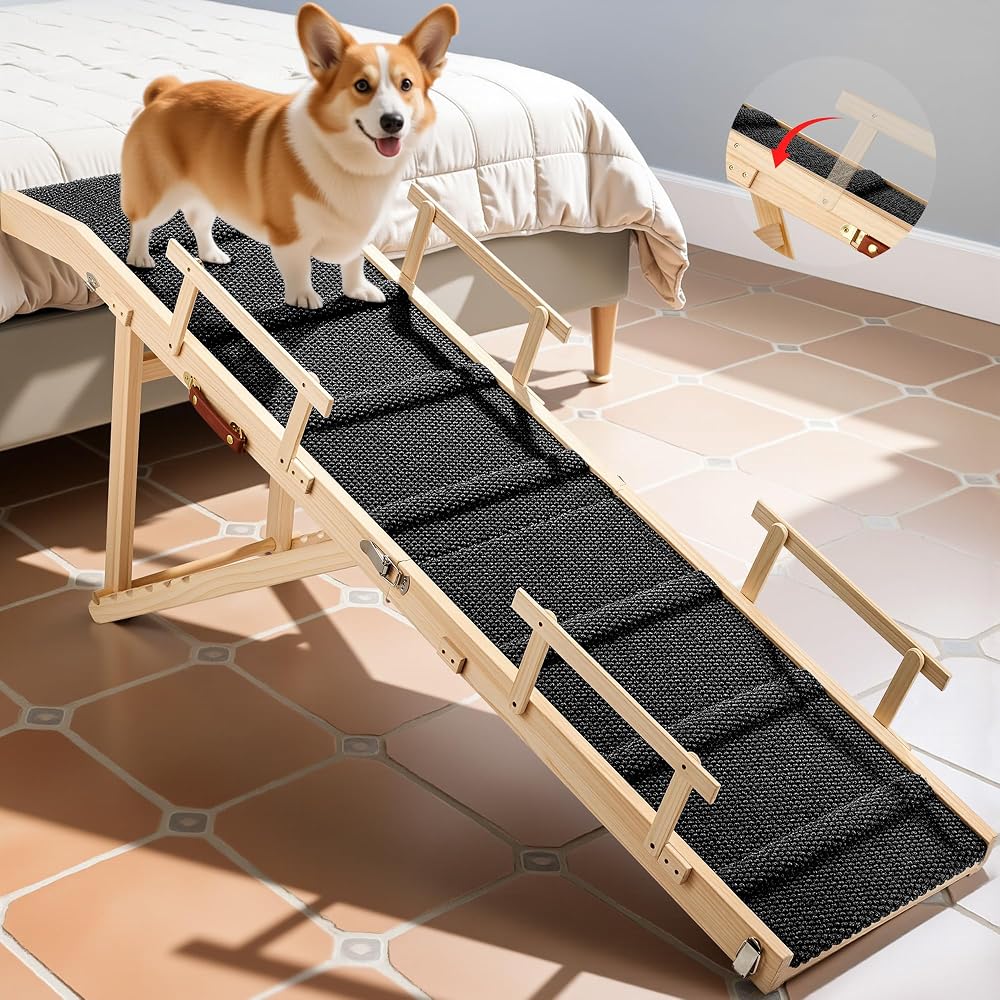
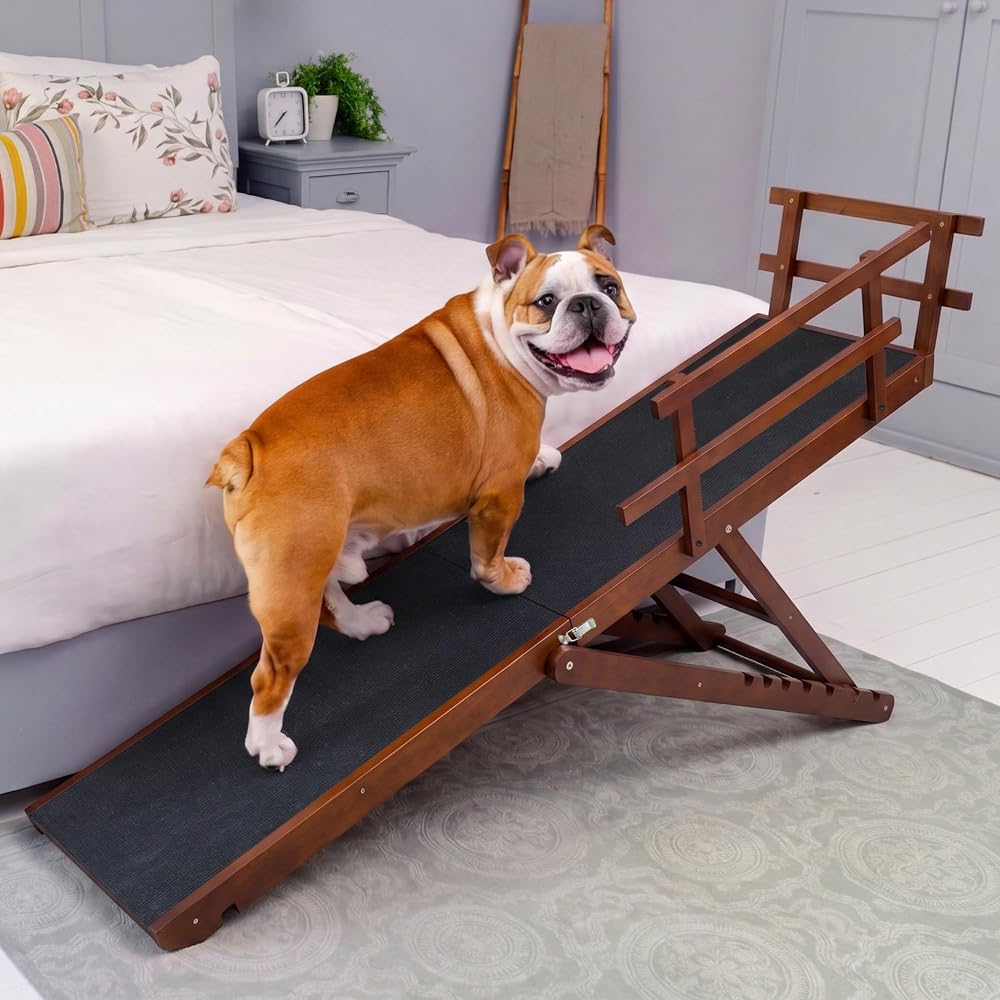
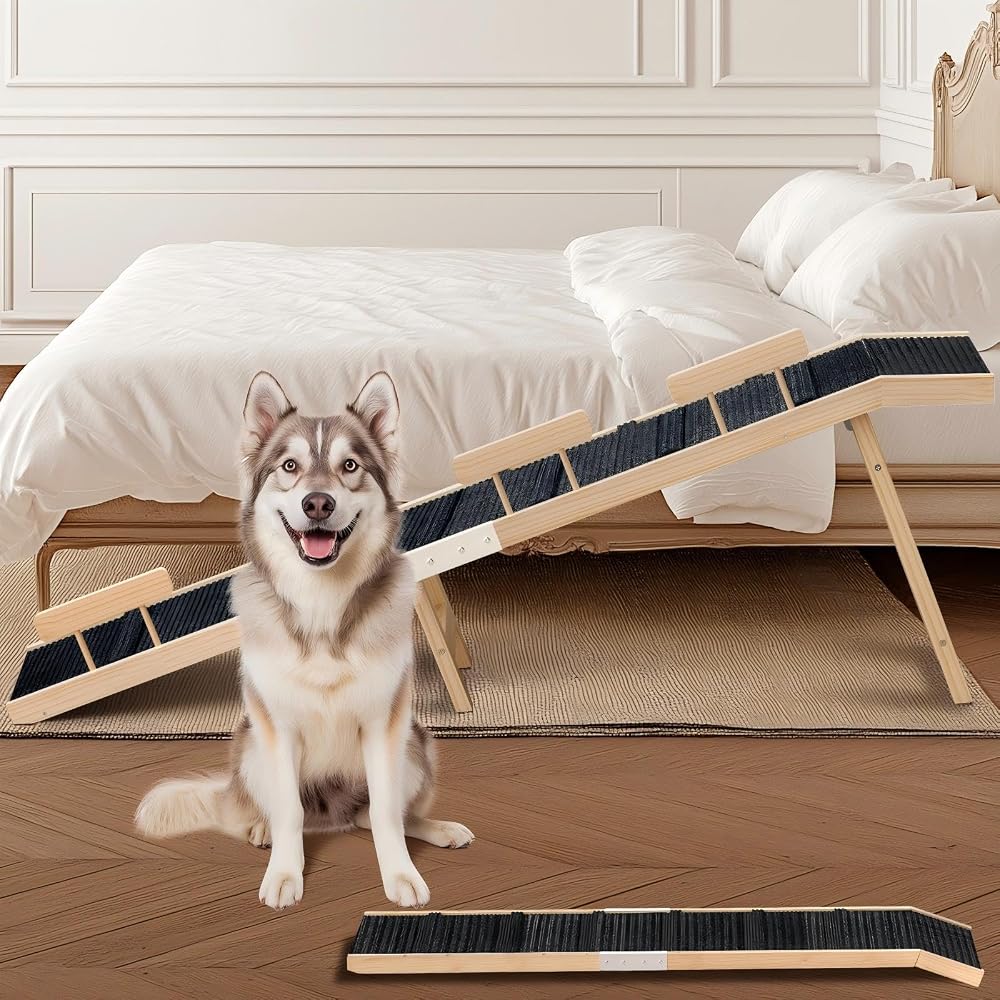
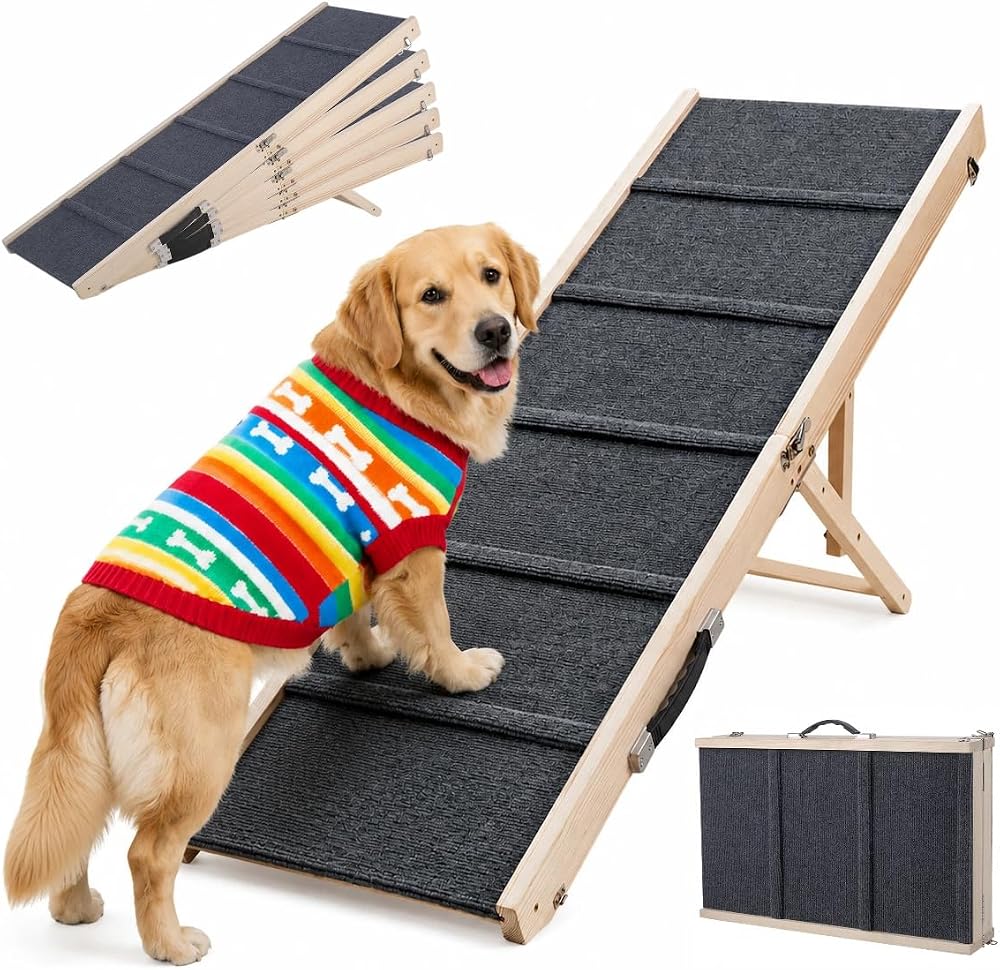
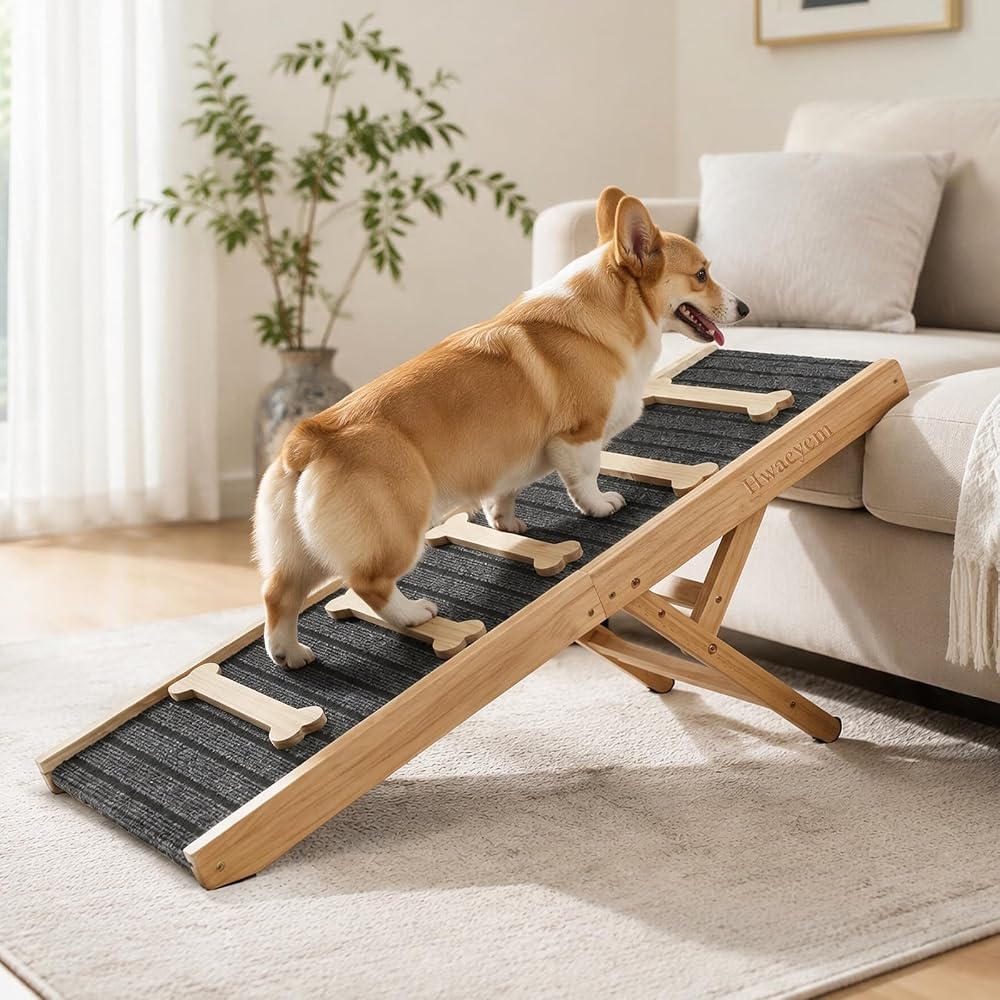
We picked these for what actually matters on a bed ramp: a gentle enough slope for the height, real non slip traction, side rails for security, and a build that stays stable under your dog. Here is the lineup, matched to different beds and dogs.

How the bed ramps compare
| Ramp | Best for | Rails | Why it stands out |
|---|---|---|---|
| Wooden Gentle Slope | Most beds | Yes | Sturdy, 20° slope, washable cover |
| 64″ with Side Rails | Nervous or older dogs | Yes | Long, foldable, secure walls |
| PRIORPET Adjustable | High beds | Yes | Adjustable height, premium birchwood |
| Easyego 74″ Foldable | Very high beds | Yes | Extra length keeps the angle gentle |
| 51″ Compact | Small dogs, lower beds | Yes | Light, folds, easy to place |
| Adjustable Bed & Couch | Two pieces of furniture | Yes | Height adjusts for bed and couch |
Dog ramps for high beds
High beds, often 30 inches or more with a thick mattress and a frame, are where a short ramp fails. If the ramp is too short for the height, the slope turns steep, and a steep ramp is nearly as hard on the joints as the jump. The fix is length or adjustability. For a tall bed, choose the adjustable birchwood ramp or the 74 inch foldable model so the climb stays gentle. Measure from the floor to the top of your mattress before you buy.
Bed ramps for small dogs
Small dogs need a ramp more than owners realize. A jump off a normal bed can be the equivalent of a person leaping off a kitchen counter, and it is repeated daily. For a small dog, pick a low, compact ramp with a gentle slope, strong traction, and side rails so tiny paws stay centered. A lighter foldable ramp is also easier to move and store between a small bed and the couch.
Bed ramps for large dogs
Large dogs need width, a high weight rating, and a base that will not flex. A ramp that is too narrow makes a big dog step off the edge, and one rated below their weight can bow in the middle. For Labs, Goldens, Shepherds, and giant breeds, choose a wide wooden ramp with a strong weight rating and side rails. The 74 inch foldable model and the adjustable birchwood ramp both handle bigger dogs well.
One ramp for the bed and the couch
If your dog uses both the bed and the sofa, a height adjustable ramp saves you buying two. Set it tall for the bed and lower it for the couch. This is the most searched combination for a reason: it is the most practical setup for a dog that follows you from room to room. Just confirm the adjustment range covers both heights before you buy.
What to look for in a bed ramp
- Slope for the height. Longer or adjustable equals gentler. Measure your bed height first, then pick a ramp that keeps the climb easy.
- Side rails. Raised edges keep older, nervous, or small dogs centered and stop missteps off the side.
- Traction. A non slip surface, ideally a washable carpet or textured cover, is the single most important safety feature.
- Weight capacity. Choose a rating comfortably above your dog, especially for large breeds.
- Stability. A ramp that wobbles will scare a dog off. Look for a solid frame and rubber feet.
- Folding and storage. Foldable ramps store flat or slide under the bed between uses.
- Washable cover. Removable, machine washable covers keep a bedroom ramp clean and hair free.
Wood vs foam bed ramps
Wood ramps are sturdier, hold more weight, often adjust in height, and look like furniture in a bedroom. Foam ramps are softer, lighter, and gentle on joints, which suits very small or frail dogs, but they carry less weight and can compress over time. For most dogs and most beds, a solid wood ramp with a padded, non slip cover is the better long term choice. Reserve foam for tiny dogs or where a soft landing surface matters most.
DIY dog bed ramp: is it worth it?
Building a bed ramp is a popular project, and free plans are easy to find. The hard part is safety. A homemade ramp needs a reliably non slip surface, a gentle enough angle for the bed height, side rails, and a stable base that will not tip when your dog shifts weight, and all of that is fiddly to get right. A DIY ramp also does not fold for storage. If you enjoy woodworking and will add proper traction and rails, go for it. For most owners, a folding or adjustable ramp is safer, tidier, and easy to live with for the price.
What vets and the AKC say about ramps
Veterinary and canine health sources agree on the principle: reduce high impact movement for dogs that are older, heavier, or dealing with joint problems. The American Kennel Club notes that ramps are generally the safer way for dogs to get up and down when mobility or joints are a concern. Guidance on osteoarthritis in dogs and managing canine osteoarthritis both stress limiting jumping on and off furniture, which is exactly what a bed ramp is for. This is general information, not veterinary advice, so check with your vet about your dog’s weight, age, and any diagnosed conditions.
How to train your dog to use a bed ramp
A new object next to the bed can spook a dog, so build confidence gradually.
- Set the ramp flat on the floor and let your dog sniff and walk across it with no pressure.
- Reward every step with treats until walking the flat ramp is easy and boring.
- Raise it to a low height first, then practice up and down.
- Place it at the bed at its real angle and lure with treats, one step at a time.
- Keep it stable and never push, drag, or lift your dog onto it.
- Practice the descent too, since many dogs fear coming down more than going up.
Common mistakes to avoid
- Buying a ramp too short for the bed height, which makes the slope too steep to help.
- Skipping side rails for an older, nervous, or small dog.
- Choosing a slick surface with no real traction.
- Placing the ramp where it wobbles or slides on a hard floor.
- Rushing training and scaring your dog off the ramp for good.
What you get at each price range
Compact & folding
Lightweight folding and shorter ramps. Fine for smaller dogs and lower heights, with basic traction and lower weight limits.
The sweet spot
Sturdier, wider ramps with better traction, side rails, and higher weight ratings. The best balance for most dogs.
Tall & heavy duty
Long aluminum, telescoping, or solid hardwood adjustable ramps for tall heights, large dogs, and heavy daily use.
Which bed ramp is right for your dog?
Answer these in order and follow the first one that fits your dog.
Frequently asked questions
What is the best dog ramp for a bed?
What size ramp do I need for a high bed?
Is a ramp better than stairs for a bed?
Do dogs really need a bed ramp?
Are bed ramps good for small dogs?
Can one ramp work for both a bed and a couch?
What is the best dog ramp for a high bed?
Should a bed ramp have side rails?
Wood or foam bed ramp, which is better?
Can I build a DIY dog bed ramp?
How do I get my dog to use a bed ramp?
How much do dog bed ramps cost?
The verdict
For most beds and most dogs, the wooden gentle-slope ramp with a washable cover is the sweet spot: sturdy, secure, and easy to keep clean. High bed? Go adjustable or extra long. Small dog? A low, compact ramp with rails. Using the couch too? An adjustable ramp does both. Whatever you choose, match the length to your bed height, add traction, and train slowly, and your dog will climb up and down safely for years.
Keep reading
- Best Orthopedic Dog Beds (senior & arthritic)
- What Size Dog Ramp Do I Need? (with calculator)
- Dog Ramp vs Dog Stairs: which is better?
- Best Dog Ramps for Senior and Arthritic Dogs
- Best Dog Ramps for Dachshunds and Small Dogs
- Best Dog Ramps for Cars and SUVs

Olivia Isabella is PetBuyLab’s dog specialist and a lifelong dog owner with hands-on experience caring for senior and large-breed dogs. She researches, compares and lives with the mobility, comfort and everyday-care products she writes about, so she knows the practical details a spec sheet misses: how a ramp’s length sets the real slope a stiff-hipped dog will attempt, why surface grip decides whether a nervous dog commits, and how the wrong pick ends up unused in the garage. Every recommendation is built from manufacturer specifications, documented owner feedback and reputable veterinary sources, and is organised around a specific dog’s needs, never around commission. Her guides are informational and never a substitute for professional veterinary advice.