
Affiliate disclosure. PetBuyLab may earn a commission when you buy through qualifying links. This does not affect the products we include, the tradeoffs we explain, or the price you pay.
Updated September 2026.
The best dog ramp for a senior dog is the one your dog can use slowly in both directions without slipping, scrambling or jumping off the side. For a tall vehicle the longest, gentlest ramp wins, which is why our top pick is an 87-inch extra-long ramp; for a lower car or a lighter lift, a shorter design may suit better. Your dog’s comfort, the landing and the person setting up the ramp all matter more than the biggest published weight rating. This guide is part of our wider best dog ramps for cars and SUVs pillar, and here we focus on five vehicle ramps available on Amazon plus what to check for an indoor ramp.
We have not physically tested these products or assessed your dog. A ramp makes access easier, but it does not diagnose arthritis or replace pain care. If a dog has new reluctance to jump, limps or suddenly loses coordination, arrange a veterinary assessment before asking them to climb.
Best picks at a glance
| Situation | Starting point | Main limitation |
|---|---|---|
| Tall SUV or truck | 87″ Aluminum Extra-Long Dog Ramp | Needs clear space behind the vehicle; confirm the top lip sits flush |
| Moderate height, broad rubber tread | PetStep Original Folding Ramp | 70 inches may be too short for a high cargo floor |
| Soft removable tread, compact storage | Pet Gear SupertraX Travel Lite Ramp | Folded unit stays thick; inspect the hinges and mat |
| Wet or muddy trips | High-Grip 71″ x 20″ Non-Slip Ramp | Newer listing with fewer reviews; confirm current specs |
| Lower hatchback, light handling | PetSafe Happy Ride Folding Ramp | 62 inches and a narrow deck make it a poor tall-SUV pick |
| Bed or sofa | A dedicated indoor ramp sized for furniture | Vehicle ramps are usually too long and awkward indoors |
What changes when your dog is older
A senior dog might still jump into the car and struggle more coming down. Descent calls for controlled braking, and an uncertain dog may speed up or leap from the upper end. A ramp replaces the single jump with a longer route, but a steep, slippery or moving ramp creates a different problem. Watch the whole trip: approach, first paws on the tread, crossing, the transfer at the top and the return down. Veterinary mobility guidance recommends adapting access and improving traction for dogs with osteoarthritis. Signs such as taking longer to rise, avoiding slippery floors or hesitating at the car can also point to pain that deserves an examination, so treat a sudden change as a health question first and an equipment question second.
Match the ramp to your dog condition
Older dogs slow down for different reasons, and the right ramp shifts with the diagnosis. This is general guidance, not a diagnosis: a sudden change in mobility is a reason to see your veterinarian, not only to buy equipment.
| Condition | What to prioritise | Watch for |
|---|---|---|
| Arthritis or osteoarthritis | The longest, gentlest slope and dependable traction | Rushing or slipping on the way down; ask your vet about pain control |
| Hip or elbow dysplasia | A wide deck and a shallow angle so weight spreads evenly | A steep ramp that loads one side; a diagnosed dog needs a mobility plan |
| A long back (Dachshund, Corgi) or IVDD history | A low, gentle ramp that removes the jump up and down | Twisting or arching on a narrow deck; keep the spine level |
| Recovery from cruciate or spinal surgery | Follow the surgeon restrictions first; a very gentle ramp only once cleared | Using a ramp in place of prescribed rest; get veterinary clearance |
| Vision loss or an unsteady gait | Raised side rails, a wide lane and a helper alongside | Drifting off the edge; introduce slowly with a hand or harness |
Choose the slope before the brand
Prefer not to run the numbers? Our dog ramp size calculator turns your load height into a recommended length and angle.
Measure the vertical rise from level ground to the point where the ramp will rest, then check the deployed working length and the clear ground behind the car. A simple planning calculation is angle = arcsin(rise divided by ramp length). For example, a 28-inch rise and a 70-inch ramp make an angle of about 24 degrees; an 87-inch ramp at the same rise is about 19 degrees. This is geometry, not a veterinary threshold: no single angle is proven comfortable for every arthritic dog.
A common rule of thumb is twice the rise for frail dogs, but at exactly twice the rise the geometry produces a 30-degree angle, which can be too demanding. We recommend measuring and choosing the longest stable ramp your dog can use without rushing or losing footing, within the manufacturer stated vehicle-height limit. If the top cannot sit flush and secure, reject that location even when the calculated angle looks gentle.
| Measured rise | 70-inch ramp | 87-inch ramp |
|---|---|---|
| 20 in | About 17° | About 13° |
| 28 in | About 24° | About 19° |
| 34 in | About 29° | About 23° |
Angles above are approximate, based on straight ramp length and level ground. They are for comparing setups, not medical prescriptions. Measure the true attachment point and follow the manufacturer maximum vehicle height.
Five ramps and when each makes sense
1. 87″ Aluminum Extra-Long Dog Ramp · Best for tall SUVs
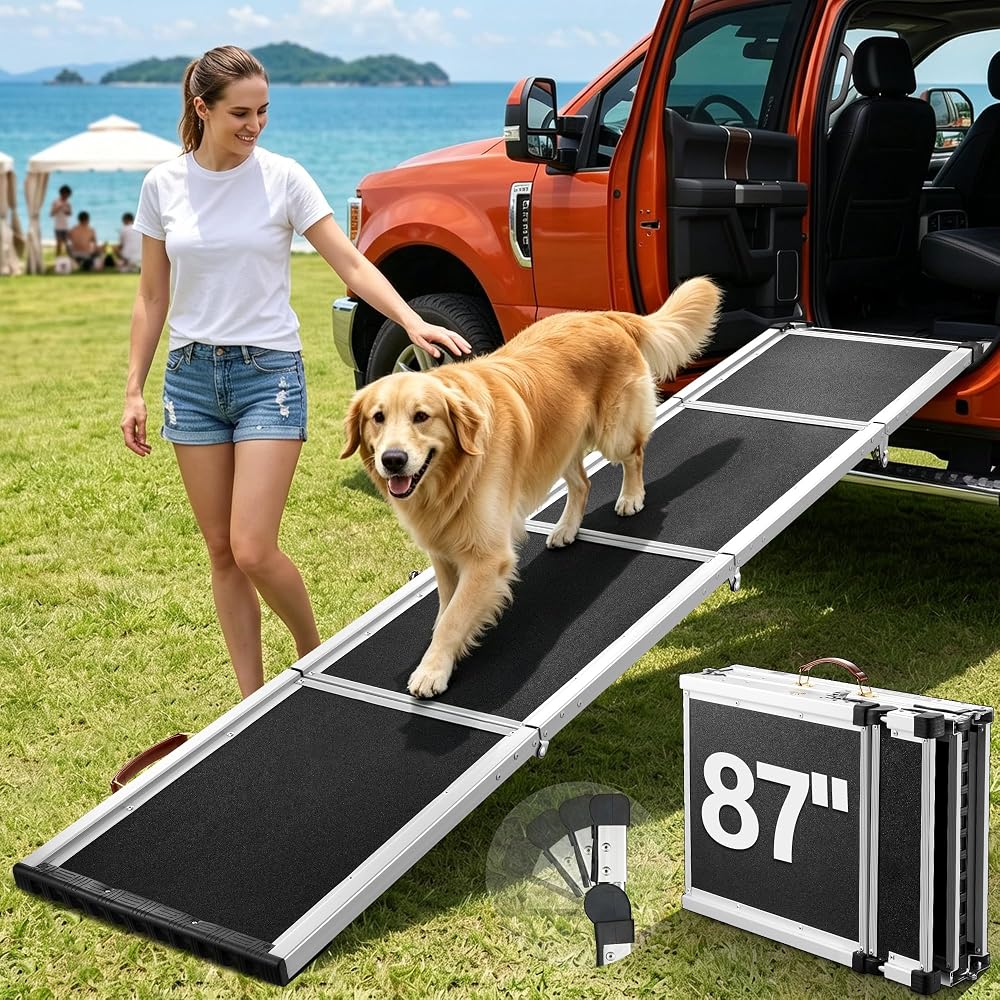
When the cargo floor is high, a senior dog needs length above all, because length is what makes the slope gentle. At about 87 inches this aluminum ramp gives the longest, shallowest approach in this guide, which is exactly what a stiff or arthritic dog needs to walk up and, more importantly, down under control. The aluminum frame stays rigid without being heavy for its size. The tradeoffs are the room it needs to deploy and store, and the need to confirm the top lip sits flush and secure on your vehicle.
2. PetStep Original Folding Ramp · Best rubberized broad tread
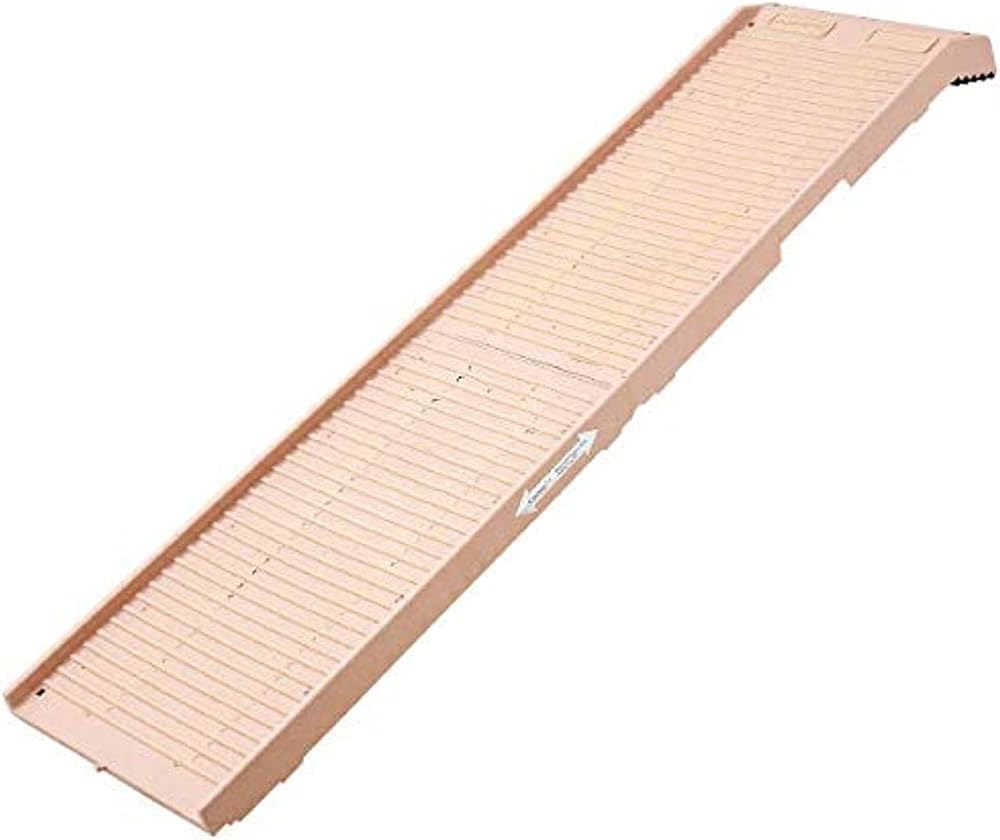
PetStep lists a 70-inch length, 17-inch width and a 500-pound capacity, with rubber feet and a molded upper grip. The firm rubberized tread is easy to clean, gives dependable grip and needs no telescoping rails, which many senior dogs find reassuring underfoot. At a tall SUV, though, 70 inches can still be a demanding slope, so it suits a moderate rise. A high product rating is not proof that it is safer for your individual dog than a lower rated ramp.
3. Pet Gear SupertraX Travel Lite Ramp · Best soft removable tread
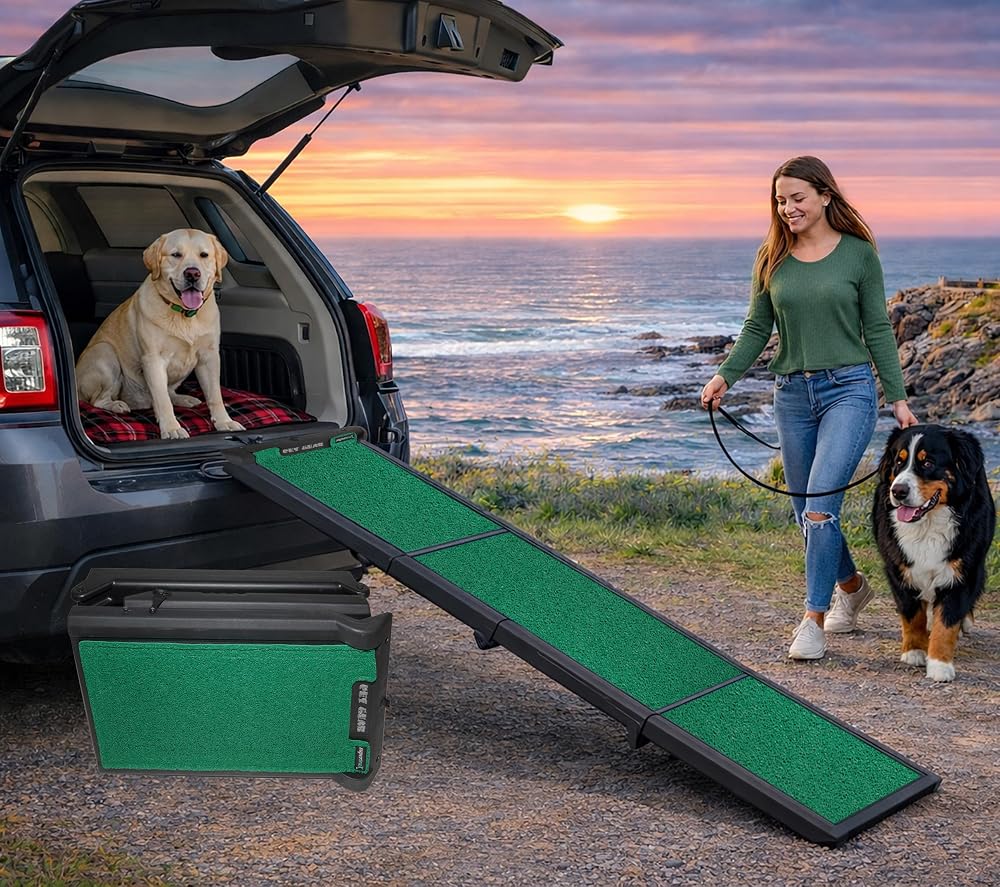
The Pet Gear Travel Lite uses a pressure-responsive SupertraX mat that lifts out for cleaning, plus bottom grippers and a tether to hold the setup in place. The raised sides help define the walking path for a dog that wanders. Inspect the mat attachment and the hinges each time; a folded tri-fold is shorter but still thick and broad in the boot.
4. High-Grip 71″ x 20″ Non-Slip Ramp · Best easy-clean grippy surface
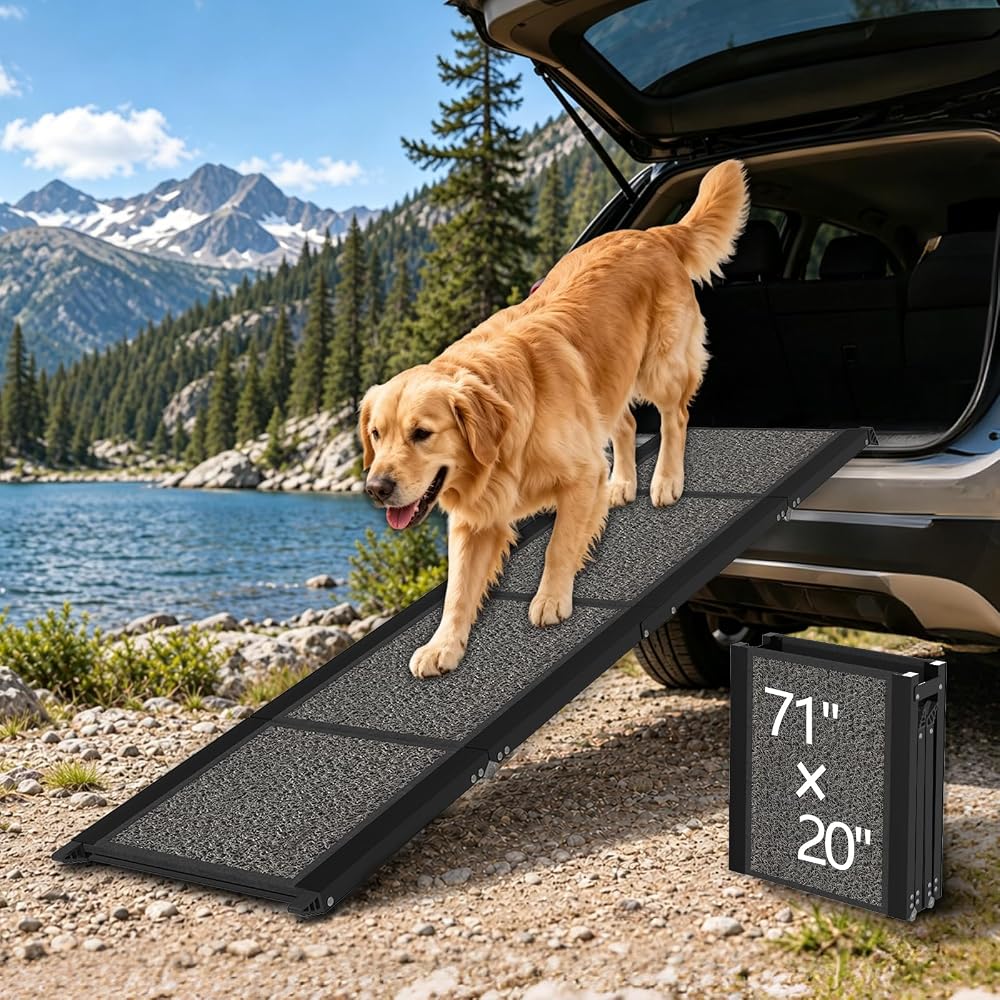
For wet paws and muddy trips, an easy-clean grippy surface beats loose carpet. This 71 by 20-inch ramp pairs an aggressively textured, wipe-clean deck with a wide walking lane, so an unsteady senior dog has room to stay centered on a slick day. It is a newer listing with fewer reviews than the established brands, so confirm the current specifications and inspect it on arrival before trusting it at height.
5. PetSafe Happy Ride Folding Ramp · Best lightweight for low cars
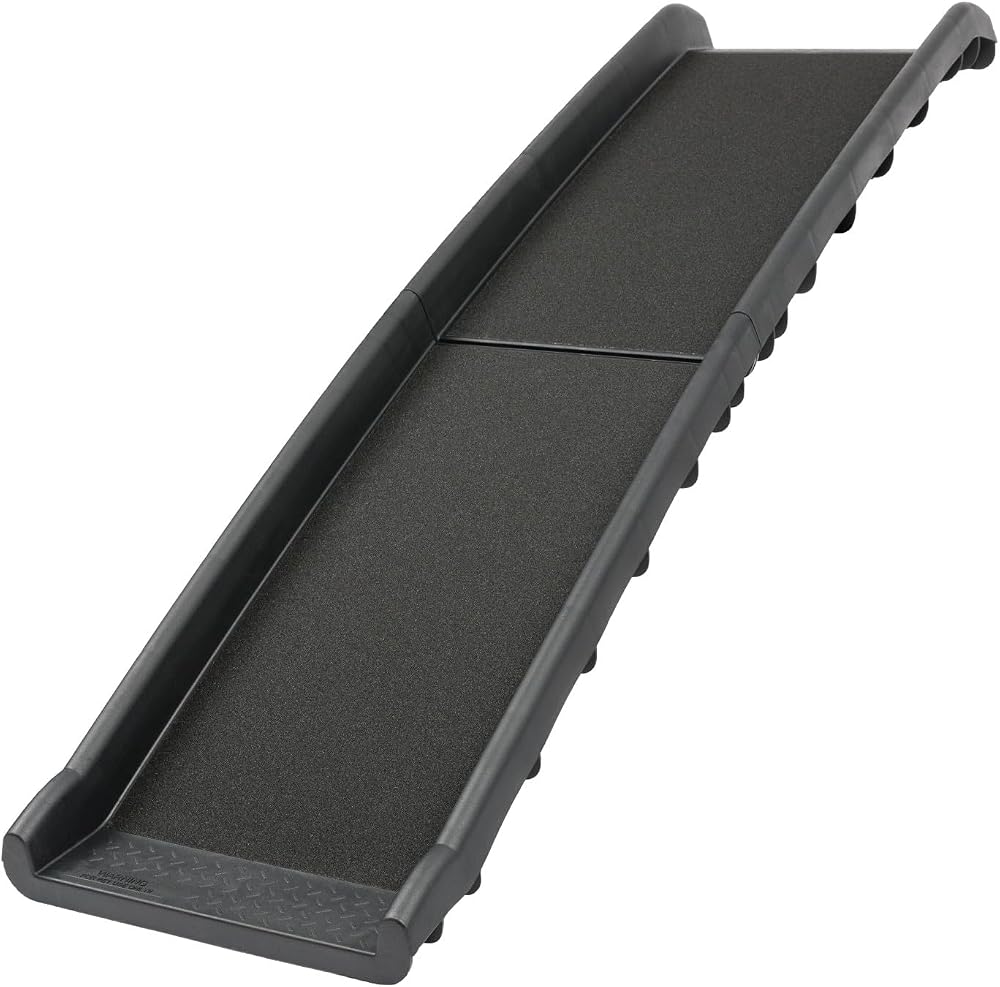
PetSafe lists a 62-inch length, 16-inch width and a 150-pound rating. Its simple fold is quick to handle, which can make consistent use more realistic than a heavier design, and consistent use is what actually protects a senior dog. The short length is the deciding limit: a ramp that is easy to lift but steep at your SUV does not serve an arthritic dog.
What about an indoor bed ramp
An indoor ramp solves a different fit problem. Measure the bed height, the available floor space and a safe landing beside the bed, then look for a low, stable, non-slip structure with side guidance if needed. A 70-inch vehicle ramp can block a bedroom and may have no safe way to attach to a mattress or bed frame. Compare a furniture ramp against your actual room geometry and the manufacturer instructions. Until we have verified a dedicated indoor product set, this guide does not name a best bed ramp.
A five-part safety check before the first use
- Check the dog: if pain, weakness, collapse, paw dragging or a sudden loss of ability is present, contact your veterinarian and do not force a trial.
- Check the landing: park on level ground and make sure the upper end sits on a solid, manufacturer-approved surface with no gap or tilt.
- Check grip: clean the tread, dry wet patches, secure the feet and any required tether, and look for loose mats or worn edges.
- Check space: leave room for the full ramp and for a person to walk alongside without stepping into traffic.
- Check the return trip: let the dog come down slowly and supervised; never assume an easy climb up guarantees a safe way down.
For a dog with a difficult gait, ask the veterinary team whether a properly fitted support harness and hands-on instruction would help. Do not pull a dog up by the collar, and do not use a ramp as a substitute for prescribed activity restrictions after surgery.
How to introduce a senior dog to a ramp
Begin on level ground, away from the vehicle. Let the dog investigate the stationary ramp and reward a look, then a step, then an unhurried crossing. Put a secure, non-slip surface at each end so the transition is predictable. Once your dog can walk across without hesitation, raise one end only a little and practice both directions. Keep sessions short and stop before fatigue changes the gait. At the car, install the ramp exactly as instructed and reward a calm ascent and descent while a helper stands beside the dog if needed. If your dog freezes, slides, scrambles, jumps off the side or looks worse afterward, lower the difficulty and speak with your veterinary team.
When a ramp may not be the right next purchase
If a dog cannot stand or walk steadily on level ground, a ramp may not be usable yet. An unstable upper contact point, too little room to deploy, a slope the dog cannot handle or a painful transfer at the top all defeat the purpose. Ask the veterinarian about pain control, rehabilitation and assistance options, and consider a lower vehicle entry or a different transport plan. A ramp is one adaptation inside a broader mobility plan, alongside traction on ordinary floors and appropriate clinical care.
Frequently asked questions
Are ramps better than stairs for arthritic dogs?
A shallow ramp can avoid repeated step-ups, but there is no universal winner. Some dogs prefer broad steps, while others need a continuous surface. Balance, joint comfort, tread grip and the direction of travel all decide. Try the option your dog can use calmly and discuss any new limitation with your veterinarian.
How long should a car ramp be for a senior dog?
Measure the rise and compare the angle and attachment of real ramps. At a 28-inch rise, 70 inches is about 24 degrees while 87 inches is about 19 degrees. Neither number guarantees comfort. Watch your dog footing both up and down, and follow the manufacturer vehicle-height guidance.
Can a ramp help a dog with hip dysplasia?
It can reduce the need to jump into a vehicle, but it cannot treat hip dysplasia, and it may still be too steep or painful for a particular dog. Ask the veterinary team for a mobility plan if your dog has diagnosed disease, new lameness or difficulty rising.
What surface is best for an old dog?
Choose a tread the dog can grip with dry and slightly damp paws, that stays fixed to the deck and does not hurt sensitive feet. Rubberized, molded and removable soft mats all have tradeoffs. A grippy tread does not stop the whole ramp from sliding, so inspect the feet and the upper contact separately.
Can I use the same ramp for a bed and a car?
Only if the manufacturer supports both uses and you can secure the top, keep a manageable incline and provide clear floor space in each location. Many car ramps are awkward beside a bed, so check the fit before assuming dual use.
At what age should a dog start using a ramp?
There is no fixed age. Start when you first notice hesitation, a harder time jumping or a diagnosis such as arthritis, and consider it early for large or long-backed breeds whose joints benefit from avoiding the impact of jumping. Prevention is easier than recovery.
Can a ramp replace surgery or medication for my dog?
No. A ramp reduces the strain of jumping, but it does not treat arthritis, dysplasia or a spinal problem. Use it alongside the pain control, weight management and rehabilitation your veterinarian recommends, not instead of them.
How do I stop my senior dog slipping on the ramp?
Keep the tread clean and dry, choose a grippy surface your dog will actually use, and put a non-slip mat at the top and bottom so the transitions are predictable. Rubber feet and a secure top lip stop the whole ramp from sliding, which matters as much as the tread.
The PetBuyLab verdict
Start with your dog and the measured height. For a tall SUV, the 87-inch extra-long ramp gives the gentlest slope here. For a moderate rise where a firm rubberized tread matters, compare the PetStep Original Folding Ramp. The Pet Gear SupertraX Travel Lite Ramp suits a dog that prefers a soft removable mat, the High-Grip 71″ x 20″ Non-Slip Ramp favors wet-weather cleaning, and the lightweight PetSafe Happy Ride Folding Ramp belongs at lower access points. No ramp here was physically tested by PetBuyLab. Do not buy from the ranking alone: verify the exact model, the current specifications, the top-edge fit and your dog’s controlled descent. For the full range of vehicle ramps, see our best dog ramps for cars and SUVs guide.
Research sources and product specifications
- Canine Arthritis Resources and Education, Home modifications for dogs diagnosed with OA
- American Kennel Club, How to make your home more accessible for your senior dog
- PetStep, Folding Pet Ramp specifications
- Pet Gear, SupertraX Travel Lite specifications
- PetSafe, Happy Ride Folding Dog Ramp specifications

Olivia Isabella is PetBuyLab’s dog specialist and a lifelong dog owner with hands-on experience caring for senior and large-breed dogs. She researches, compares and lives with the mobility, comfort and everyday-care products she writes about, so she knows the practical details a spec sheet misses: how a ramp’s length sets the real slope a stiff-hipped dog will attempt, why surface grip decides whether a nervous dog commits, and how the wrong pick ends up unused in the garage. Every recommendation is built from manufacturer specifications, documented owner feedback and reputable veterinary sources, and is organised around a specific dog’s needs, never around commission. Her guides are informational and never a substitute for professional veterinary advice.