


Affiliate disclosure. PetBuyLab may earn a commission when you buy through qualifying links. This does not affect the products we include, the tradeoffs we explain, or the price you pay.
Updated September 2026.
The best dog ramp for a car or SUV is not simply the model with the highest weight limit. It must be long enough for your loading height, wide and stable enough for your dog, grippy in both directions, and practical enough that you will actually use it. For most families the Extra-Wide 74″ x 20″ Dog Car Ramp is the strongest all round starting point. For tall SUVs, trucks or dogs that need a gentler, adjustable slope, the PetSafe Happy Ride Compact Telescoping Ramp is the more adaptable choice.
This guide compares ten options available on Amazon by their published design, dimensions, portability, traction, stability features and likely use case. PetBuyLab did not physically test these ramps. Specifications and availability can change, so confirm the current listing and measure your vehicle before buying.
- A car or SUV ramp lets your dog load and unload without the jarring jump that wears on hips, elbows, and the spine.
- Length matters most: aim for a gentle slope, which usually means a longer ramp for taller vehicles.
- Look for a non slip surface, a weight rating above your dog, side rails, and a stable base that does not wobble.
- Folding ramps are easiest to store and travel with; telescoping ramps pack shorter but can feel less rigid.
- Introduce it slowly with treats, flat on the ground first, before ever using it at the car.
Our top picks at a glance
How we selected these products
We began with the decision factors that matter in real use: working length, incline at common vehicle heights, walking width, traction, resistance to sliding, weight capacity, product weight, storage shape and top edge security. We then reviewed manufacturer information, current retailer listings, independent editorial comparisons and recurring owner concerns. Products were assigned to the use case where their design makes the most sense rather than forced into a single universal ranking.
This is research based editorial selection, not hands on testing. We do not claim that a dog walked on a product, that a ramp was load tested by PetBuyLab, or that a veterinarian approved our list. Read our editorial and corrections policy for how we choose products, handle accuracy and disclose affiliate relationships.
How to choose the right ramp before reading the reviews
Start with loading height and usable length
Measure vertically from the ground to the surface where the upper edge of the ramp will rest, then check the working length rather than the folded length. A longer ramp spreads the same rise over more distance and usually produces a gentler approach. This matters most for senior dogs, dogs with arthritis, short legged breeds and dogs that lack confidence on inclines.
Treat traction and stability as separate questions
Traction keeps paws from sliding on the walking surface. Stability keeps the whole ramp from rocking, bowing or moving away from the vehicle. Rubber feet, a secure upper lip and a tether can matter as much as the tread. Press the unloaded ramp at the lower, middle and upper sections before letting your dog on.
Check width and edge guidance
Large dogs and dogs with an unsteady gait need more usable width than a small, coordinated dog. Side rails help a dog read the path but do not fix a narrow deck. Measure the walking surface, not the maximum exterior width.
Respect the weight rating but look beyond it
The published capacity is a filter, not a full safety score. A ramp can hold the weight and still feel springy or narrow. Choose meaningful capacity above your dog weight, follow the setup instructions, and retire any ramp that is cracked, distorted or missing non slip parts.
What length ramp for your vehicle
Prefer not to do the math? Our dog ramp size calculator turns your load height into a recommended length and angle in one step.
Match the ramp to your vehicle first. Measure from the ground to the boot floor or tailgate, aim for roughly three times that height, and keep the incline shallow. These ranges are planning examples, not a substitute for measuring your own vehicle.
| Vehicle or access point | Typical loading height | Ramp direction | What to avoid |
|---|---|---|---|
| Sedan side or rear door | 16 to 24 in | A 60 to 66 inch ramp, securely positioned | A wide ramp that cannot sit flat at the opening |
| Crossover or compact SUV | 24 to 28 in | Around 66 to 72 inches, then test the real angle | Choosing by vehicle class without measuring |
| Midsize or full-size SUV | 28 to 34 in | 72 inches or an adjustable telescoping ramp | Short bi fold ramps that create a sharp climb |
| Pickup tailgate or lifted SUV | 32 to 40 in or more | The longest compatible ramp, up to 87 inches | A ramp that leaves a gap or unstable lip |
How the 10 ramps compare
| Ramp | Length | Width | Rating | Typical price |
|---|---|---|---|---|
| Extra-Wide 74″ x 20″ Dog Car Ramp | 74″ | 20″ | 4.5 stars | ~$110 |
| PetSafe Happy Ride Compact Telescoping Ramp | 28 to 70″ | 16″ | 4.3 stars | ~$160 |
| 87″ Aluminum Extra-Long Ramp | 87″ | 17″ | 4.9 stars | ~$180 |
| Pet Gear Tri-Fold 71″ Ramp with SupertraX | 71″ | ~16″ | 4.2 stars | ~$130 |
| PetSafe Happy Ride Folding Ramp | 62″ | 16″ | 4.1 stars | ~$60 |
| Extra-Wide 74.8″ x 20″ Folding Ramp | 74.8″ | 20″ | 4.8 stars | ~$130 |
| PawStep Portable Folding Ramp | ~71″ | ~17″ | 4.4 stars | ~$80 |
| High-Grip 71″ x 20″ Non-Slip Ramp | 71″ | 20″ | New | ~$110 |
| Compact 63″ x 17″ Folding Ramp | 63″ | 17″ | 4.5 stars | ~$100 |
| Dog Stairs with Guardrail | Steps | n/a | 4.5 stars | ~$58 |
The 10 best dog ramps for cars and SUVs
1. Extra-Wide 74″ x 20″ Dog Car Ramp · Best overall
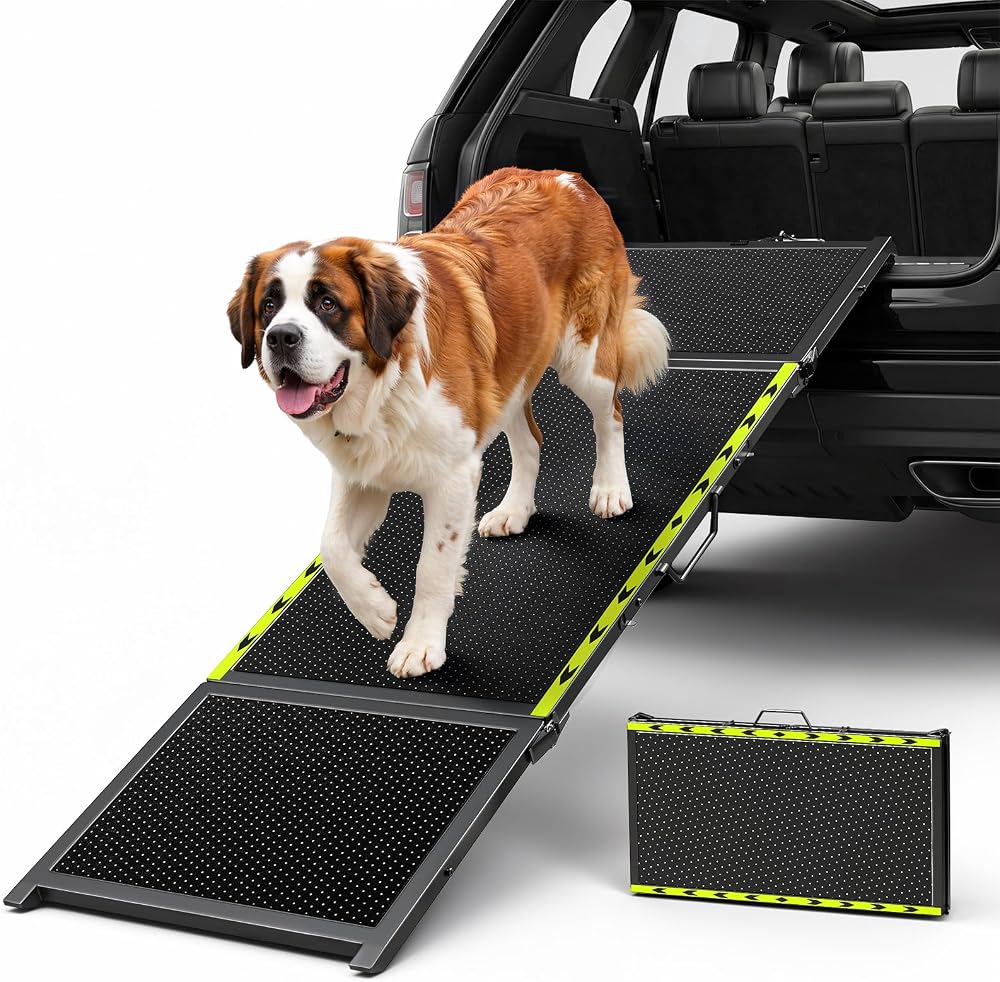
This extra-wide folding ramp is the most balanced default for most SUV owners. At about 74 inches long and a full 20 inches wide it gives a large dog room to place all four paws, and the long deck keeps the climb gentle into a typical SUV cargo floor. A non-slip surface and a solid folded form make it practical for everyday use. The main compromise is bulk, so measure your boot before buying.
2. PetSafe Happy Ride Compact Telescoping Ramp · Best adjustable
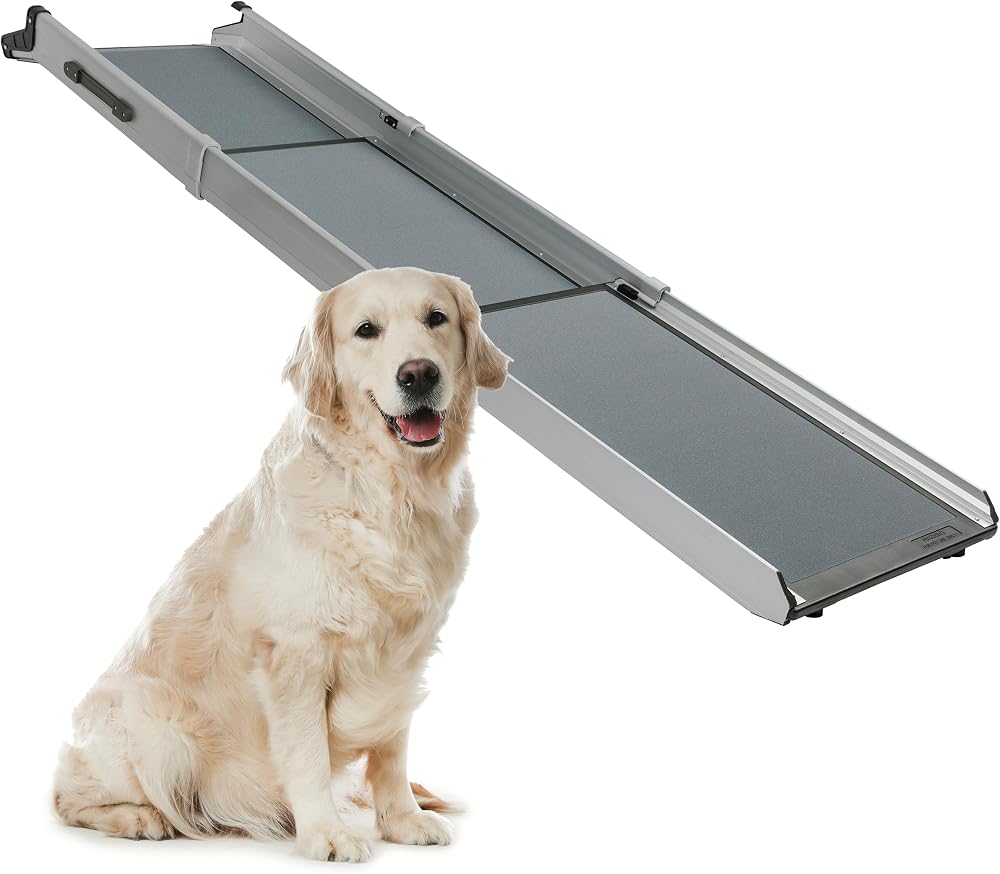
This telescoping ramp slides from about 28 to 70 inches, so one ramp can serve a low sedan today and a tall SUV tomorrow. A published 300 pound capacity plus rubber feet, side rails and a safety latch make it a sensible pick for large or giant breeds and multi vehicle homes. The surface can feel coarse to some dogs, and it is bulkier collapsed than a simple folding ramp. Introduce it flat and confirm the top section rests securely on your vehicle.
3. 87″ Aluminum Extra-Long Ramp · Best for tall trucks
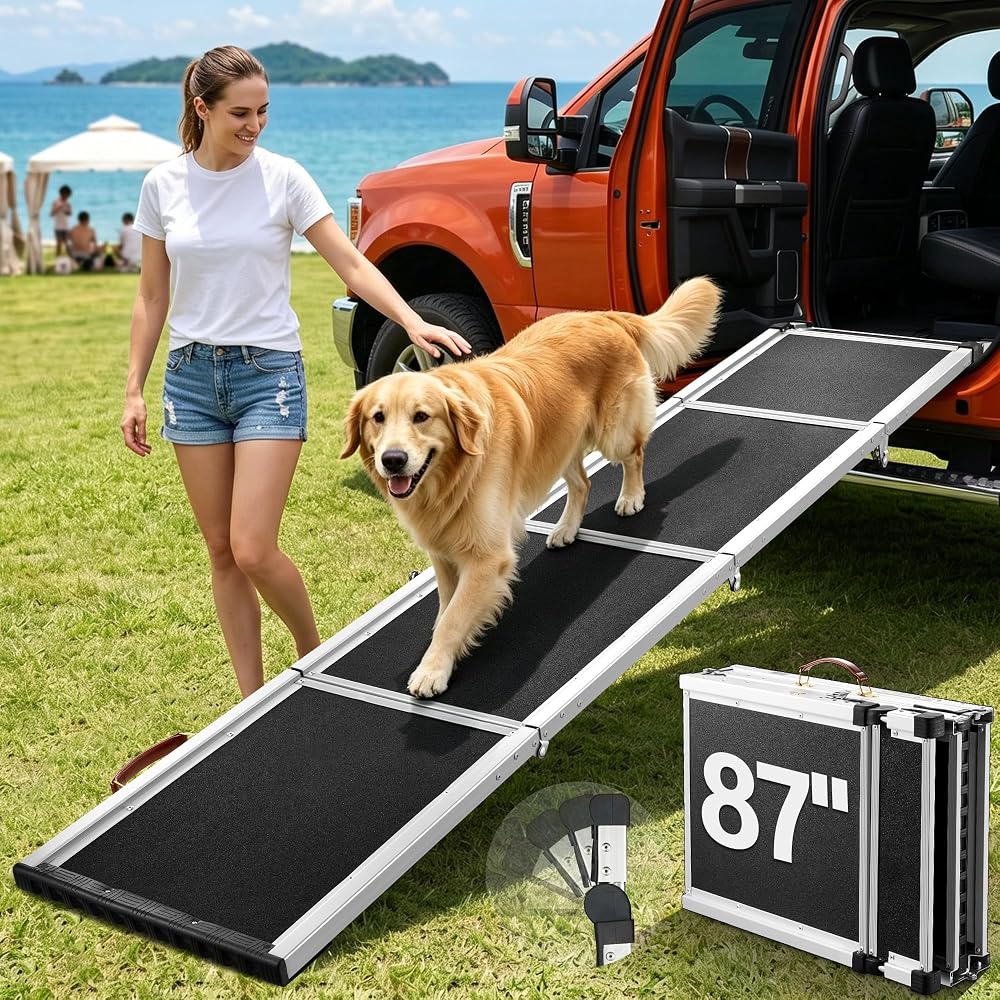
When the load floor is a pickup tailgate or a lifted SUV, only length keeps the angle safe, and at about 87 inches this aluminum ramp offers the longest reach in the guide. The aluminum frame stays rigid without being heavy for its size, and the long run turns a tall climb into a gentle one. It is the least compact option to store, so it suits owners who have the space and genuinely need the reach.
4. Pet Gear Tri-Fold 71″ Ramp with SupertraX · Best tri-fold
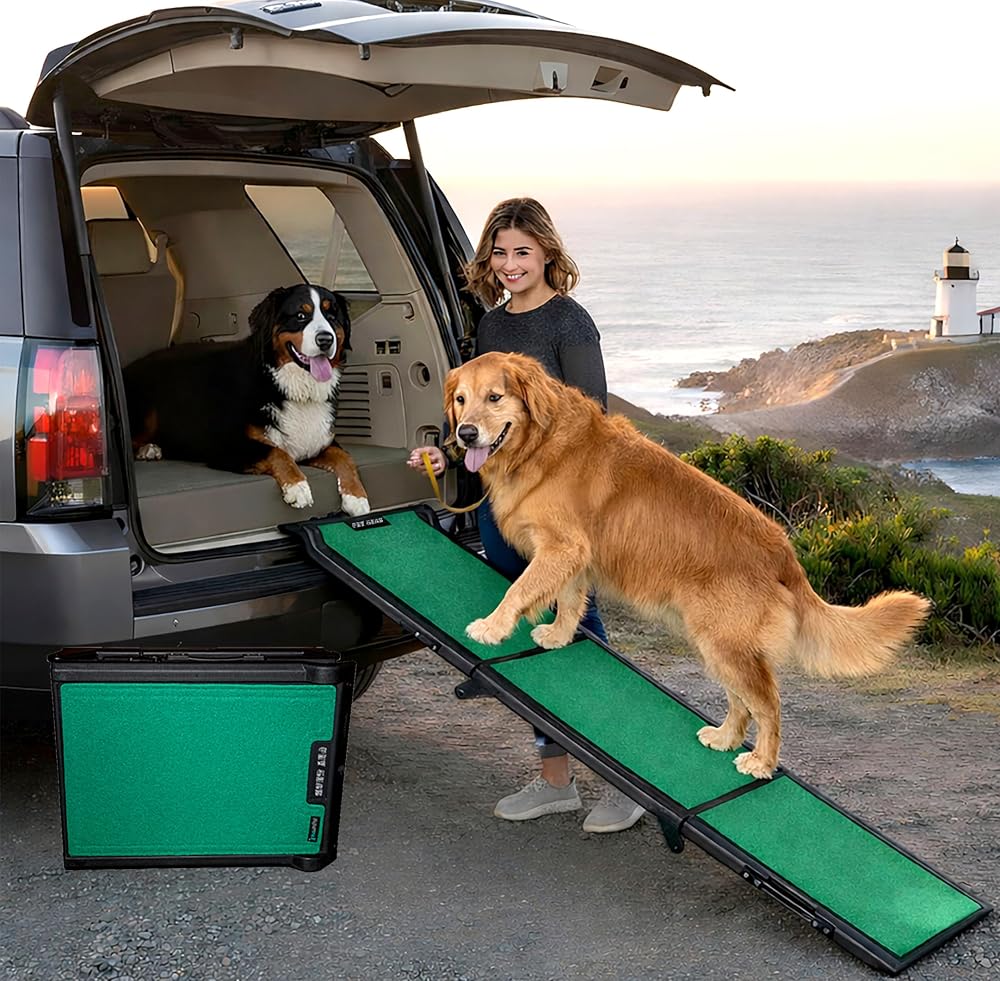
This tri fold shortens the stored length by folding into three panels instead of telescoping, and the SupertraX surface is designed to grip under paw pressure. The full 71 inch deck suits SUVs, while three panels fit across a cargo area more easily than one long ramp. It remains thick and broad folded, and the hinges are worth inspecting for play before each trip.
5. PetSafe Happy Ride Folding Ramp · Best lightweight
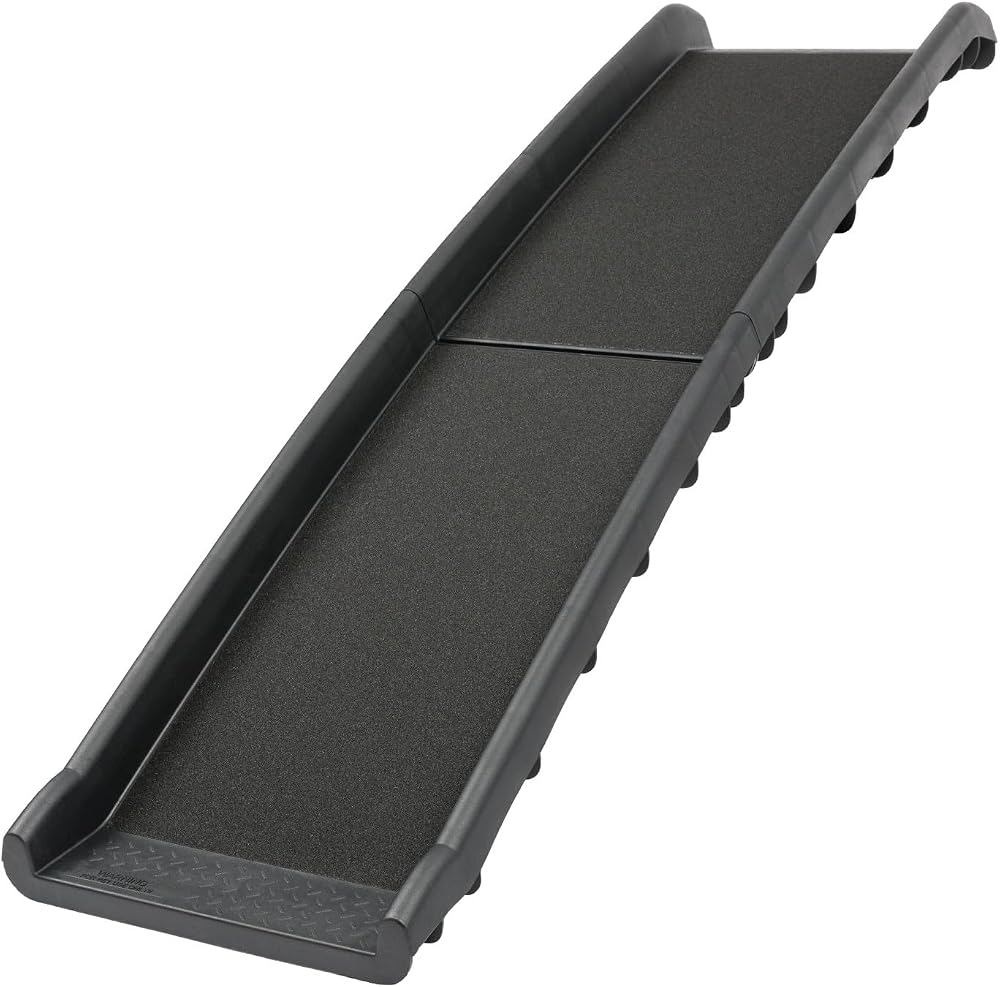
At about 10 pounds and a simple bi fold, this is the easiest ramp here to lift, carry and deploy, which matters if a heavier ramp would end up unused. Its roughly 62 inch length and 150 pound capacity make it a lower vehicle tool that is excellent for sedans, hatchbacks and lower crossovers but too short to stay gentle at a tall SUV or truck. Treat it as a low vehicle or lighter dog option rather than a universal car ramp.
6. Extra-Wide 74.8″ x 20″ Folding Ramp · Best extra-wide
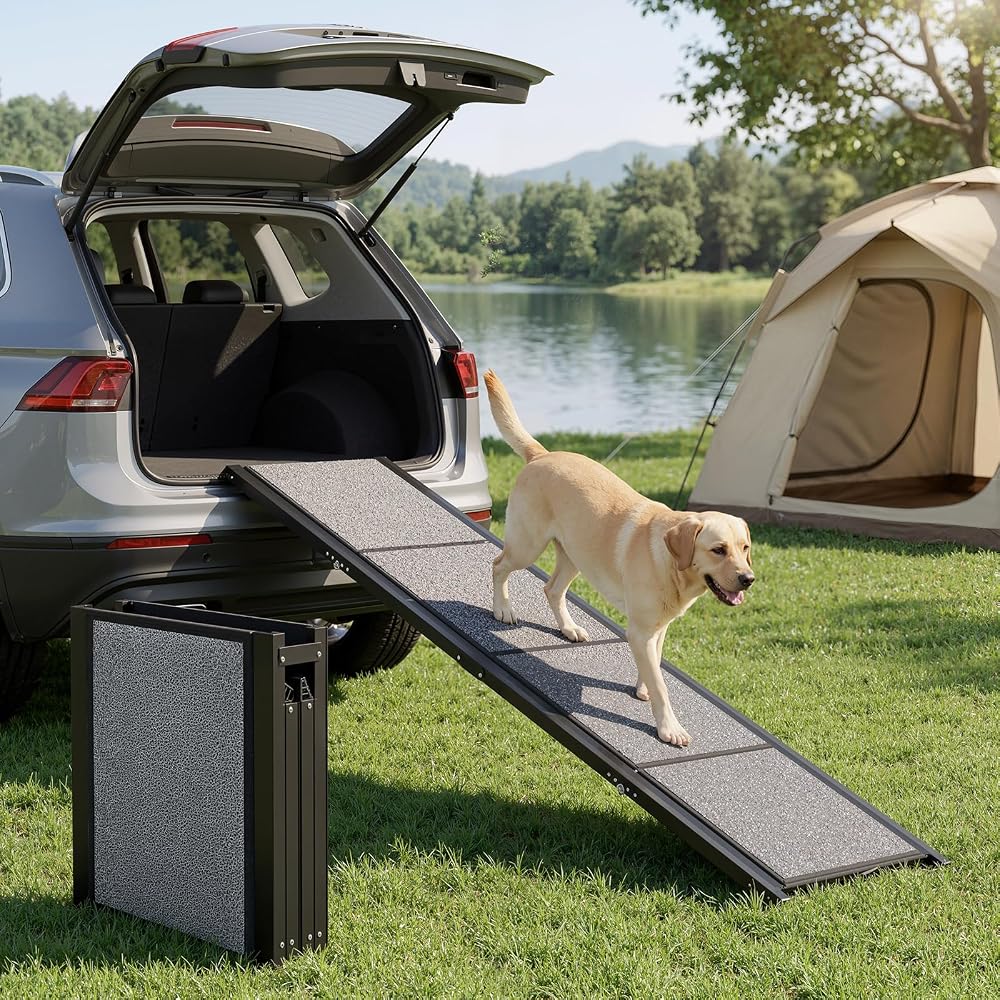
This ramp pairs a long 74.8 inch deck with a full 20 inch width and carries one of the strongest owner ratings in the category. The extra width gives a big or unsteady dog room to correct a misplaced paw, and the length keeps the incline forgiving at SUV height. Like any 20 inch wide ramp it needs real cargo room, so check that it fits alongside your usual luggage.
7. PawStep Portable Folding Ramp · Best budget
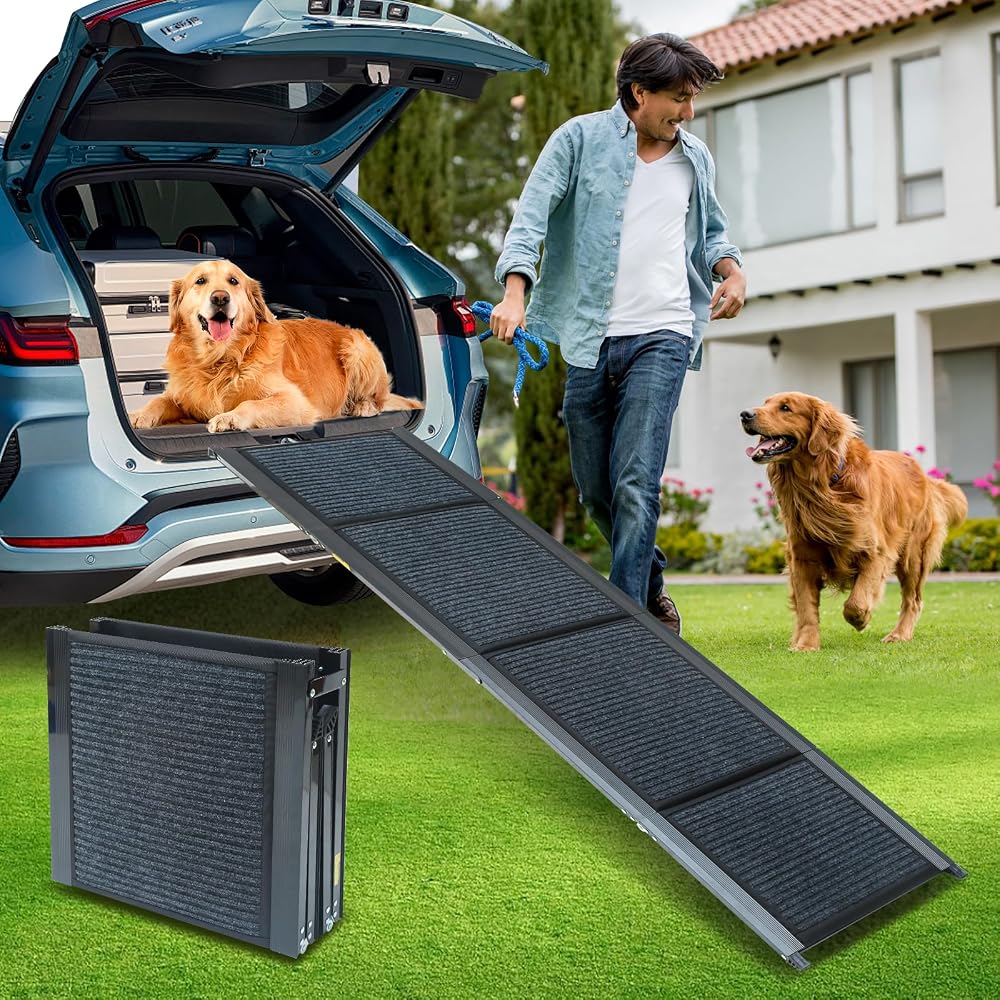
The PawStep folding ramp covers the essentials, a non slip surface and a fold flat design, at a lower price than the premium names. It is a reasonable entry point for lower vehicles and confident dogs when the alternative is lifting a dog that resists being carried. Budget ramps usually compromise on length and width, so judge it against your actual vehicle height rather than the appealing price.
8. High-Grip 71″ x 20″ Non-Slip Ramp · Best non-slip surface
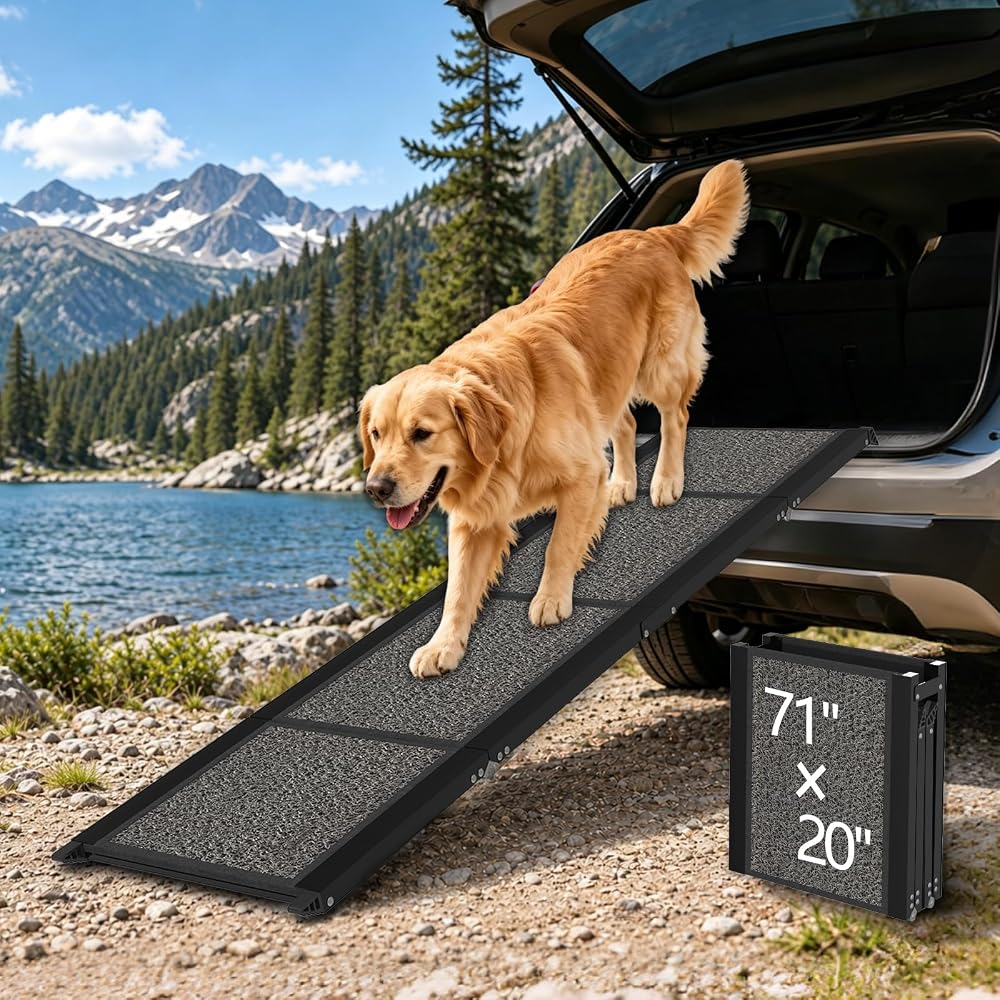
For owners who deal with wet paws and muddy trips, this 71 by 20 inch ramp leads with an aggressively textured, easy clean walking surface and a wide deck. Traction is the standout, and the width helps a dog stay centered on a slick day. It is a newer listing with fewer reviews than the established brands, so confirm the current specifications and inspect it on arrival before trusting it at height.
9. Compact 63″ x 17″ Folding Ramp · Best for low cars
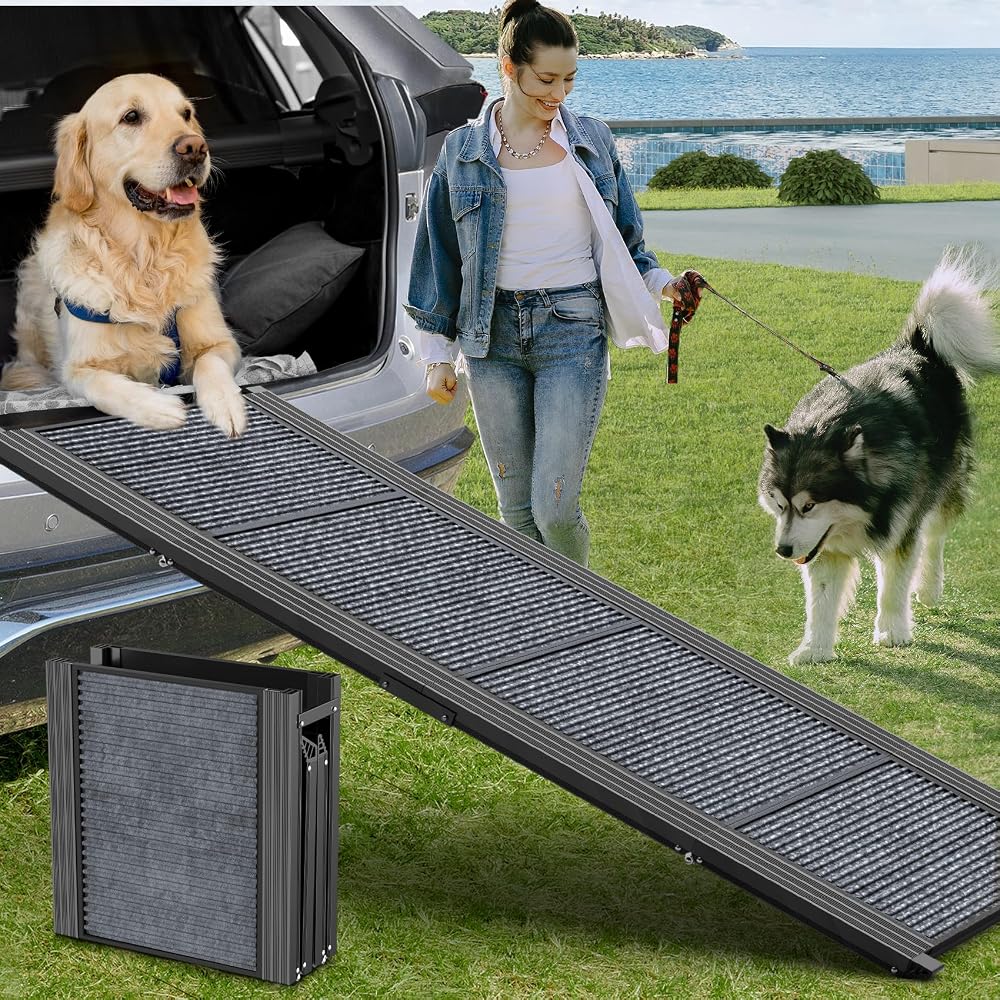
At about 63 inches this shorter folding ramp is easier to handle and store than a full 71 to 74 inch model, and it works well for a low hatchback, wagon or lower crossover where the angle stays reasonable. Do not choose it purely because it fits the boot: its shorter length can become steep at a tall SUV, and a compact deck leaves a big dog less room to recover a paw. Measure first and watch the descent.
10. Dog Stairs with Guardrail · Best step alternative
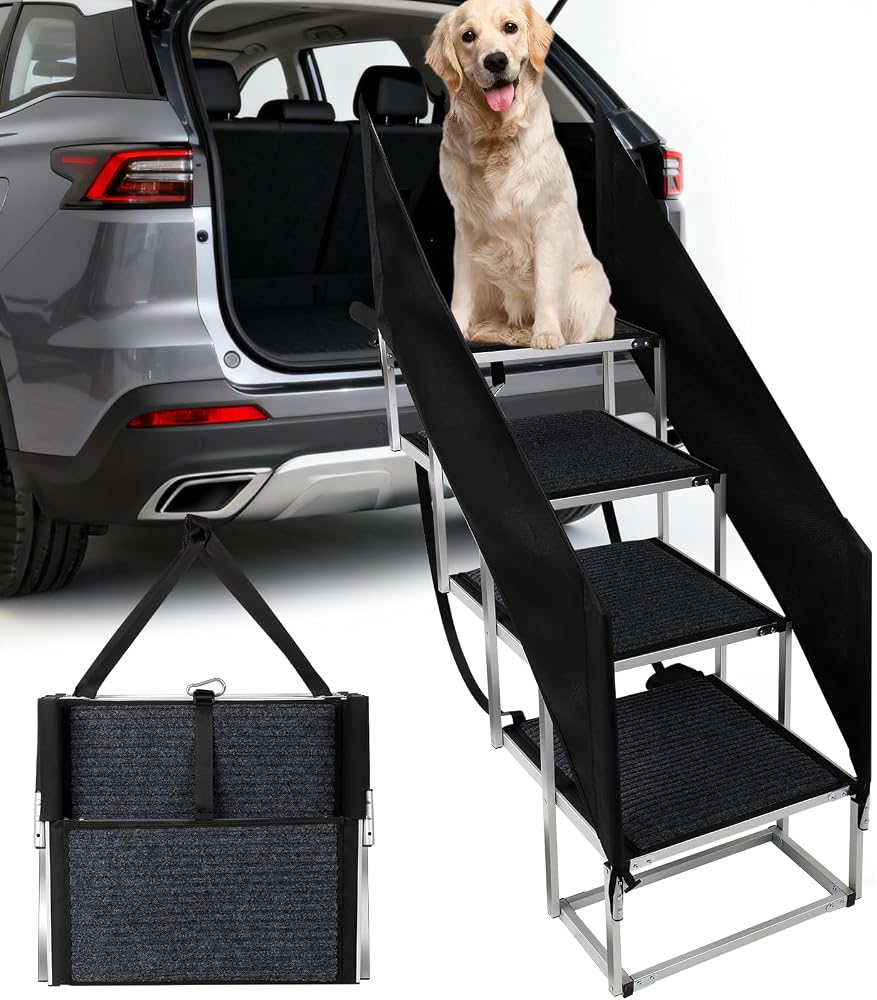
Some dogs simply refuse a long, narrow ramp. For them, a set of broad, guard railed steps can feel more secure because each footfall is a defined platform rather than a continuous incline. Side guardrails add confidence, and the format suits lower vehicles and dogs that dislike ramps. Steps are not ideal for a dog with significant arthritis, where a shallow continuous ramp is usually kinder, so match the format to the dog.
Which ramp fits your dog and vehicle
| Situation | Recommended starting point | Reason |
|---|---|---|
| Senior or arthritic dog in a tall SUV | Adjustable telescoping ramp | The adjustable length can reduce steepness |
| Large dog that drifts sideways | Wide 20 inch full length ramp | More width gives room for controlled paw placement |
| Owner with lifting restrictions | Light bi fold ramp for a low vehicle | Lower weight improves consistent use |
| Very tall truck bed or lifted SUV | Longest compatible ramp, up to 87 inches | A short ramp creates an excessive angle |
| Dog that refuses a narrow ramp | Broad guard railed steps | Defined platforms can feel more secure |
| Small sedan or hatchback | Compact 63 inch folding ramp | A long wide ramp may not fit the opening |
Signs your dog needs a car ramp
A ramp is not only for very old dogs. The sooner you protect a dog’s joints, the better, and a few everyday signs are worth watching for.
- Hesitating, pacing or taking a run up before jumping into the car, then stopping short.
- Failed or scrambling attempts to get in, or needing two tries where one used to do.
- A yelp, stiffness or limping after jumping down, especially the morning after a trip.
- A diagnosis of arthritis, hip or elbow dysplasia, or recovery from cruciate or spinal surgery.
- A long backed breed such as a Dachshund or Corgi, where repeated jumping strains the spine.
- A large or giant breed whose size makes every jump a heavy impact on the joints.
- A growing puppy, where big jumps onto hard surfaces are best avoided.
If any of these sound familiar, a ramp is a small change that can protect mobility for years. When a dog suddenly refuses to jump, treat it as possible pain and check with your veterinarian.
Ramp, stairs, or lifting: which is right?
All three get a dog into a vehicle, but they are not equal for the joints.
- A ramp is the gentlest option because the motion is continuous and impact free. It is usually the best choice for large, heavy, senior or arthritic dogs, and the only one a recovering dog can use without a jarring step.
- Stairs take up less floor space and suit smaller, agile, confident dogs, but each step still asks for a small hop up or down, so they are less kind to sore joints.
- Lifting works only for small dogs and puts real strain on your own back. For a large dog it is a strain injury waiting to happen, for you and for them.
For most car and SUV owners with a medium to large dog, a correctly sized ramp is the safest long term answer.
How to measure a dog ramp for your car
- Park on level ground and measure the vertical height from the ground to the point where the ramp will rest.
- Measure the door or cargo opening and note trim, bumper lips, latches or gaps that could interfere with the upper edge.
- Measure the cargo area as it will be packed for travel, then compare with the ramp folded length, width and thickness.
- Confirm your dog current weight and choose a rated capacity with a sensible margin.
- Check whether the ramp needs a tether or latch point and whether your vehicle provides one.
- If possible, mock up the working length with a tape measure and make sure there is clear ground to deploy it safely.
How to train your dog to use a car ramp
A good ramp can still fail if the first experience is frightening. Train away from traffic and do not begin at full vehicle height.
- Place the ramp flat on a non slip surface and reward your dog for looking at it, approaching it and placing one paw on it.
- Guide the dog across the flat ramp with treats or a target, keeping sessions short and calm. Do not drag the leash or push from behind.
- Raise one end only slightly and practice both directions. Going down often needs more confidence and braking control.
- Increase the height gradually while preventing jumps from the side. Add a helper beside the ramp if your dog is uncertain.
- At the vehicle, secure the ramp exactly as directed, turn off the engine and remove distractions, then reward a slow complete crossing.
- If the dog freezes, scrambles or jumps off, lower the difficulty. Improve traction or reduce the incline before trying again.
Keeping your ramp safe over time
A ramp is only as safe as its grip and its hinges, and both wear with use. A two minute routine keeps it trustworthy.
- Sweep or brush loose grit off the walking surface before each use so paws keep traction.
- When it gets muddy, wash with mild soap and water, or hose down a plastic or rubber ramp, then let it dry fully before folding it away.
- Avoid harsh chemicals and pressure washers that can strip non slip coatings or tread tape.
- Before a trip, press the unloaded ramp at the top, middle and bottom to check for flex, and confirm the feet, hinges and top lip are tight.
- Retire any ramp with a cracked deck, a bent hinge, a missing foot or worn smooth tread. A slick or wobbly ramp is more dangerous than no ramp.
What owners actually report (the honest tradeoffs)
Specs only tell half the story. Across owner reviews, each ramp style has a predictable weak spot worth knowing before you buy.
- Folding and tri-fold ramps: the hinges are the first thing to loosen, and a wide folded slab can dominate a small boot. Check the hinges before every trip.
- Telescoping ramps: the sliding rails collect grit and can stick, and the collapsed unit is long and heavy. Rinse the rails and confirm the latch before loading a dog.
- Carpet or rug surfaces: grippy when dry, but they hold water, hair and odour and take time to dry after a muddy walk. A molded or rubberised deck is easier to keep clean.
- Aluminium ramps: light and rigid, but they can feel cold or noisy underfoot, which makes a nervous dog hesitate. Introduce them slowly.
- Extra-wide ramps: the safest walking lane for a big or unsteady dog, at the cost of real cargo space. Measure your boot before committing to a 20-inch deck.
None of these are dealbreakers; they are the tradeoffs to weigh against your dog and your vehicle.
Safety mistakes to avoid
- Using a short ramp on a high SUV because the weight rating looks sufficient
- Letting the upper edge rest on unstable trim, a loose bumper protector or an open gap
- Assuming a textured surface means the whole ramp cannot slide
- Allowing a dog to jump from the side or top before finishing the descent
- Using a damaged hinge, cracked deck, missing foot or loose tread covering
- Training for the first time in a busy parking area
- Forcing a painful, frightened or neurologically impaired dog to continue
A sudden refusal to jump, climb or enter a vehicle can signal pain or weakness. Contact your veterinarian if your dog limps, cries, trembles, drags the toes, crosses the hind feet, falls, cannot rise normally or shows a sudden change in bladder control. Equipment can improve access, but it cannot diagnose or treat the cause.
What vets and the AKC say about car ramps
Veterinary and canine health sources consistently favor reducing impact for dogs that are older, heavier, or dealing with joint problems. The American Kennel Club points out that ramps are generally the safer way for dogs to get up and down when mobility or joints are a concern, because they remove the repeated jumping a tall tailgate forces. Guidance on osteoarthritis in dogs and managing canine osteoarthritis stresses limiting high impact movement like jumping in and out of vehicles, which is exactly the strain a ramp takes away.
Even for a healthy adult dog, a ramp protects the joints over years of daily rides and prevents the awkward landings that cause sudden injuries. This is general information rather than veterinary advice, so ask your own vet about your dog’s weight, age, and any diagnosed conditions.
What you get at each price range
Compact & folding
Lightweight folding and shorter ramps. Fine for smaller dogs and lower heights, with basic traction and lower weight limits.
The sweet spot
Sturdier, wider ramps with better traction, side rails, and higher weight ratings. The best balance for most dogs.
Tall & heavy duty
Long aluminum, telescoping, or solid hardwood adjustable ramps for tall heights, large dogs, and heavy daily use.
Which car or SUV ramp is right for your dog?
Answer these in order and follow the first one that fits your dog.
Frequently asked questions
What is the best dog ramp for an SUV?
For many SUVs, start with a stable ramp around 72 to 74 inches long and a wide deck, then adjust for the measured cargo height. Our overall pick is a balanced option, while a tall SUV or mobility limited dog may need the adjustable length of a telescoping ramp.
How long should a dog ramp be for an SUV?
There is no single length for every SUV. Measure the loading height and use the longest practical ramp that fits the attachment point and storage area. Crossovers may work with roughly 66 to 72 inches, while taller SUVs and trucks often benefit from 74 to 87 inches or a telescoping model.
Are dog ramps safe for senior dogs?
They can be when the ramp is stable, wide enough, non slip and shallow enough for the dog to move slowly in both directions. A steep or shifting ramp can be unsafe. Ask your veterinarian for guidance if your dog has arthritis, weakness, a neurologic condition or recent surgery. For senior-specific picks, see our best dog ramps for senior and arthritic dogs guide.
Is a folding or telescoping ramp better?
Folding ramps usually deploy quickly and store in a shorter block. Telescoping ramps offer adjustable length, useful for different vehicles and tall loading points. Choose based on the required incline, stored footprint, weight and how confidently you can secure it.
What width should a dog car ramp be?
The dog should be able to walk without placing paws near an edge. Large, wide bodied or unsteady dogs need more width, so a 20 inch deck helps. Compare the tread width, not only the exterior measurement, and watch whether your dog moves straight or drifts.
Can a dog ramp damage a car?
An incompatible upper lip, grit under the contact point or poor placement can mark trim or press on a weak surface. Follow the maker instructions, clean contact areas and use only approved protectors that do not make the connection unstable.
How much weight can a dog car ramp hold?
It depends on the model. The ramps here range from about 150 pounds on the lightweight PetSafe folding ramp up to 300 pounds on the PetSafe telescoping ramp. Choose a rating comfortably above your dog’s weight, and remember capacity is only part of safety: width, stability and traction matter too. Confirm the current figure on the product listing.
How do I make a dog ramp less steep?
Use a longer ramp. The angle is set by length against the height being climbed, so moving to a longer deck at the same load height lowers the incline. Aim for roughly 18 to 25 degrees, closer to 18 to 20 for a small, elderly or recovering dog. A gentler angle is always safer for hips, elbows and a healing joint.
Do dogs prefer ramps or stairs?
It varies by dog. Ramps are gentler on the joints because the motion is continuous and impact free, which suits large, senior or arthritic dogs. Some smaller, confident dogs prefer the defined footing of steps. Introduce either slowly with treats and let your dog’s comfort, not a rule, decide.
How do I clean a dog car ramp?
For most ramps, brush off grit and wash with mild soap and water, or hose down a plastic or rubber surface, then let it dry fully before folding it away. Avoid harsh chemicals that can degrade coatings or non slip tread, and sweep loose debris off before each use so paws keep their grip.
Do dogs really need a ramp for the car?
Not every dog does, but a ramp is strongly recommended for senior, arthritic, large, long backed, or recovering dogs, and for tall SUVs and trucks where the jump is significant. For a young, healthy, athletic dog it is more about prevention and protecting the joints over time.
How much weight can a dog car ramp hold?
Most quality car ramps are rated between roughly 150 and 400 pounds. Pick one rated comfortably above your dog’s weight so it stays stable and safe while your dog moves on it.
How steep should a car ramp be?
Gentler is safer. As a rule of thumb, a longer ramp for a given height gives an easier climb. Very steep ramps discourage dogs and strain joints, which is why taller vehicles need longer ramps. Our ramp size guide shows the length to aim for.
Is a ramp or stairs better for a car?
A ramp, almost always. Stairs rarely reach vehicle height safely and take more steps for the dog to manage. See our full ramp vs stairs comparison for the details.
The PetBuyLab verdict
Choose the ramp that creates the safest complete system of dog, ramp, vehicle and owner. The Extra-Wide 74″ x 20″ Dog Car Ramp is our best overall pick for typical SUV use. The PetSafe Happy Ride Compact Telescoping Ramp is the stronger fit for tall vehicles and dogs that need a gentler, adjustable approach, while the lightweight PetSafe Happy Ride Folding Ramp makes more sense for lower vehicles and owners who cannot lift a heavier ramp. Before you buy, measure the loading height, door width and storage area. A correctly sized mid priced ramp beats a premium product that is too short, too narrow or too heavy to use.

Olivia Isabella is PetBuyLab’s dog specialist and a lifelong dog owner with hands-on experience caring for senior and large-breed dogs. She researches, compares and lives with the mobility, comfort and everyday-care products she writes about, so she knows the practical details a spec sheet misses: how a ramp’s length sets the real slope a stiff-hipped dog will attempt, why surface grip decides whether a nervous dog commits, and how the wrong pick ends up unused in the garage. Every recommendation is built from manufacturer specifications, documented owner feedback and reputable veterinary sources, and is organised around a specific dog’s needs, never around commission. Her guides are informational and never a substitute for professional veterinary advice.