
Affiliate disclosure. PetBuyLab may earn a commission when you buy through qualifying links. This does not affect the products we include, the tradeoffs we explain, or the price you pay.
Updated September 2026. This guide uses manufacturer specifications and our own incline calculations; we do not claim to have physically tested every ramp.
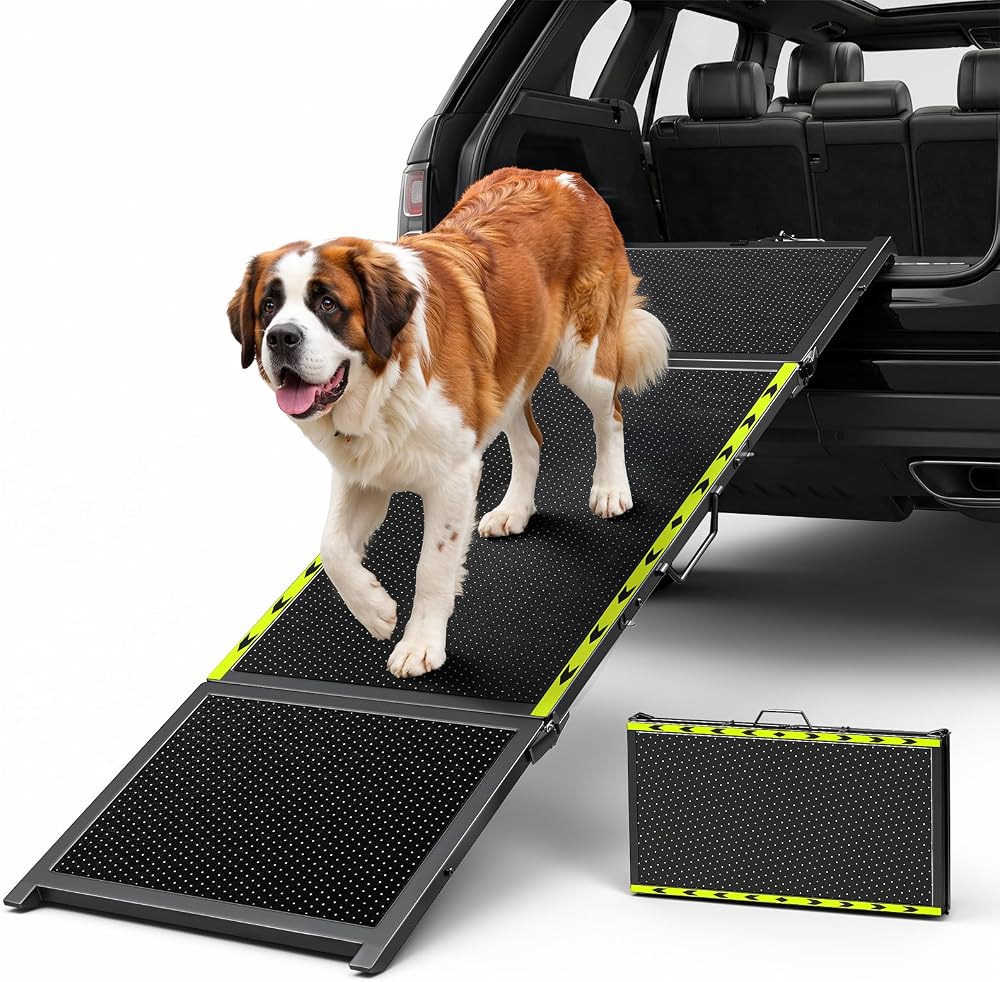
The most common dog ramp mistake is buying for the dog and forgetting the car. A ramp that is perfect for a low hatchback can be dangerously steep at a lifted SUV, because the angle your dog actually climbs is set by the ramp length against the height it has to reach. This guide shows you how to size a ramp to your exact vehicle: measure once, check the angle, then pick the length that keeps the climb gentle. It is part of our wider best dog ramps for cars and SUVs pillar.
Size calculator: get your ramp length
Enter your load height and your dog, and this works out the ramp length, the real incline angle, and a model that fits, using the same arcsin math as the chart above.
How to measure your vehicle for a dog ramp
- Park on level ground so the reading is not skewed by a slope.
- Measure vertically from the ground to the exact point where the top of the ramp will rest, whether that is the boot floor, the tailgate or a seat.
- Note the width of the opening and any lip, latch or bumper the ramp must clear.
- Check the clear ground behind the vehicle, because a longer ramp needs more run-out space to sit at a gentle angle.
- Apply the rule of thumb, or use the chart below, then confirm the top of the ramp sits flush and secure before your dog uses it.
Dog ramp size chart by vehicle
Match your measured load height to a ramp length. The angles are approximate, based on a straight ramp on level ground; they are for comparing setups, not medical prescriptions.
| Your vehicle | Typical load height | Ramp length to aim for | Resulting incline | A ramp that fits |
|---|---|---|---|---|
| Sedan or low hatchback | 16 to 22 in | 60 to 63 in | About 18 to 22° | Compact 63″ Folding Ramp |
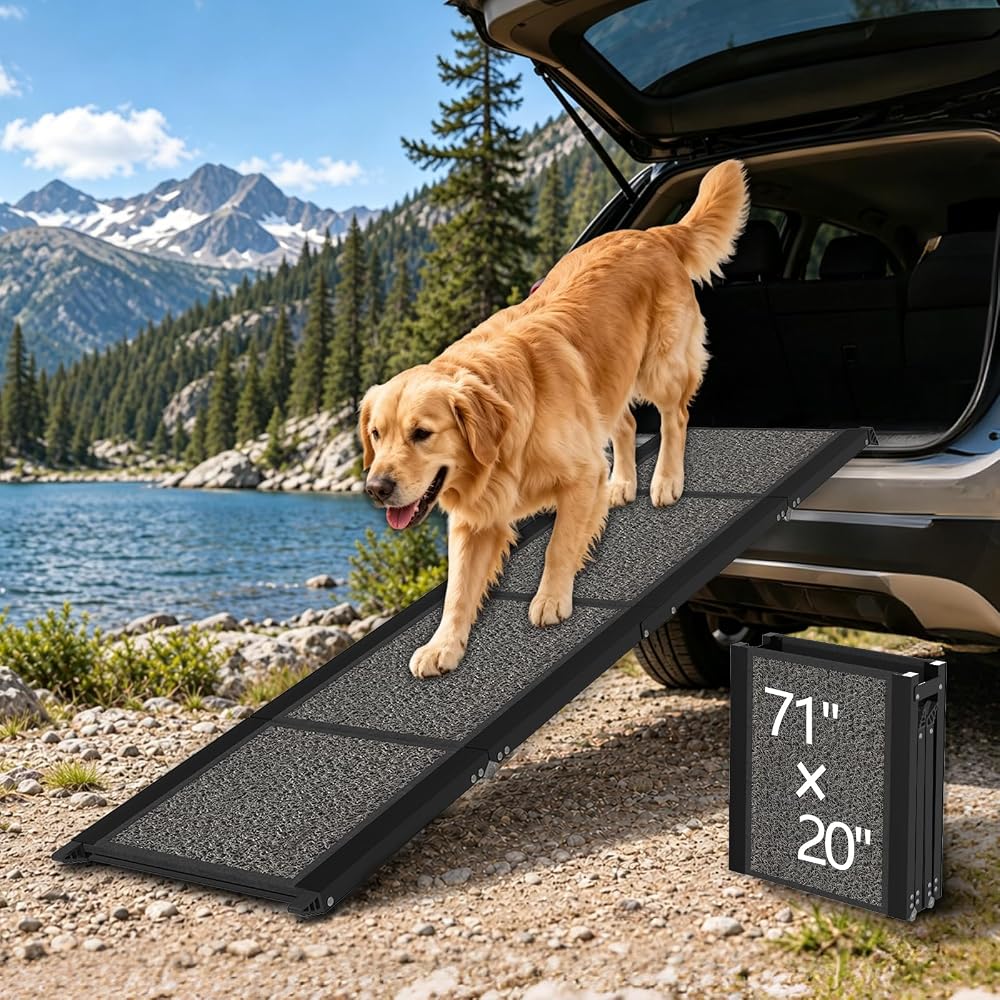
| Crossover or compact SUV | 22 to 28 in | 66 to 71 in | About 20 to 24° | High-Grip 71″ Ramp |
| Full-size SUV or minivan | 28 to 34 in | 71 to 74 in | About 23 to 28° | Extra-Wide 74″ Ramp |
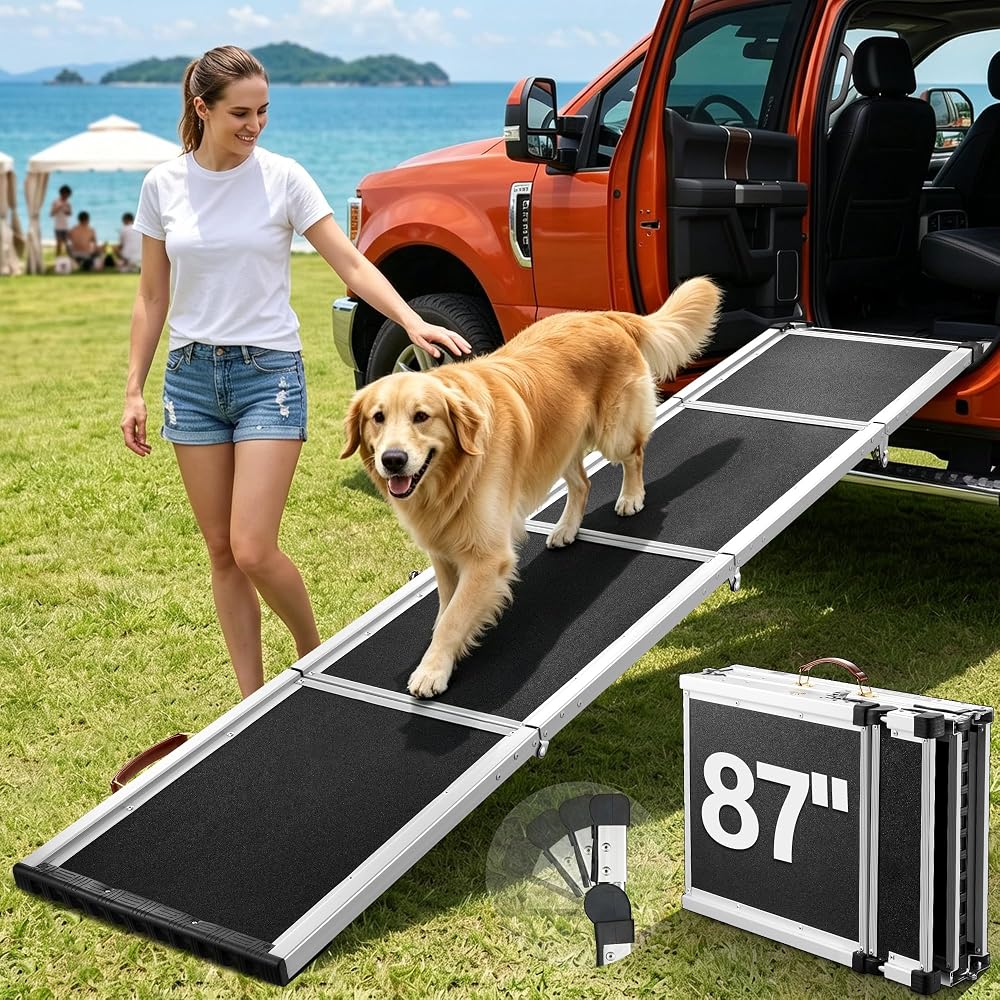
| Pickup tailgate or lifted SUV | 32 to 42 in | 80 to 87 in (the longest that fits) | About 26 to 30° | 87″ Aluminum Extra-Long |
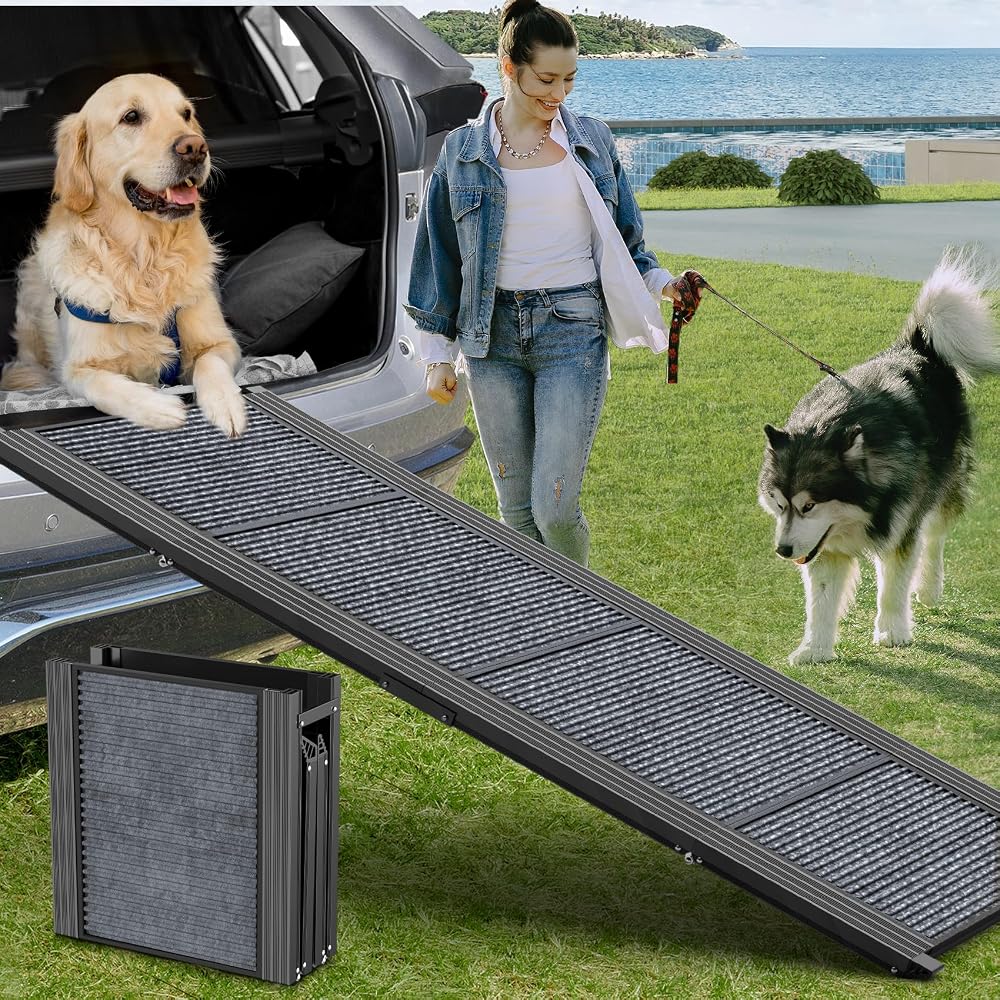
| Two or more vehicles | Varies | Adjustable telescoping | Set per vehicle | PetSafe Telescoping Ramp |
The incline math, in one line
The angle is simple trigonometry: incline = arcsin(rise divided by ramp length). A 28-inch rise on a 63-inch ramp is about 26 degrees; the same rise on an 87-inch ramp drops to about 19 degrees. No single angle is proven comfortable for every dog, but the formula is a reliable way to compare two setups before you buy. If the number climbs above the mid twenties for an older or unsteady dog, reach for a longer ramp or a lower loading point.
Should you get a telescoping ramp?
If one ramp has to serve a sedan today and a truck tomorrow, an adjustable telescoping ramp lets you set the length to each vehicle so the angle stays reasonable. The tradeoff is a longer, heavier collapsed unit and sliding rails to inspect. For a single low vehicle, a simple Compact 63″ Folding Ramp is lighter and quicker to deploy, while a household that switches between cars is the classic case for the PetSafe Telescoping Ramp.
Width and capacity: the other two numbers
Length sets the slope, but two more measurements matter. Width decides whether a large or unsteady dog can place all four paws without stepping off; aim for a walking lane around 17 inches for medium dogs and closer to 20 inches for large or wobbly dogs. Capacity should sit comfortably above your dog weight, but treat it as a filter rather than a safety score, because a ramp can support the weight and still feel springy or narrow underfoot.
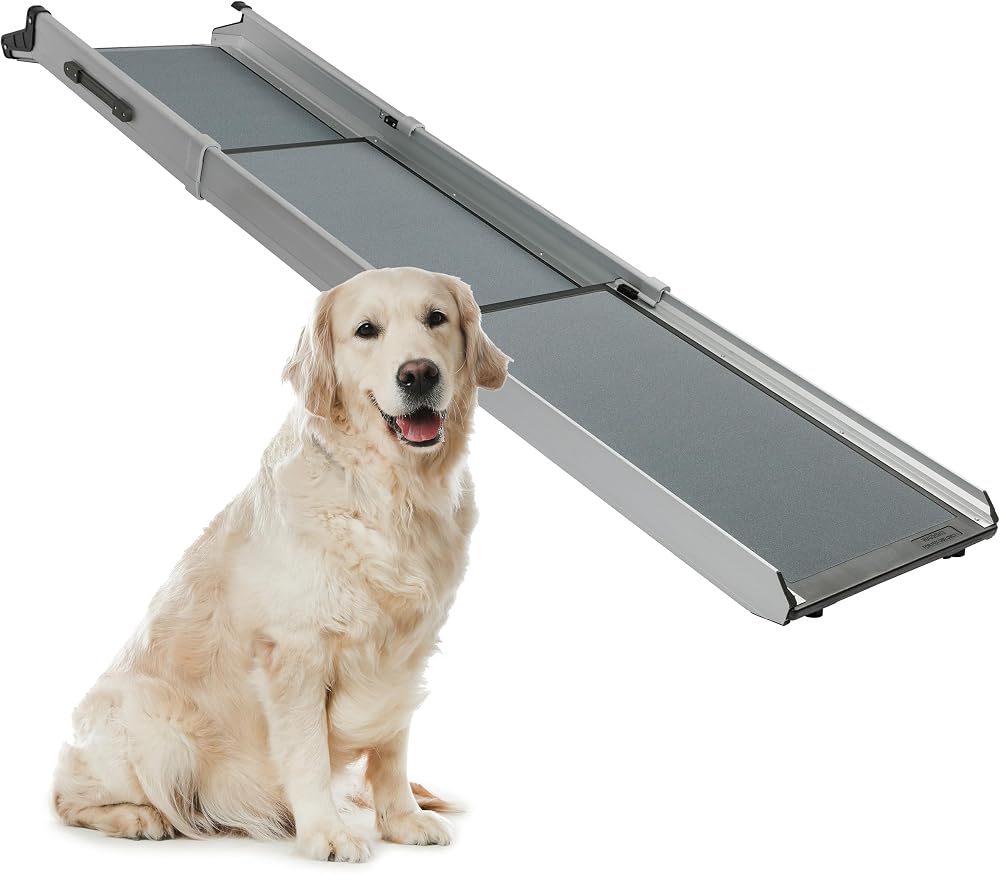
Recommended ramps by length
Frequently asked questions
What size dog ramp do I need for an SUV?
Measure your cargo-floor height first. Most crossovers and mid SUVs work with a 66 to 71-inch ramp, while full-size and lifted SUVs are gentler with 74 to 87 inches or an adjustable telescoping model. Confirm the resulting angle with the chart above rather than guessing from the vehicle class.
How long should a dog ramp be for a truck?
Truck tailgates are the tallest common load height, often 32 to 42 inches, so aim for the longest ramp you can store and deploy, up to about 87 inches. A short ramp at a truck bed creates a steep, unsafe climb no matter how high its weight rating is.
Can I make a dog ramp less steep?
Yes, use a longer ramp. Because the angle is length against height, moving to a longer deck at the same load height lowers the incline. Remember that a longer ramp also needs more clear ground behind the vehicle to sit at that gentler angle.
Is a longer ramp always better?
Longer is gentler on the joints, but it is heavier, needs more storage and more run-out space. Choose the longest ramp that fits your vehicle height, your storage and your ability to lift it every time, then stop.
What if my vehicle height is between two sizes?
Size up. A slightly longer ramp gives a gentler angle and a margin for a senior or nervous dog, whereas a ramp that is a little too short becomes too steep exactly when your dog is tired or sore.
How much weight can a dog ramp hold?
Ramps range from about 150 pounds on the lightweight folding pick to 300 pounds on the telescoping model, and heavy-duty ramps go higher. Match the rating to your dog actual weight, not the breed average, and treat capacity as a filter rather than a safety score, because a ramp can hold the weight and still feel narrow or springy.
What ramp angle is safe for a dog?
Aim for roughly 18 to 25 degrees. Small or short-legged dogs do best around 18 to 20 degrees, medium dogs tolerate 22 to 25, and a slope past the mid twenties tends to make dogs rush or refuse. Longer is gentler, so add length rather than accept a steep angle.
Do I need a ramp with a safety tether?
A tether or top hook helps when the ramp rests on a smooth tailgate or hatch and could slide as your dog steps on. It is not essential on a grippy, well-seated ramp with rubber feet, but for a heavy or unsteady dog the extra security is worth it. Always follow the maker attachment instructions.
The bottom line
Sizing a dog ramp comes down to one measurement and one rule: find your load height, aim for about three times that in ramp length, and keep the incline gentle. A low car is happy with a 63-inch ramp; a full SUV wants 71 to 74 inches; a truck needs the longest ramp you can handle; and if you switch vehicles, an adjustable telescoping ramp earns its keep. For the full range of models see our best dog ramps for cars and SUVs guide, and for older dogs see our best dog ramps for senior and arthritic dogs guide.

Olivia Isabella is PetBuyLab’s dog specialist and a lifelong dog owner with hands-on experience caring for senior and large-breed dogs. She researches, compares and lives with the mobility, comfort and everyday-care products she writes about, so she knows the practical details a spec sheet misses: how a ramp’s length sets the real slope a stiff-hipped dog will attempt, why surface grip decides whether a nervous dog commits, and how the wrong pick ends up unused in the garage. Every recommendation is built from manufacturer specifications, documented owner feedback and reputable veterinary sources, and is organised around a specific dog’s needs, never around commission. Her guides are informational and never a substitute for professional veterinary advice.