
Updated October 11, 2026 · Written by Olivia Isabella, PetBuyLab editorial team
A pool is one of the few places where a ramp is not a convenience, it is a lifeline. Dogs fall in, tire faster than you would think, and often cannot find the way out, and that is how even strong swimmers drown. A dog ramp for a pool gives your dog a clear, reliable exit. This guide covers the best pool exit ramps you can actually buy, how to match one to an in-ground or above-ground pool, and the safety steps that matter even more than the ramp itself. Start with the quick safety check below.
Disclosure: PetBuyLab is reader supported. When you buy through links on this page we may earn a small affiliate commission, at no extra cost to you. This never changes which products we recommend. This guide is general safety information, not a substitute for supervision or professional advice.
For getting a dog out of an in-ground pool, a stable inflatable exit ramp or dock platform is the most practical, best-rated option on the market right now. For an above-ground pool, you usually also need a non slip ramp to help your dog climb up to the deck. But no ramp replaces the two things that actually keep dogs alive: teaching your dog to use it, and never leaving them near the pool unsupervised.
- Dogs drown in pools because they cannot find or reach an exit, not because they cannot swim. A clear exit route is the whole point.
- In-ground pools suit a floating exit ramp or platform; above-ground pools often need an entry ramp too.
- The exit must be easy to see and reach from the middle of the pool, and your dog must be taught to use it.
- Pool exit ramps are a newer, thinner product category, so choose the best-rated option and read recent reviews.
- A ramp is one layer of safety. Supervision, a fence or alarm, and knowing pet CPR matter even more.
Is your pool dog-safe? A 60-second check
Tick everything that is true for your pool and your dog, then get your risk level and the single most important thing to fix. It takes under a minute and it could save your dog’s life.
Why a pool exit ramp can save your dog’s life
Most people assume that because dogs can swim, they are safe in a pool. They are not. The danger is not the swimming, it is the getting out. Pool walls are smooth and vertical, so a dog cannot climb them. In a panic, a dog tends to swim back to the spot where they fell in, circling the same wall, rather than heading for a ladder or steps across the pool. As they tire, their head drops, and a strong swimmer can go under in minutes. Puppies, senior dogs, short-legged breeds like Dachshunds, and flat-faced breeds like Bulldogs are at even higher risk. A pool exit ramp gives your dog one obvious, reachable way out, which is the single best thing you can add after supervision and a fence.
Exit ramps, floats, and steps: match it to your pool
There is no single “pool ramp” that fits every pool. Match the type to how your dog gets in and out:
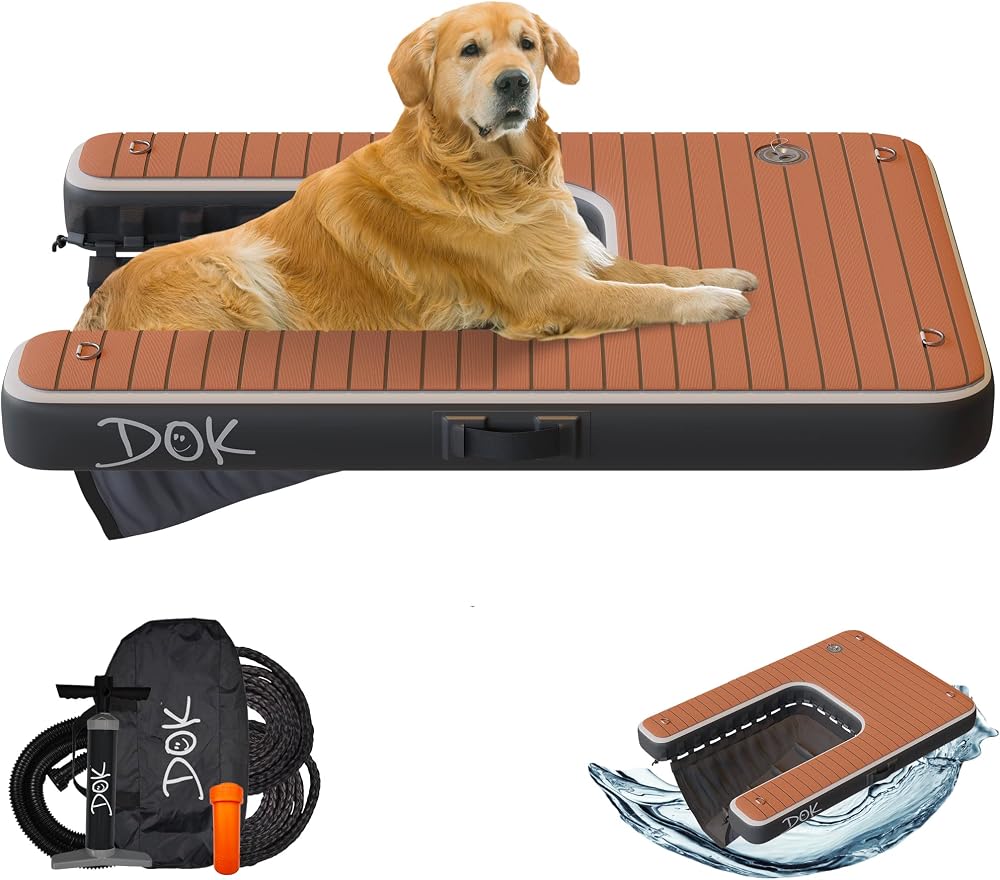
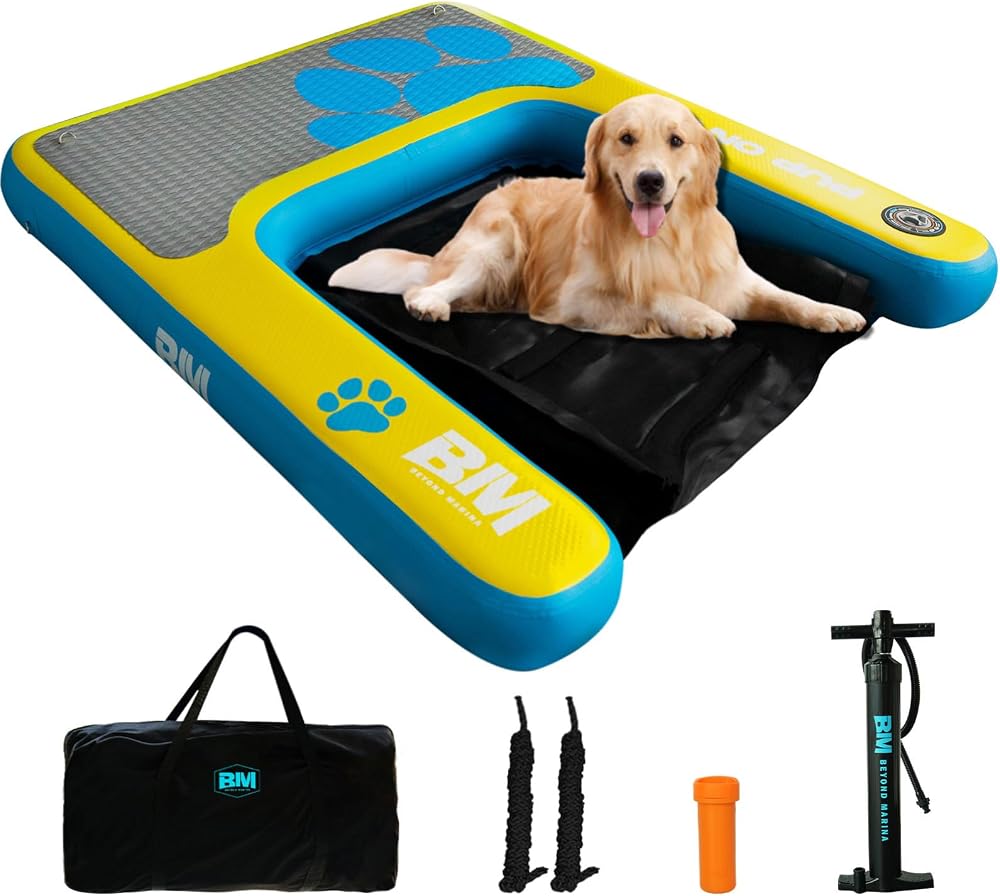
- In-ground pools: a floating exit ramp or an inflatable dock platform sits at the water line so your dog can climb straight out. These are the best-rated pool exit products on the market right now.
- Above-ground pools: getting out is only half the problem. Your dog also has to get up to the deck, so you often need a non slip entry ramp as well as an exit solution.
- Docks, pontoons, and boats: a sturdy inflatable platform or water ramp lets your dog climb out of open water and rest, which is also popular for dock diving and play.
We compare pool ramps and floats on the things that matter in water: grip when soaked, stability under a scrambling dog, weight rating, visibility, and how well they hold up to sun and chlorine. We cross-check verified owner reviews and flag categories that are still thin, which is exactly the case with rigid pool ramps today. We never take payment for placement. PetBuyLab is affiliate supported but editorially independent, and this guide is general safety information, not veterinary advice.
The 6 best dog ramps for pools
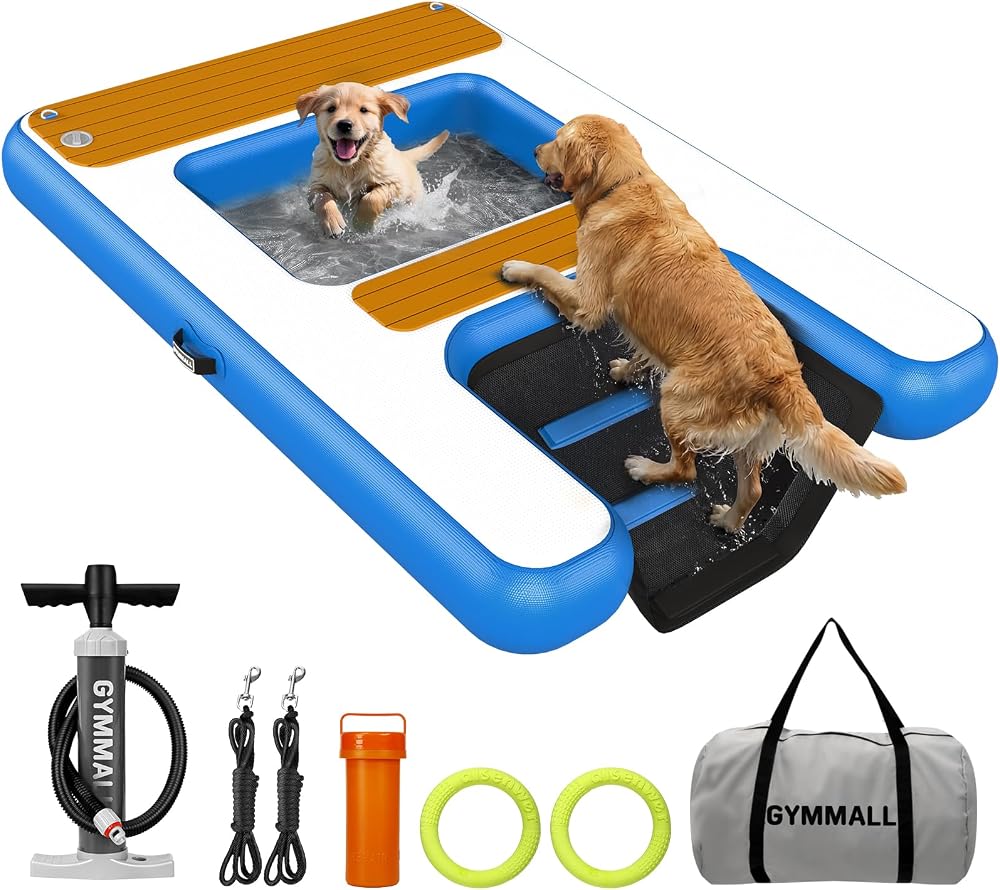
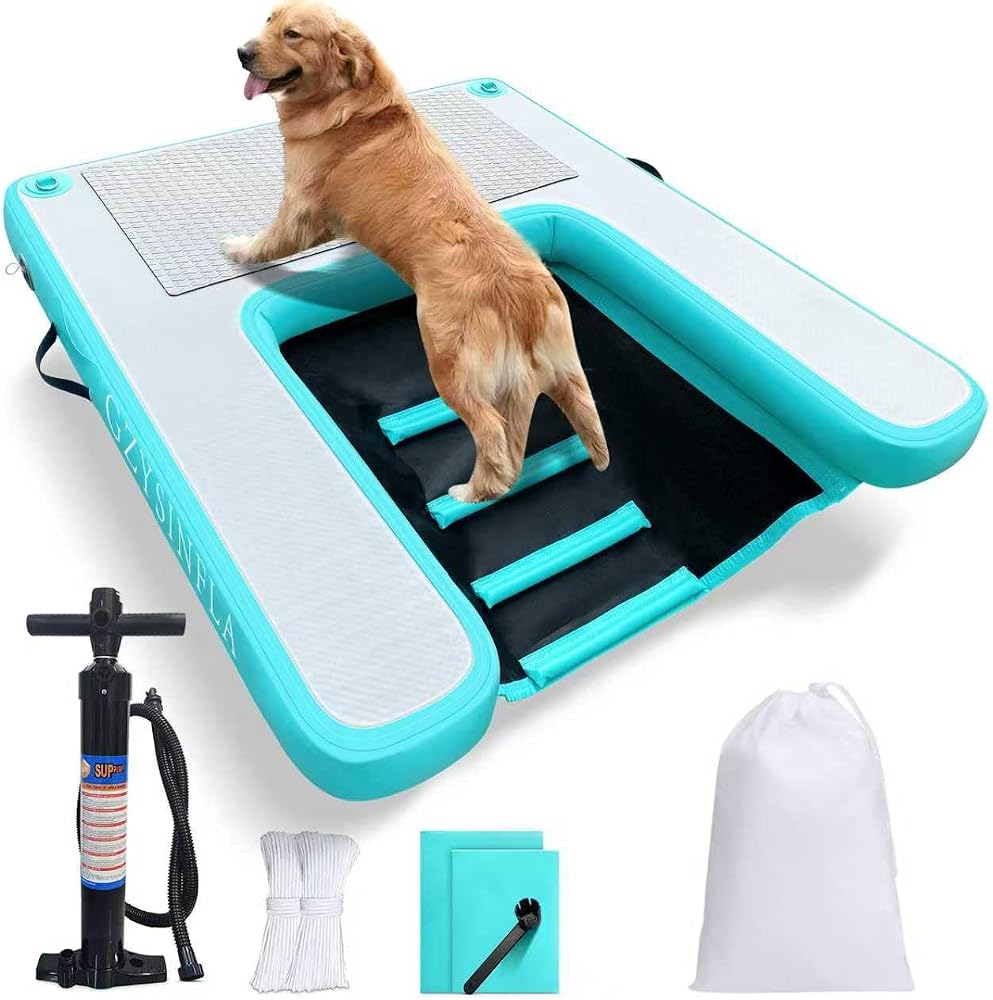
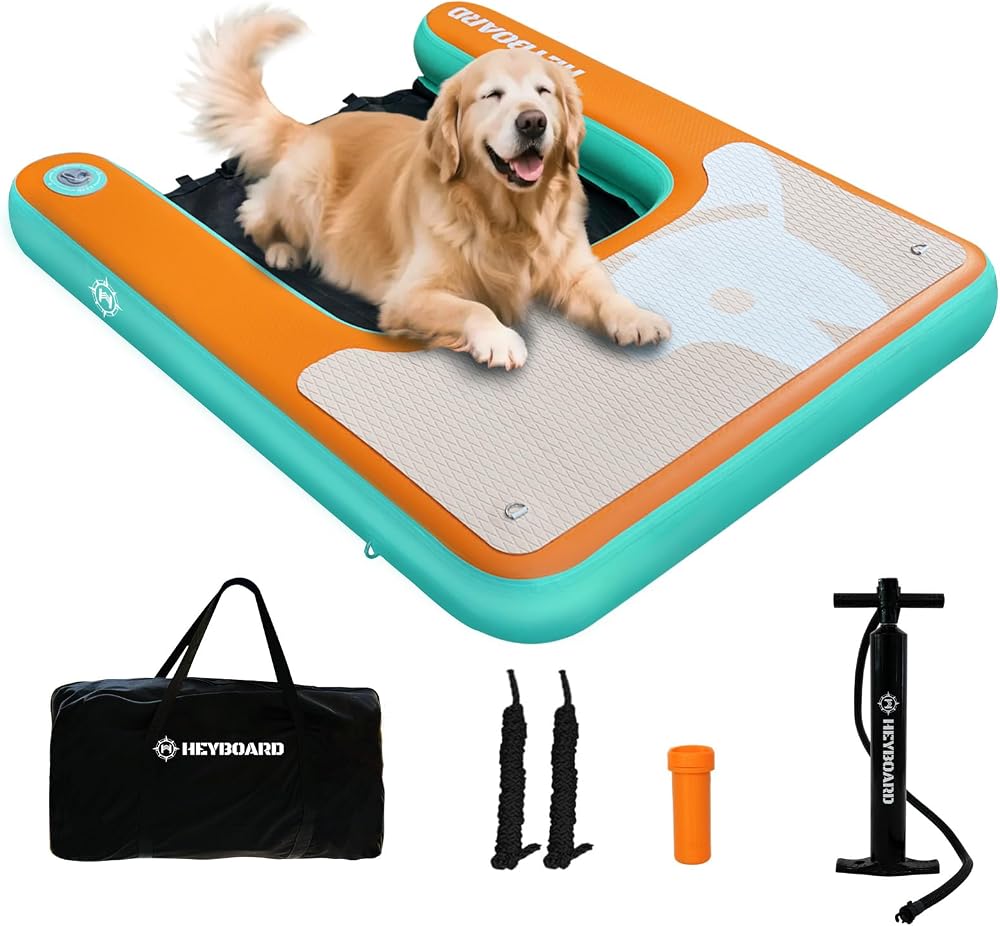
An honest note first: dedicated pool exit ramps are a young, thin product category, and the rigid foldable “pool ramps” on the market are mostly poorly reviewed. The options that actually earn good ratings are inflatable exit ramps and dock platforms, plus a non slip ramp for above-ground entry. These are the best-rated picks we would trust today.

How the pool ramps compare
| Ramp | Type | Best for | Why it stands out |
|---|---|---|---|
| DOK Platform | Inflatable platform | In-ground pools, docks | Stable surface to climb onto and rest |
| Dock Ramp + Hammock | Inflatable | Rest and play | Ramp plus a shaded water hammock |
| Floating Water Ramp | Inflatable ramp | Climbing out | Gentle ramp angle up out of the water |
| HEYBOARD | Inflatable | Large dogs | Sized and rated for bigger breeds |
| BM Inflatable | Inflatable | Value | Holds up to 250 lb at a lower price |
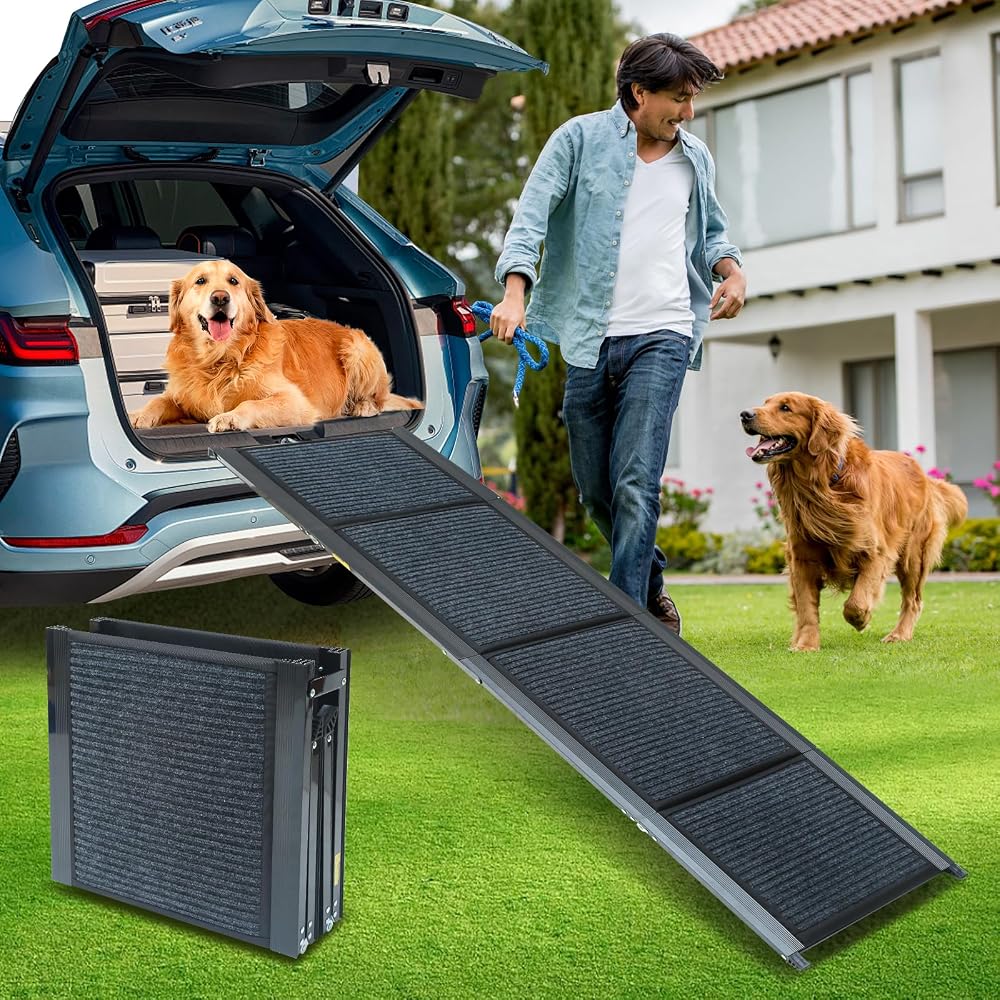
| PawStep Non-Slip | Rigid aluminum | Above-ground entry | Grippy ramp to climb up to the deck |
What you get at each price range
Basic inflatable
A simple inflatable ramp or float. Fine for smaller dogs and gentle use, but check the weight rating and seams carefully.
The sweet spot
A sturdier inflatable platform or exit ramp with better stability and a higher weight rating. The best balance for most pools.
Platform & extras
Larger platforms with rest hammocks, or a rigid non slip ramp for above-ground entry. Built for big dogs and heavy summer use.
Which pool ramp is right for you?
Answer these in order and follow the first one that fits.
Above-ground pools: getting in and out
Above-ground pools add a second problem. Your dog has to climb up to the deck or edge to get in, and then has to get back out of the water and down again. A floating exit ramp handles the water part, but for the climb up you usually want a sturdy, non slip ramp with enough length for a gentle angle. Our dog ramps for stairs guide covers long outdoor ramps that suit a deck, and the portable dog ramps guide covers folding options you can move poolside and store for winter.
What to look for in a pool ramp
- Grip when wet. A pool ramp is always wet, so the surface has to bite under soaked paws. This is non negotiable.
- Easy to see. Your dog has to find it in a panic. A bright colour or a marker above the water line helps them spot it.
- Stable and anchored. A ramp that slides or tips when your dog scrambles onto it is worse than none. Look for anchoring points or a wide, weighted base.
- Weight capacity. Match it to your dog with margin, and be especially careful with inflatables, where durability depends on the seams and upkeep.
- A big enough landing. Your dog needs room to get their back legs up and out, not just their front paws.
- Sun and chlorine resistance. Pool chemicals and UV break materials down, so choose something built for constant water exposure and store it out of season.
Teach your dog to find and use the pool ramp
A ramp your dog does not know how to use will not save them. Introduce it before it is ever an emergency, and never assume they will figure it out in the water.
- Let your dog explore the ramp out of the water first, with treats, so it is familiar.
- Place it at the exit and guide your dog onto it from the shallow end or the step, rewarding each success.
- Practise climbing out right beside the ramp, so they link “get out here” with that spot.
- Gently practise from a little further out, then from the middle of the pool, always supervised.
- Repeat often enough that heading for the ramp becomes automatic.
For the full method on getting a nervous dog comfortable with a ramp, see our complete ramp training guide.
Pool safety mistakes to avoid
- Assuming a dog that can swim can also get out. Those are two different skills.
- Buying a ramp and never teaching your dog to use it.
- Leaving the ramp where it is hard to see or reach from the water.
- Relying on the ramp instead of supervision and a fence.
- Using a slick or unstable ramp that scares your dog off at the worst moment.
What vets say about pool safety
Veterinary guidance is blunt about this. The American Veterinary Medical Association’s warm-weather safety advice stresses never leaving pets unsupervised around water, making sure they have a way out, and introducing them to water gradually, because not every dog is a strong swimmer. The American Kennel Club similarly favours ramps for safe access, noting that ramps are generally the safer way for dogs to get up and down. The honest takeaway: a ramp is one important layer, but it works alongside constant supervision, a fence or pool alarm, and knowing basic pet CPR. This is general safety information, not veterinary advice, so talk to your vet about your dog’s swimming ability and any health limits.
Frequently asked questions
What is the best dog ramp for a pool?
How do dogs get out of a pool?
Can a dog drown in a pool even if it can swim?
What kind of ramp works for an in-ground pool?
What about a dog ramp for an above-ground pool?
Are inflatable dog pool ramps any good?
How do I teach my dog to use the pool exit ramp?
How do I make the pool exit easy for my dog to find?
Is a pool ramp enough to keep my dog safe?
What is the best pool ramp for a large or heavy dog?
Will chlorine and sun damage a pool ramp?
Is a ramp or pool steps better for my dog?
The verdict
A dog ramp for a pool is not about convenience, it is about giving your dog a way out before they need it. For an in-ground pool, an inflatable exit ramp or platform is the best-rated choice today; for an above-ground pool, add a non slip ramp for the climb up. Then do the parts no product can do for you: mark the exit, teach your dog to use it from the middle of the pool, and never let them swim unsupervised. Get that right, and your pool becomes a place your dog can enjoy safely all summer.
Keep reading

Olivia Isabella is PetBuyLab’s dog specialist and a lifelong dog owner with hands-on experience caring for senior and large-breed dogs. She researches, compares and lives with the mobility, comfort and everyday-care products she writes about, so she knows the practical details a spec sheet misses: how a ramp’s length sets the real slope a stiff-hipped dog will attempt, why surface grip decides whether a nervous dog commits, and how the wrong pick ends up unused in the garage. Every recommendation is built from manufacturer specifications, documented owner feedback and reputable veterinary sources, and is organised around a specific dog’s needs, never around commission. Her guides are informational and never a substitute for professional veterinary advice.