
Updated October 5, 2026 · Written by Olivia Isabella, PetBuyLab editorial team
Stairs are where a lot of dogs quietly struggle. A slick deck, a steep set of porch steps, a flight down to the yard, each one asks your dog to hop and land, over and over, on joints that may already ache. A dog ramp for stairs fixes that by turning the steps into one gentle, four-on-the-floor slope. This guide covers the six best dog ramps for stairs in 2026, indoor and outdoor, plus exactly how to size one to your steps and keep it safe when it rains.
Disclosure: PetBuyLab is reader supported. When you buy through links on this page we may earn a small affiliate commission, at no extra cost to you. This never changes which products we recommend.
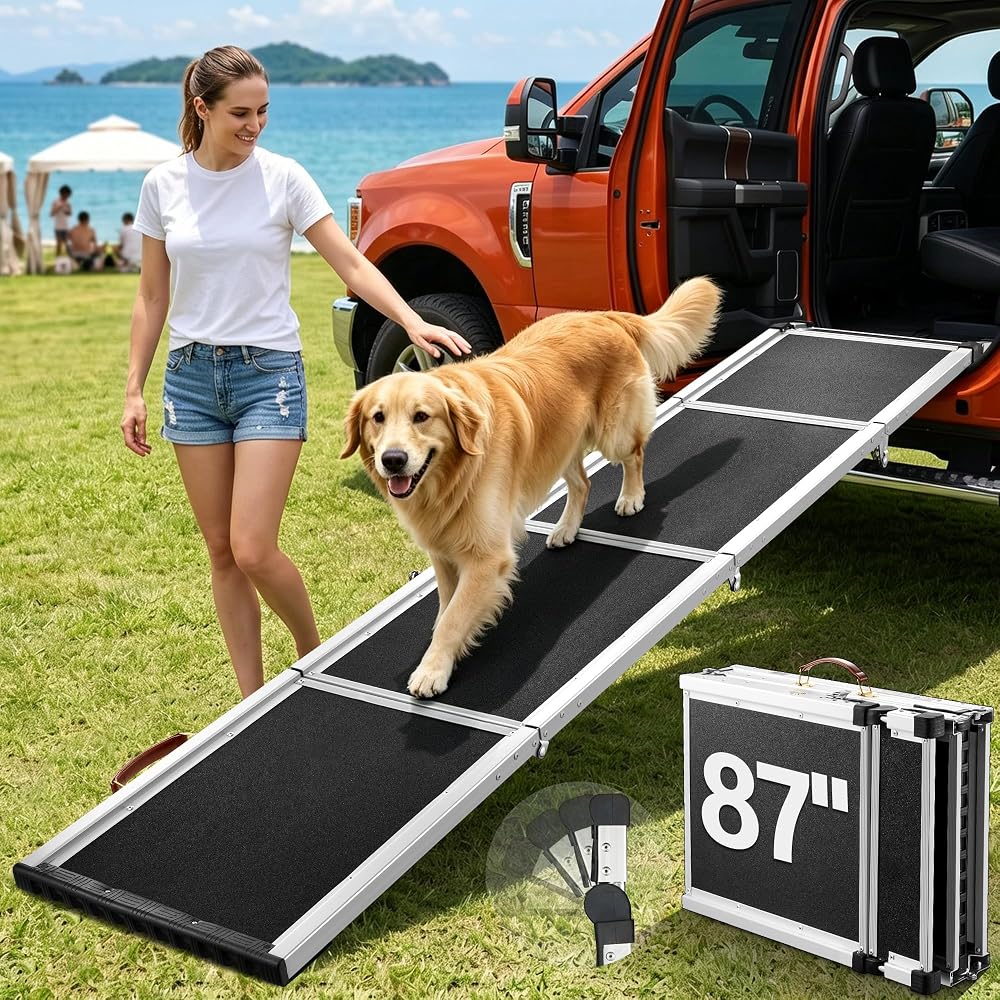
To cover a full flight of outdoor steps or a high deck, the 87″ extra long aluminum ramp gives the gentlest slope. For a few porch or deck steps, a long, wide folding ramp is easiest to place. For indoor steps or when storage is tight, a telescoping ramp adjusts to the exact rise. Whatever you pick, the non slip surface is the part that keeps your dog safe, especially on wet steps.
- A stairs ramp lets your dog skip the jarring up and down of steps, which protects hips, elbows, and the spine.
- Length is everything: the ramp has to be long enough to span the whole rise at a gentle angle, so taller flights need longer ramps.
- Outdoors, prioritize a non slip surface that still grips when wet, plus a weather resistant aluminum or plastic frame.
- Indoors, a shorter folding or telescoping ramp handles a step or two and tucks away between uses.
- Large and heavy dogs need extra width and a high weight rating so the ramp stays rock solid underfoot.
Why a ramp beats the stairs for your dog
Here is the thing most owners miss: it is the descent that does the damage. Going down a flight of steps, your dog drops their full weight onto the front legs again and again, and on a wet deck or a polished indoor stair that landing can also mean a slip. For a senior dog, a long backed breed, a recovering patient, or a heavy dog, that repeated impact is exactly what you want to avoid. A ramp replaces the whole staircase with a single smooth incline, so your dog simply walks down. No hopping, no hard landings, no scramble for grip. If you are still weighing the bigger question of ramp versus steps as a mobility aid, our dog ramp vs stairs comparison breaks that down; this guide is about ramps that let your dog skip the stairs entirely.
The 6 best dog ramps for stairs
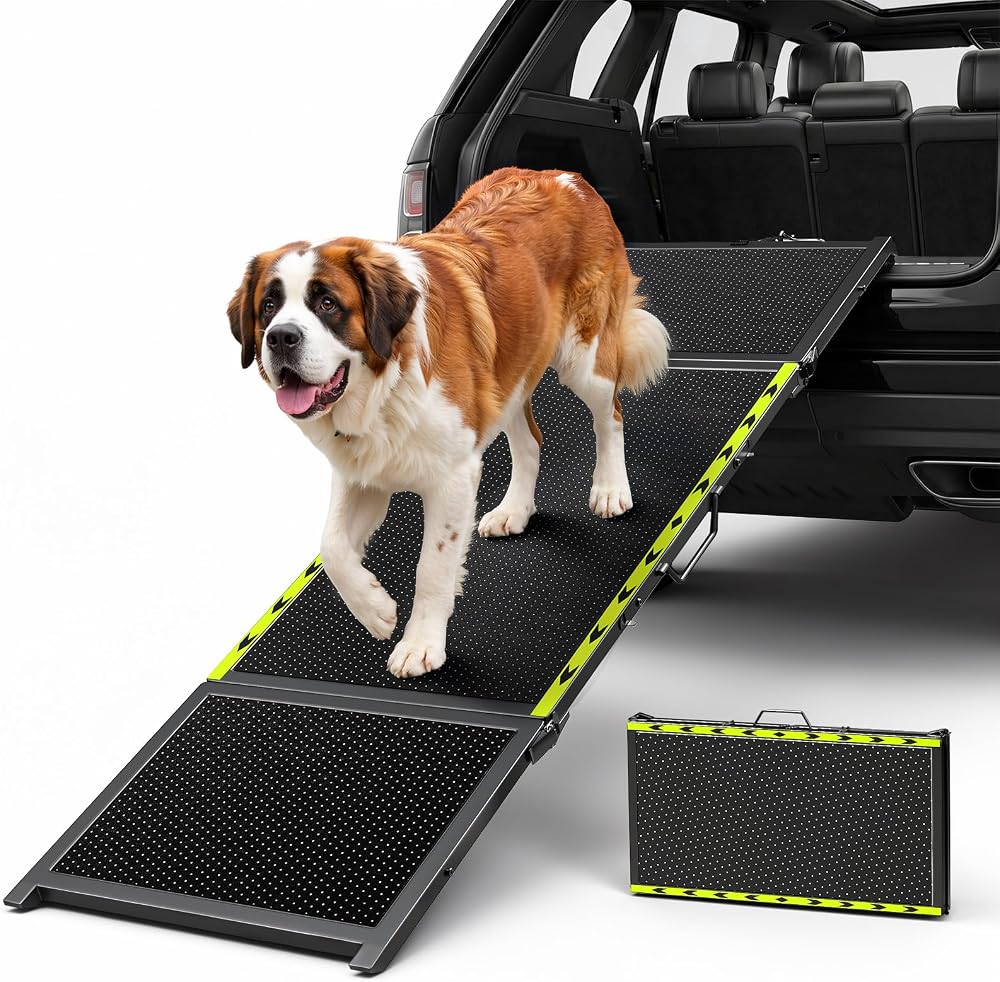
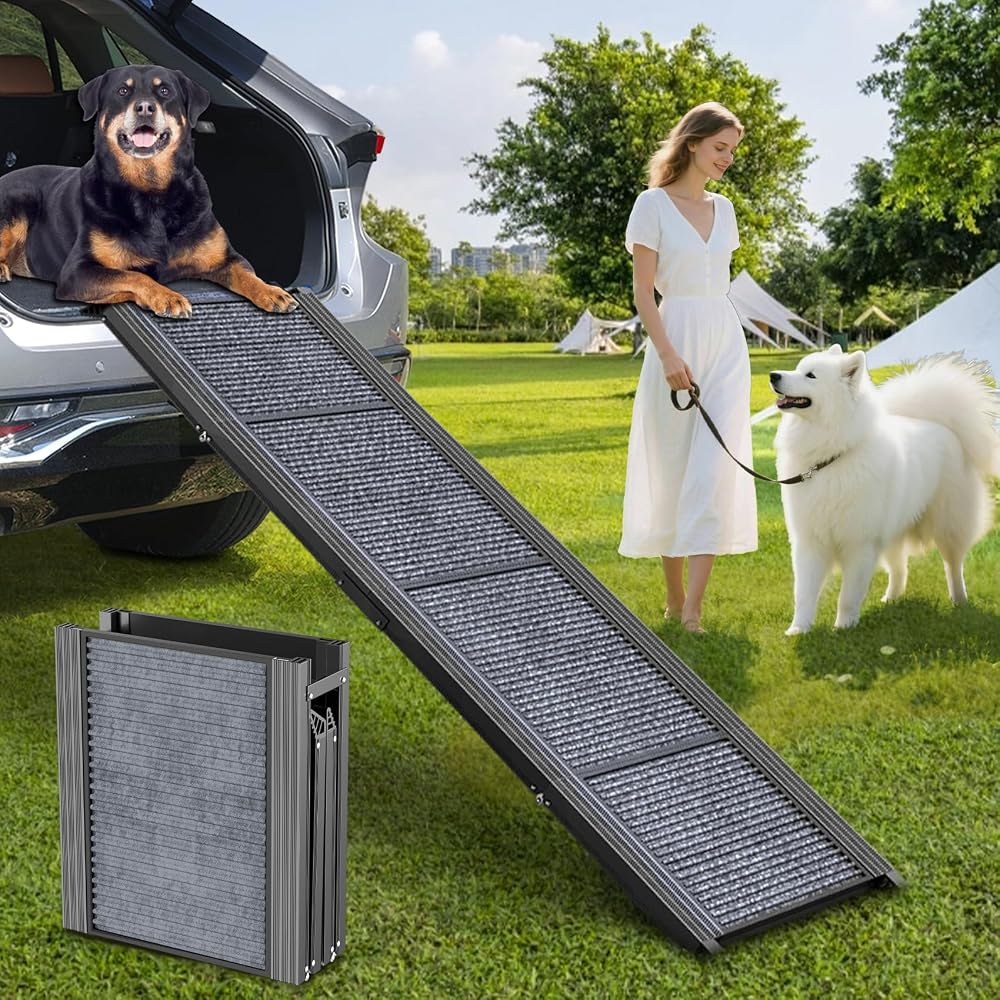
We picked these for what actually matters on a staircase: enough length to keep the slope gentle across the whole rise, a surface that grips in the rain, and a frame that holds steady under a confident stride. Here is the lineup, matched to indoor steps, porches, decks, and full flights.

How the stairs ramps compare
| Ramp | Length | Best for | Why it stands out |
|---|---|---|---|
| 87″ Aluminum | 87 in | Full flights, high decks | Longest reach, gentlest slope, weatherproof |
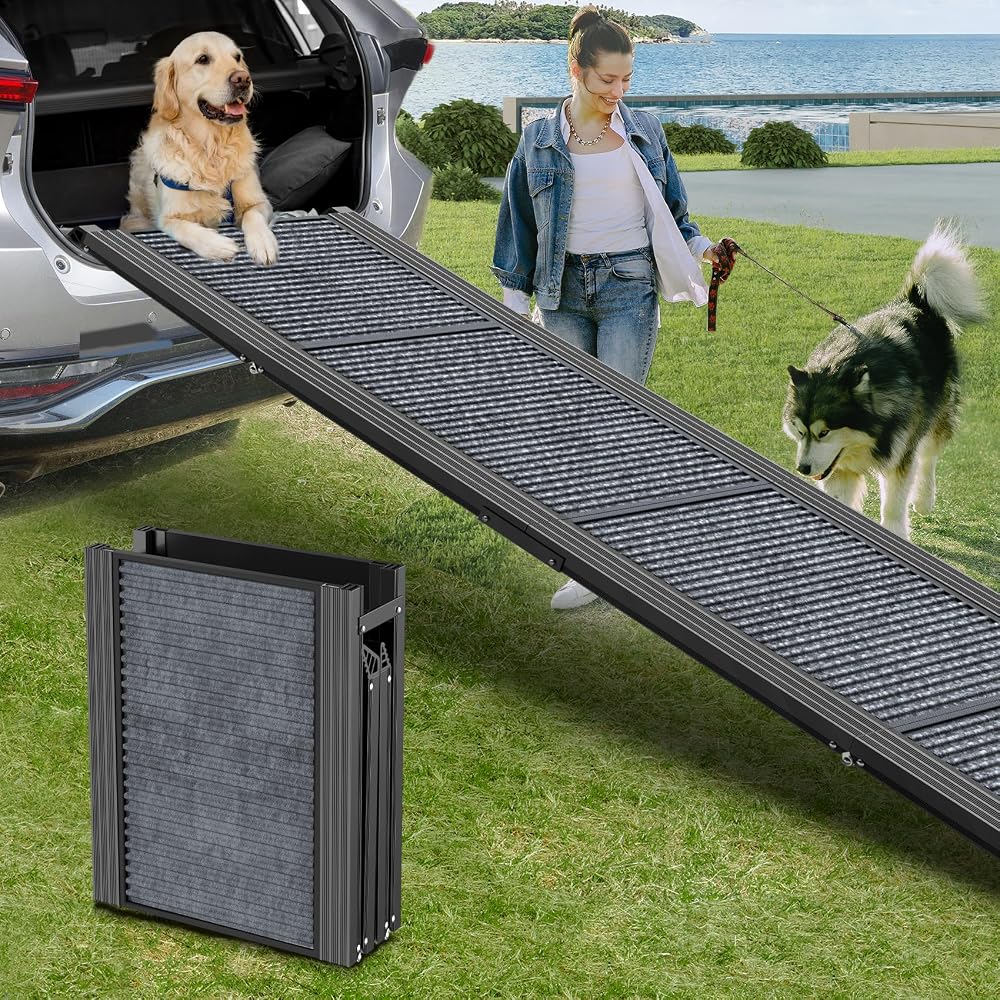
| 71″ x 20″ Folding | 71 in | Porch & deck steps | Long and wide, non-slip carpet surface |
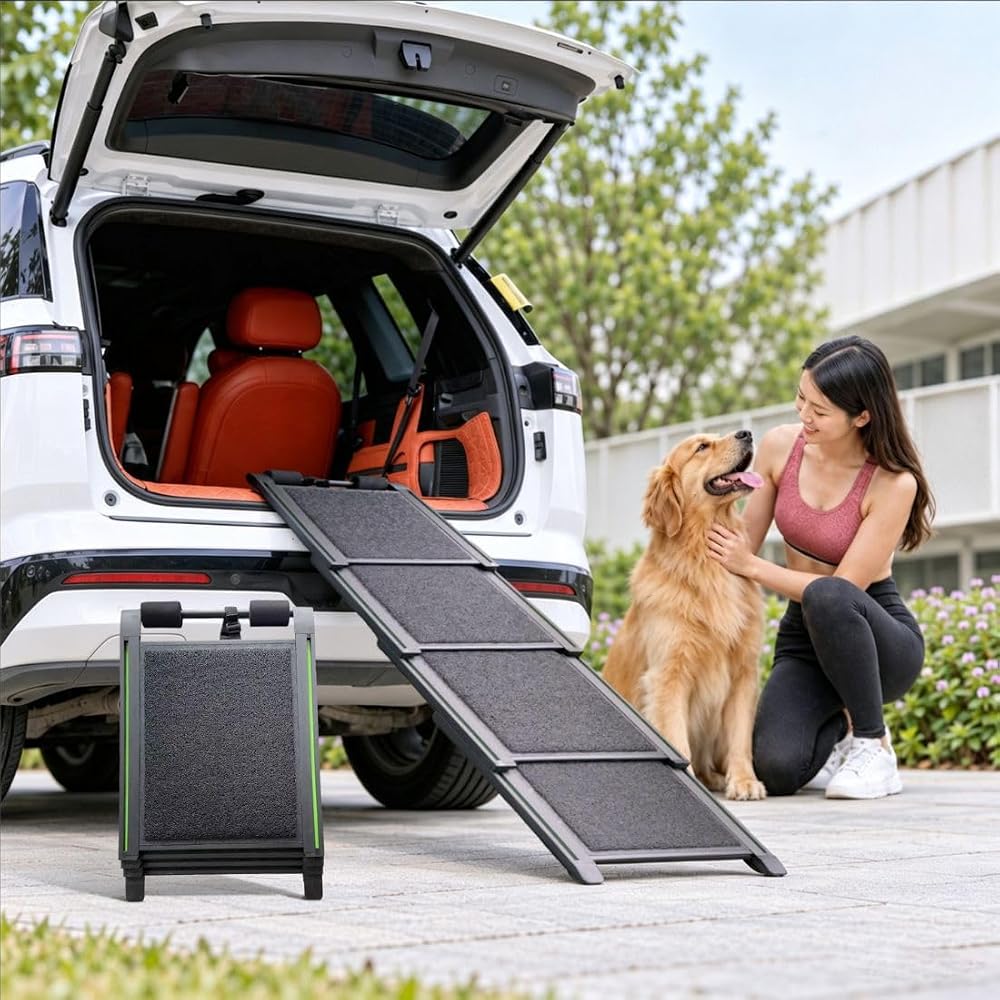
| PawStep Non-Slip | folding | Wet or slick surfaces | Aluminum, grippy all-surface tread |
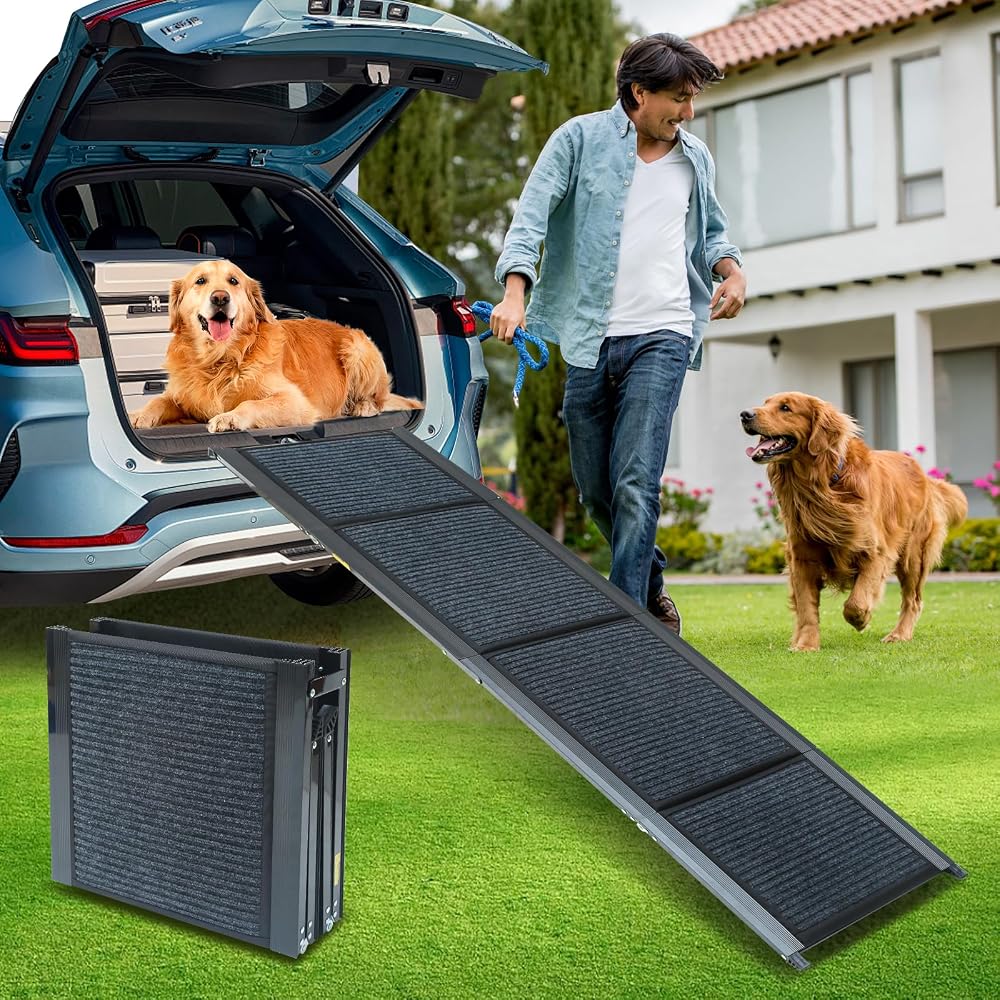
| 73″ Telescoping | up to 73 in | Different step heights | Adjusts length, packs shortest |
| 74″ x 20″ Extra Wide | 74 in | Large & giant dogs | Wide, stable, high weight rating |
| 63″ Lightweight | 63 in | Budget, low steps | Light, folds, easy to move |
What you get at each price range
Short & folding
Lightweight folding ramps for one or two low steps. Fine for smaller dogs, with basic traction and lower weight limits.
The sweet spot
Longer, wider folding or telescoping ramps with better grip and higher weight ratings. The best balance for most porches and decks.
Long & heavy duty
Extra long aluminum ramps for full flights, high decks, large dogs, and weather exposed outdoor use.
Which stairs ramp is right for you?
Answer these in order and follow the first one that fits your steps.
Dog ramp for stairs: indoor vs outdoor
The staircase sets the rules. A dog ramp for stairs inside the house usually only has to clear a short set of steps, like a sunken living room or a split level landing, so a shorter folding or telescoping ramp works, and you can prioritize a tidy look and easy storage. An outdoor dog ramp for stairs, on the other hand, often spans a taller porch or deck and lives in the weather, so length, a rust proof aluminum frame, and a tread that grips when wet all matter far more. If you need the ramp to come and go, foldable and telescoping models shine in both places.
Match the ramp to your stairs
- A full flight to the yard: the hardest case. Go as long as you can, like the 87 inch aluminum ramp, so the slope stays walkable the whole way down.
- Porch or deck steps (a few risers): a 63 to 71 inch folding ramp usually spans them with a gentle angle and stores flat between uses.
- A high or lifted deck: reach for the longest ramp or a telescoping one you can extend; a short ramp here gets dangerously steep.
- A single step or threshold: a short, light ramp (or a telescoping ramp set near its minimum) is plenty.
- Slippery or wet steps: grip is the priority. Choose a textured or carpeted non slip surface that still bites when it is raining.
- Large or giant dogs: add width and a high weight rating so a big dog feels secure and the ramp never flexes.
What to look for in a dog ramp for stairs
- Length for the rise. Measure the total height your dog is descending, then pick a ramp long enough to keep a gentle slope. As a rule of thumb, aim for a ramp about three times that height. Our ramp size guide has a calculator.
- Non slip surface. This is the single most important safety feature on stairs. Look for carpet, rubber, or a deeply textured tread that grips when wet.
- Weather resistance. Outdoors, aluminum or heavy duty plastic beats bare wood, which warps and gets slick. If you use a wood ramp outside, store it under cover.
- Weight capacity. Match it to your dog with room to spare, especially for large breeds.
- Stability and a secure top edge. The ramp should rest firmly on the top step without sliding. Rubber feet and a non slip lip make a big difference.
- Folding or telescoping. If the ramp is not permanent, a model that folds flat or collapses short is far easier to move and store.
DIY dog ramp for stairs: is it worth it?
Building a ramp over your steps is a tempting weekend project, and for a simple low porch it can work. The catch is the same one that trips up every homemade ramp: safety. You need a reliably non slip surface (plain plywood is lethal when wet), a gentle enough angle for the full rise, and a top edge that will not shift when your dog commits their weight to it. Outdoors you also need materials that survive the rain. If you enjoy building and will add proper grip and a secure lip, go for it. For most owners, a folding or telescoping ramp is safer, lighter, weatherproof, and ready to use today.
What vets and the AKC say about ramps
Veterinary and canine health sources line up on the principle: cut the high impact movement for dogs that are older, heavier, or dealing with joint problems. The American Kennel Club notes that ramps are generally the safer way for dogs to get up and down when mobility or joints are a concern, because a slope removes the jumping and hard landings that stairs demand. Guidance on osteoarthritis in dogs and managing canine osteoarthritis both stress limiting that kind of strain, which is exactly what a stairs ramp does. This is general information, not veterinary advice, so check with your vet about your dog’s age, weight, and any diagnosed conditions.
How to train your dog to use a stairs ramp
A ramp laid over the steps looks and feels new, and the height can be intimidating, so build confidence from the bottom up.
- Lay the ramp flat on the ground first and let your dog sniff and walk across it with no pressure.
- Reward every step with treats until the flat ramp is easy and boring.
- Set it over the lowest steps you have and practice up and down a short, gentle rise.
- Move it to the real staircase and lure with treats, one step of progress at a time.
- Make sure the top edge is secure and the surface is dry, and never push or drag your dog onto it.
- Practice the descent most of all, since coming down a ramp over stairs is what dogs hesitate on.
Common mistakes to avoid
- Buying a ramp too short for the rise, so the slope becomes as steep as the stairs it replaced.
- Using a smooth or bare-wood surface that turns slick the moment it rains.
- Not securing the top edge, so the ramp slides off the step mid descent.
- Leaving a wood ramp out in the weather until it warps and loses grip.
- Rushing training and letting a scary first try put your dog off the ramp for good.
Frequently asked questions
What is the best dog ramp for stairs?
Can a dog ramp go over a flight of stairs?
What length ramp do I need to cover outdoor steps?
Are outdoor dog ramps weatherproof?
How do I make a dog ramp safe on wet steps?
Is there a dog ramp for stairs inside the house?
Dog ramp or stairs, which is better for my dog?
Can I build a DIY dog ramp for stairs?
What ramp works for a high porch or tall deck?
What is the best stairs ramp for a large or heavy dog?
How do I get my dog to use a ramp over the stairs?
How steep is too steep for a dog ramp?
The verdict
For most staircases, length is the decision. A full flight or a high deck wants the 87 inch aluminum ramp so the slope stays gentle; a few porch steps are happy with a long, wide folding ramp; indoor steps and tight storage favor a telescoping model. Prioritize a non slip surface that grips when wet, match the length to your rise, train slowly from the bottom step up, and your dog will skip the stairs safely for years.
Keep reading
- Dog Ramps for Pools (safety & exit ramps)
- Dog Ramp vs Dog Stairs: which is better?
- What Size Dog Ramp Do I Need? (with calculator)
- Best Portable Dog Ramps (folding & telescoping)
- Best Dog Ramps for Senior and Arthritic Dogs
- Best Dog Ramps for Cars and SUVs

Olivia Isabella is PetBuyLab’s dog specialist and a lifelong dog owner with hands-on experience caring for senior and large-breed dogs. She researches, compares and lives with the mobility, comfort and everyday-care products she writes about, so she knows the practical details a spec sheet misses: how a ramp’s length sets the real slope a stiff-hipped dog will attempt, why surface grip decides whether a nervous dog commits, and how the wrong pick ends up unused in the garage. Every recommendation is built from manufacturer specifications, documented owner feedback and reputable veterinary sources, and is organised around a specific dog’s needs, never around commission. Her guides are informational and never a substitute for professional veterinary advice.