
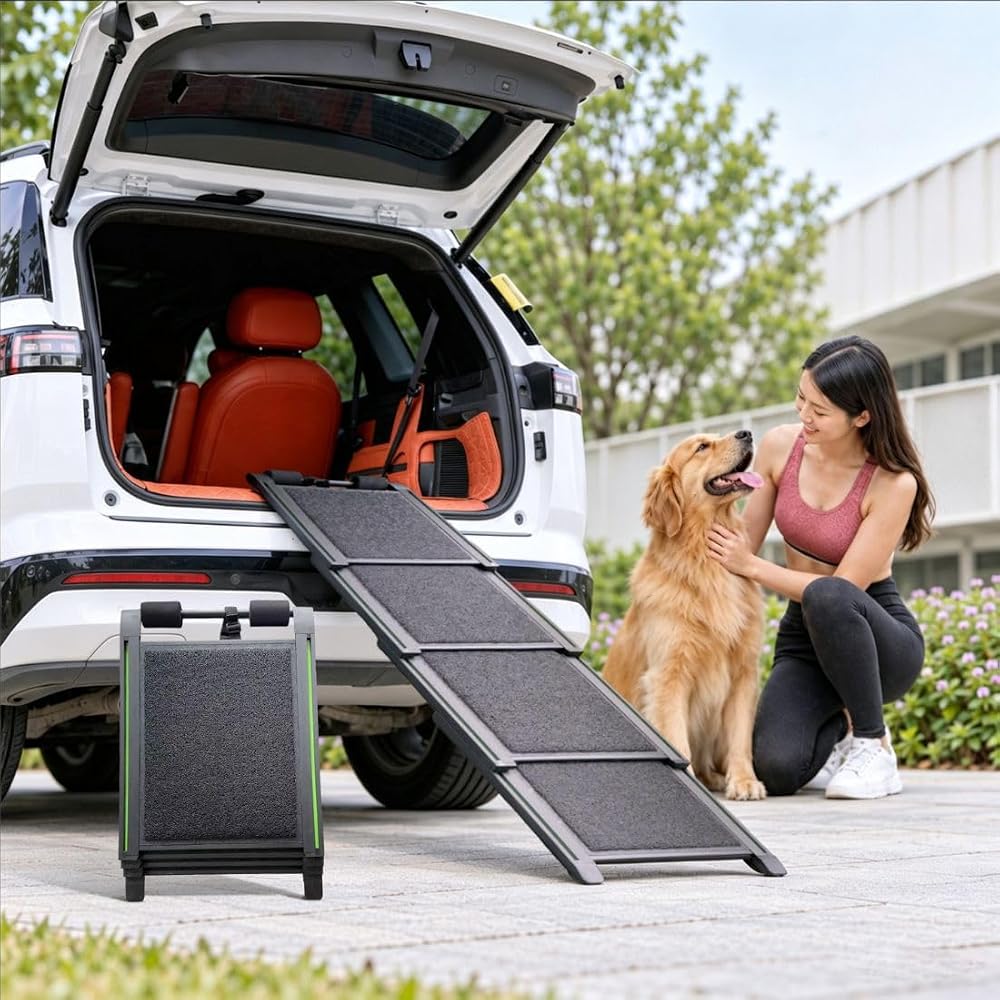
Updated October 12, 2026 · Written by Olivia Isabella, PetBuyLab editorial team
An RV door is the hardest climb your dog faces on the road. The steps are steep, narrow, and bouncy, the threshold can sit two or three feet off the ground, and the ground under it changes at every site. A dog ramp for RV steps fixes that, but only if you pick the right length for your entry height. This guide gives you the best RV dog ramps, the simple math for how long a ramp you actually need, and how to teach your dog to use it at a busy campground.
Disclosure: PetBuyLab is reader supported. When you buy through links on this page we may earn a small affiliate commission, at no extra cost to you. It never changes which products we recommend, and we do not take payment for placement.
For most RVs, a telescoping or long folding aluminum ramp is the best choice, because an RV door is high and a short ramp turns into a steep, scary climb. Measure from the ground to your threshold first, then use the fit finder below to get the minimum safe length. For a very high 5th-wheel or motorhome entry, go extra long or lower the rise with a step. For getting your dog up to the RV bed, a compact folding ramp works best.
- The number that matters most is your entry height: ground to threshold, measured where the RV is parked.
- A longer ramp means a gentler slope. Short ramps on a high door are the main reason dogs refuse them.
- Telescoping ramps adjust to your exact height, which is why they suit RVs so well.
- Nervous and senior dogs need a shallower slope, so they need a longer ramp than a confident dog does.
- If even a long ramp would be too steep, lower the rise with a step or landing, or switch to purpose-built RV steps.
We focus on the things that decide whether an RV ramp actually gets used: usable length for a high door, grip on the surface, stability on uneven ground, weight rating, and how small and light it folds for a rig with no spare storage. We cross-check verified owner reviews and favour adjustable or long ramps for RV entries. We never take payment for placement. PetBuyLab is affiliate supported but editorially independent, and this is general guidance, not veterinary advice.
RV Ramp Fit Finder: how long a ramp do you need?
Enter your entry height and your dog, and this tool gives you the minimum ramp length for a safe, gentle slope, plus which kind of ramp to buy. It is the step every roundup tells you to do but never does for you.
Why getting a dog into an RV is different
A house has one or two steps. An RV entry is a different problem, and three things make it hard for a dog. First, the height: many thresholds sit 24 to 36 inches off the ground, higher than a tall kitchen counter. Second, the stock steps are steep, narrow, and often flex or rattle, which many dogs hate. Third, the ground changes at every stop, so a step that felt fine on pavement is suddenly higher on a gravel pad or a slope. A ramp solves all three at once, as long as it is long enough to keep the slope gentle. That last part is where most people go wrong, so we built the fit finder above to do the math for you.
How long a dog ramp for RV steps really needs to be
Here is the whole idea in one line: a longer ramp lays the same height down over more distance, so the slope gets gentler. A short ramp on a high door becomes a near-vertical climb that a dog will refuse. As a rough guide, a comfortable slope for most dogs runs the ramp about three times the entry height. So a 24-inch entry wants roughly a 70-inch ramp, and a 30-inch entry wants closer to 85 inches. Confident dogs can handle a steeper angle and a shorter ramp. Senior, short-legged, or nervous dogs need it shallower, which means longer. The fit finder turns your exact numbers into a target length, but the takeaway is simple: when in doubt on an RV, go longer.
The 6 best dog ramps for RVs and campers
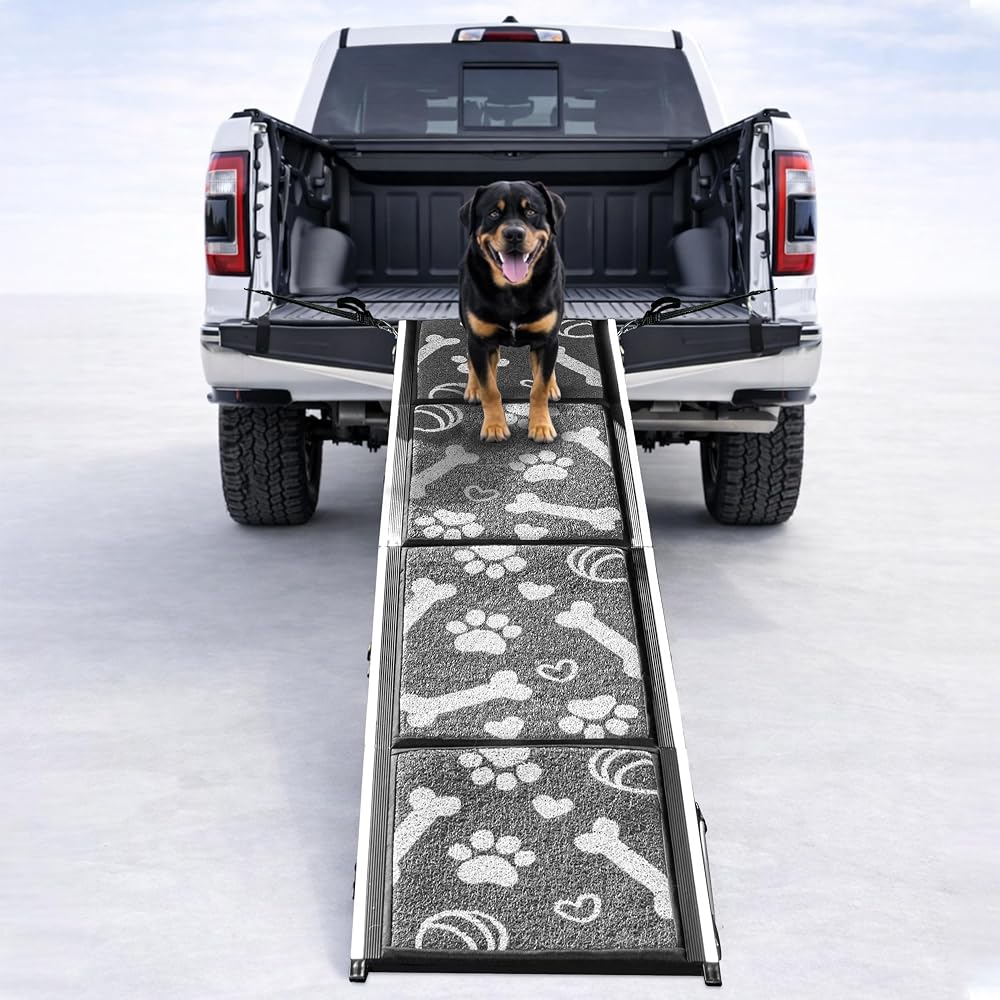
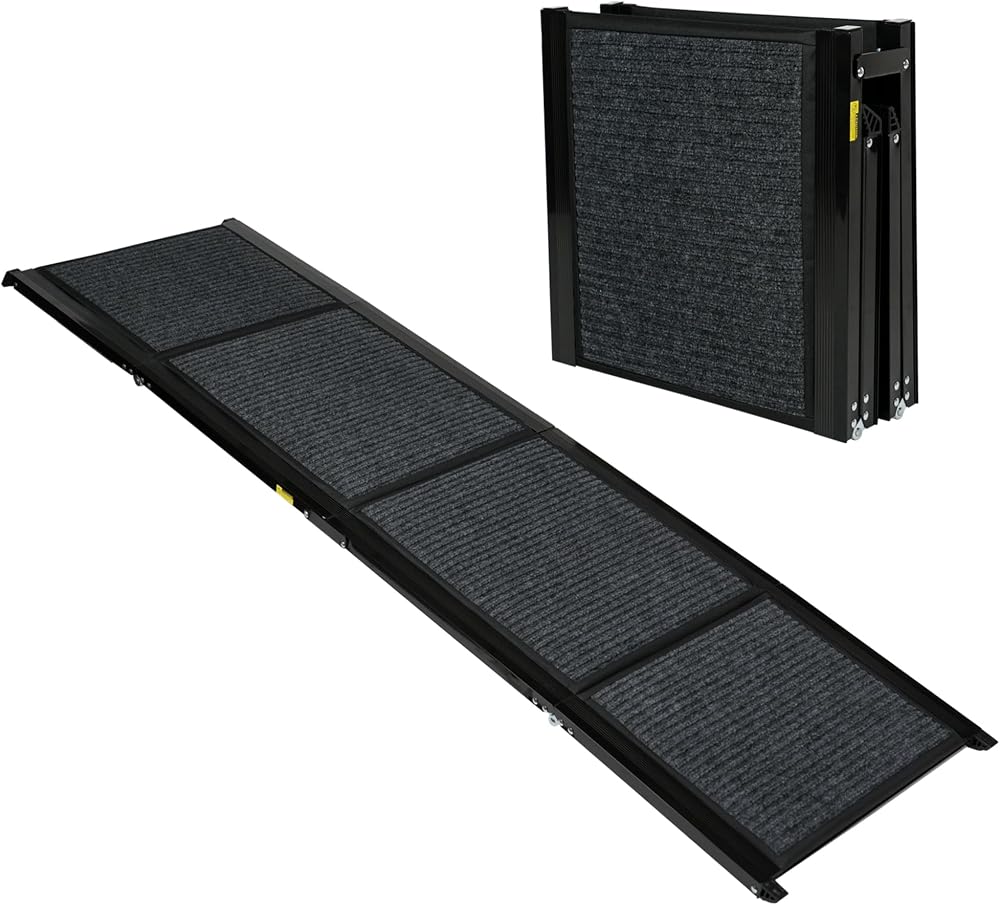
These are the ramps that handle a high RV entry, grip under real paws, and still pack down for a rig with no storage. There is a pick for a high entry, a nervous dog, a big dog, a tight budget, and for inside the RV.

How the RV ramps compare
| Ramp | Type | Best for | Why it stands out |
|---|---|---|---|
| Telescoping Aluminum | Adjustable | Most RVs | Slides to your exact entry height |
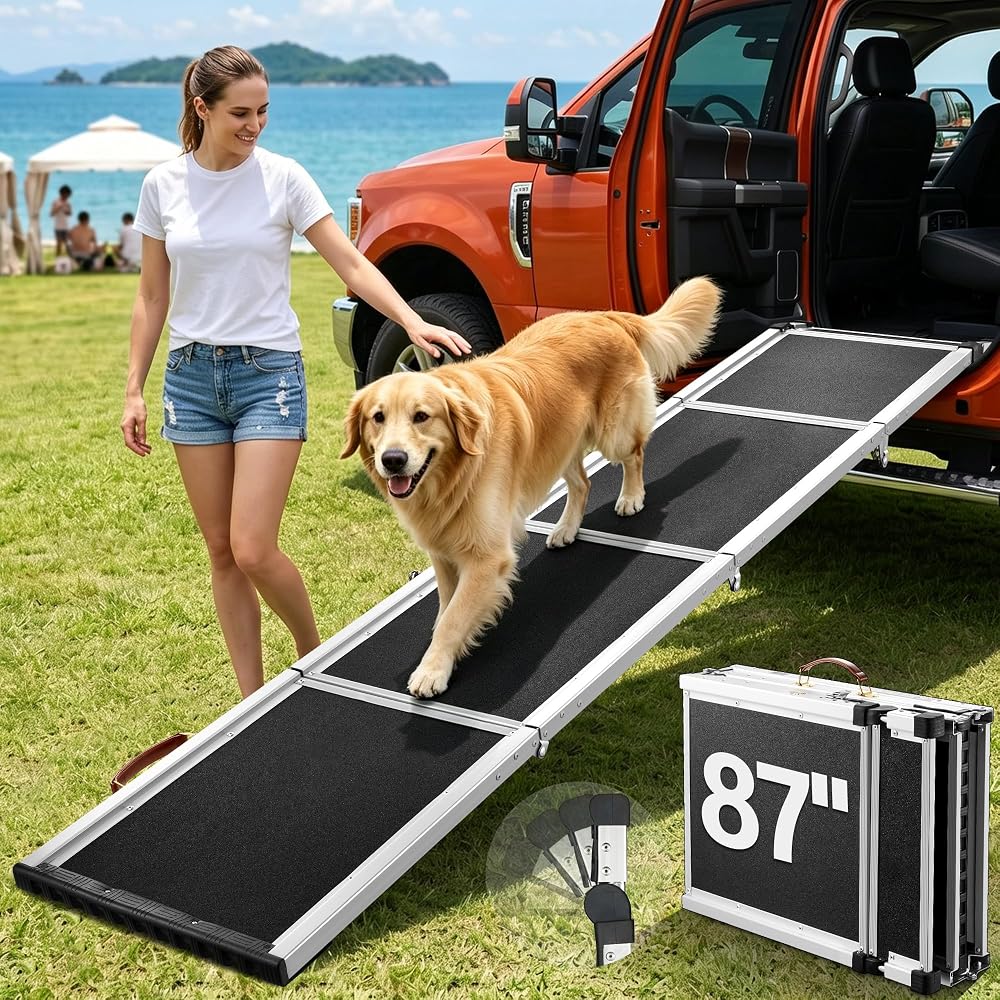
| 87 in Extra-Long | Fixed, long | High entries, 5th wheels | Longest reach for the gentlest slope |
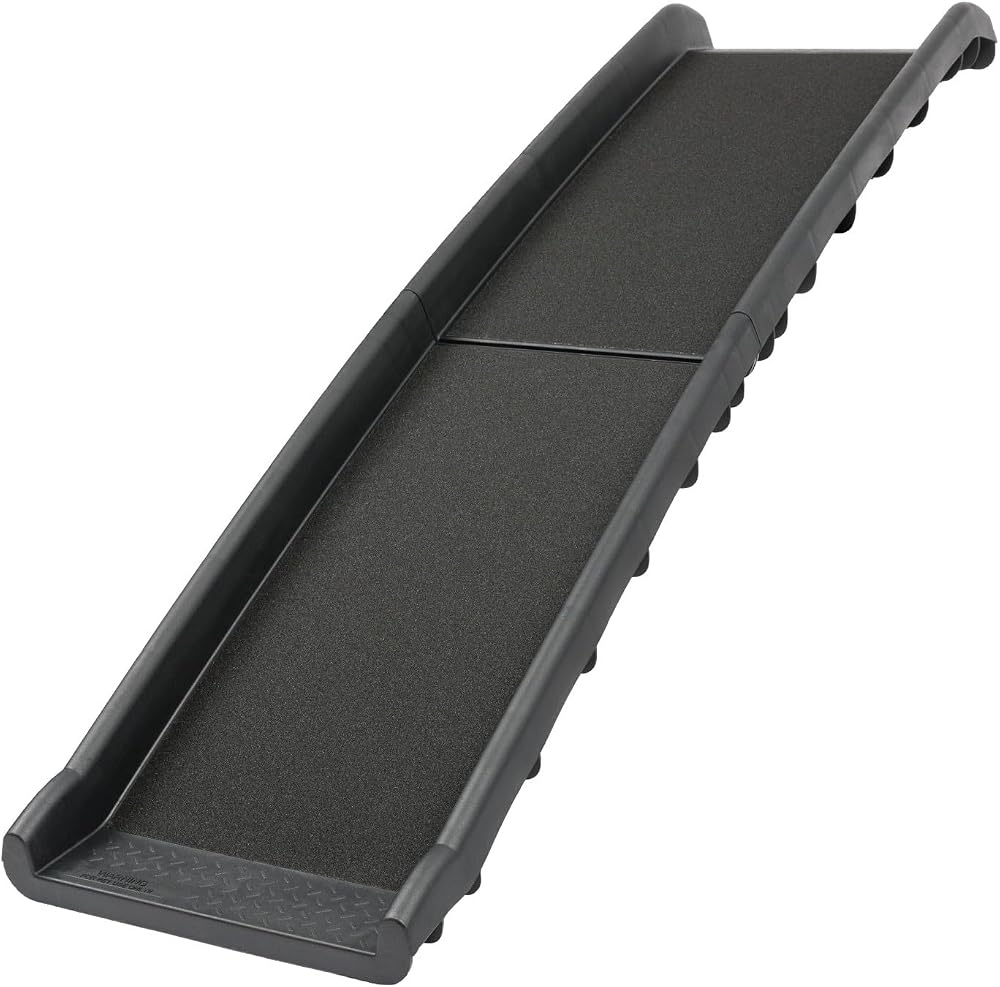
| PetSafe Happy Ride | Folding | Light, easy carry | Lightweight and simple to deploy |
| Extra-Wide 74 x 20 | Folding | Nervous dogs | Wide deck feels more secure |
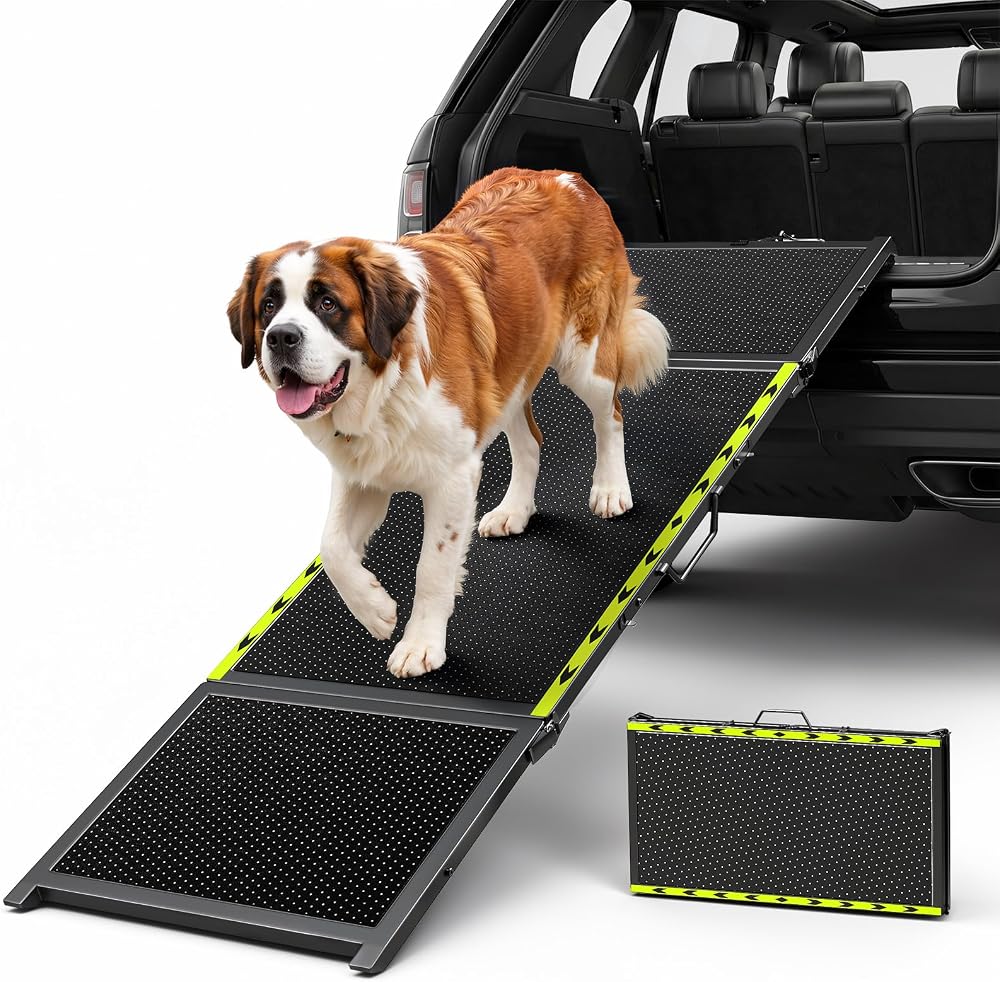
| Heavy-Duty 71 in | Folding | Large dogs | Higher weight rating and a solid deck |
| Compact Felt 63 in | Folding | Inside the RV | Soft, quiet surface for the bed or dinette |
What you get at each price range
Light folding ramp
A simple folding ramp that is easy to carry and store. Great for smaller dogs and lower entries, but check that it is long enough for your door.
The sweet spot
A telescoping, extra-wide, or heavy-duty ramp. Adjustable length and a sturdier deck, which is what most RV entries really need.
Extra-long reach
An 87-inch ramp for very high entries and 5th wheels, so even a tall door keeps a gentle, dog-friendly slope.
Which RV ramp is right for you?
Run the fit finder first, then follow the first line that matches.
Ramps inside the RV: the bed and the dinette
Getting in the door is only half the job. Inside, many dogs also need help up to the cabover bunk, the bedroom platform, or a dinette they sleep on. Space is tight, so a bulky entry ramp will not work here. A compact folding ramp with a soft, quiet surface is the better tool indoors. It stores flat under the bed and does not bang around while you drive. If your dog sleeps up high, this is worth adding on top of your entry ramp. For more on matching a ramp to a bed, see our dog ramps for beds guide.
Ramp vs better RV steps
A ramp is not always the answer. If your entry is very high and there is no room to lay a long ramp, even a good ramp can end up too steep. In that case you have two honest options. One is to lower the rise: add a sturdy step or a small landing so the ramp only has to cover part of the height. The other is to replace the stock fold-out steps with wider, more solid RV steps that many dogs climb more happily than a bouncy factory set. Neither is a failure. The goal is a safe, confident climb, and sometimes the best path is a shorter ramp onto a better step. Use the fit finder above to see which camp you are in.
What to look for in an RV dog ramp
- Enough length for your height. This is the whole game. Match the length to your entry, and when unsure, go longer.
- Real grip. Campsite ramps get wet, muddy, and dusty. The surface has to bite under dirty paws.
- Stable on uneven ground. Look for a wide base, rubber feet, and a lip that hooks the threshold so it cannot slide on gravel.
- Folds small and light. You will deploy and stow it at every stop, so weight and folded size matter more than they do at home.
- Weight capacity with margin. Match it to your dog and leave headroom, especially for big breeds.
- A usable width. A wider deck helps a nervous dog commit, which matters on a high, wobbly entry.
Teach your dog to use the ramp at a campsite
A new ramp plus a strange campground is a lot to ask. Set your dog up to win by practising before the trip and keeping it calm on site.
- Practise at home first, on the flat, with treats, so the ramp is familiar before it is ever at a steep angle.
- Set it at a low height to start, then build up to your real entry over a few sessions.
- At the campsite, place the ramp on firm, level ground and anchor the top lip on the threshold.
- Lure your dog up and down slowly, rewarding each calm trip, and never drag them.
- Keep early campground trips short and positive, away from the busiest, loudest times.
If your dog is scared of the ramp itself, our complete ramp training guide walks through fixing fear and refusal step by step.
Common RV ramp mistakes to avoid
- Buying a short ramp for a high door, then wondering why your dog refuses the steep climb.
- Measuring at home and forgetting that a gravel or sloped site raises the real rise.
- Skipping practice and expecting a nervous dog to nail it at a loud campground.
- Letting the ramp slide because the top lip is not hooked on the threshold.
- Leaving your dog in a hot parked RV while you set up, which is dangerous in warm weather.
What vets and experts say
The case for ramps is about protecting joints. The American Kennel Club notes that ramps are generally the safer way for dogs to get up and down, because a steady slope spares the hips, elbows, and spine the impact of jumping or scrambling steep steps. That matters even more for the repeated high climbs of RV life. On the road, the American Veterinary Medical Association also warns owners to never leave a pet in a parked vehicle in warm weather, since the inside of an RV heats up fast while you set up or pack down. A ramp keeps the climb safe, but supervision and heat sense keep your dog safe overall. This is general information, not veterinary advice, so ask your vet about your dog’s joints and mobility.
Frequently asked questions
What is the best dog ramp for an RV?
How long should a dog ramp for RV steps be?
Why will my dog not use the RV ramp?
Are telescoping ramps good for RVs?
What about a ramp for a very high motorhome or 5th-wheel entry?
Can I use the ramp on a gravel or sloped campsite?
Do I need a different ramp to get my dog up to the RV bed?
How much weight can an RV dog ramp hold?
Is a ramp or better RV steps the right choice?
Will the ramp fit in my RV storage?
How do I teach my dog to use the ramp on a trip?
Can I leave my dog in the RV while I set up?
The verdict
The best dog ramp for RV steps is the one that is long enough to keep the climb gentle. Measure your entry height, run the fit finder, and let the number pick your ramp. For most rigs a telescoping or long aluminum ramp is the sweet spot, a very high entry wants an extra-long ramp or a lower rise, and the RV bed wants a compact indoor ramp. Add a little practice before the trip, keep your dog cool and supervised on site, and your dog will climb in and out as easily as you do.
Keep reading

Olivia Isabella is PetBuyLab’s dog specialist and a lifelong dog owner with hands-on experience caring for senior and large-breed dogs. She researches, compares and lives with the mobility, comfort and everyday-care products she writes about, so she knows the practical details a spec sheet misses: how a ramp’s length sets the real slope a stiff-hipped dog will attempt, why surface grip decides whether a nervous dog commits, and how the wrong pick ends up unused in the garage. Every recommendation is built from manufacturer specifications, documented owner feedback and reputable veterinary sources, and is organised around a specific dog’s needs, never around commission. Her guides are informational and never a substitute for professional veterinary advice.