
Affiliate disclosure. PetBuyLab may earn a commission when you buy through qualifying links. This does not affect the products we include, the tradeoffs we explain, or the price you pay.
Updated September 2026.
Small and long-backed dogs get hurt in a way big dogs usually do not: by jumping on and off the furniture, over and over, every day. For a Dachshund, Corgi, Chihuahua or a small senior, the drop from a bed or sofa is the real danger, not the car. This guide picks low, gentle ramps that protect a long spine and small joints, for beds and couches first and the car second. It sits alongside our best dog ramps for cars and SUVs pillar.
Best picks at a glance
| Situation | Starting point | Main limitation |
|---|---|---|
| Beds and couches of different heights | Height-Adjustable Bed & Couch Ramp | Needs resetting when you move it between rooms |
| A high bed and a nervous or long-backed dog | 64″ Bed Ramp with Side Rails | A large, pricier fixture |
| A simple, affordable couch or low-bed ramp | RAYKI Foldable Bed & Couch Ramp | Check the height it reaches before buying |
| A permanent, furniture-friendly ramp | Solid Wood Bed & Couch Ramp | Heavy and does not fold away |
| Getting a small dog into a low car | Compact 63″ Car Ramp | Too short for a tall SUV |
Why small and long-backed dogs need a ramp
Small and long-backed dogs face two problems a ramp solves. Breeds like the Dachshund, Corgi and Basset have long spines that are prone to intervertebral disc disease, and repeated jumping on and off furniture loads that spine again and again. Toy breeds also carry a risk of a luxating patella and fragile leg joints, where the impact of landing does the damage. A ramp removes the jump, and especially the jump down, which is where most injuries happen. It is not a treatment, so a dog with back pain, an unsteady gait or a sudden refusal to jump needs a veterinary check, not just new equipment.
What to look for in a small-dog ramp
- A low height and a gentle slope. Measure your furniture; short legs need a shallow climb, not a steep one.
- A non-slip surface. A small dog slips easily, so look for carpet or a textured tread the paws can grip.
- Side rails or a wide-enough lane. Rails keep a long back straight and stop a dog stepping off the edge.
- The right length for the height. A tall bed needs a longer ramp than a low couch to stay gentle.
- Stability. Rubber feet and a steady frame matter, because a nervous small dog will refuse a ramp that shifts.
The best ramps for small dogs, reviewed
1. Height-Adjustable Bed & Couch Ramp · Best overall for small dogs
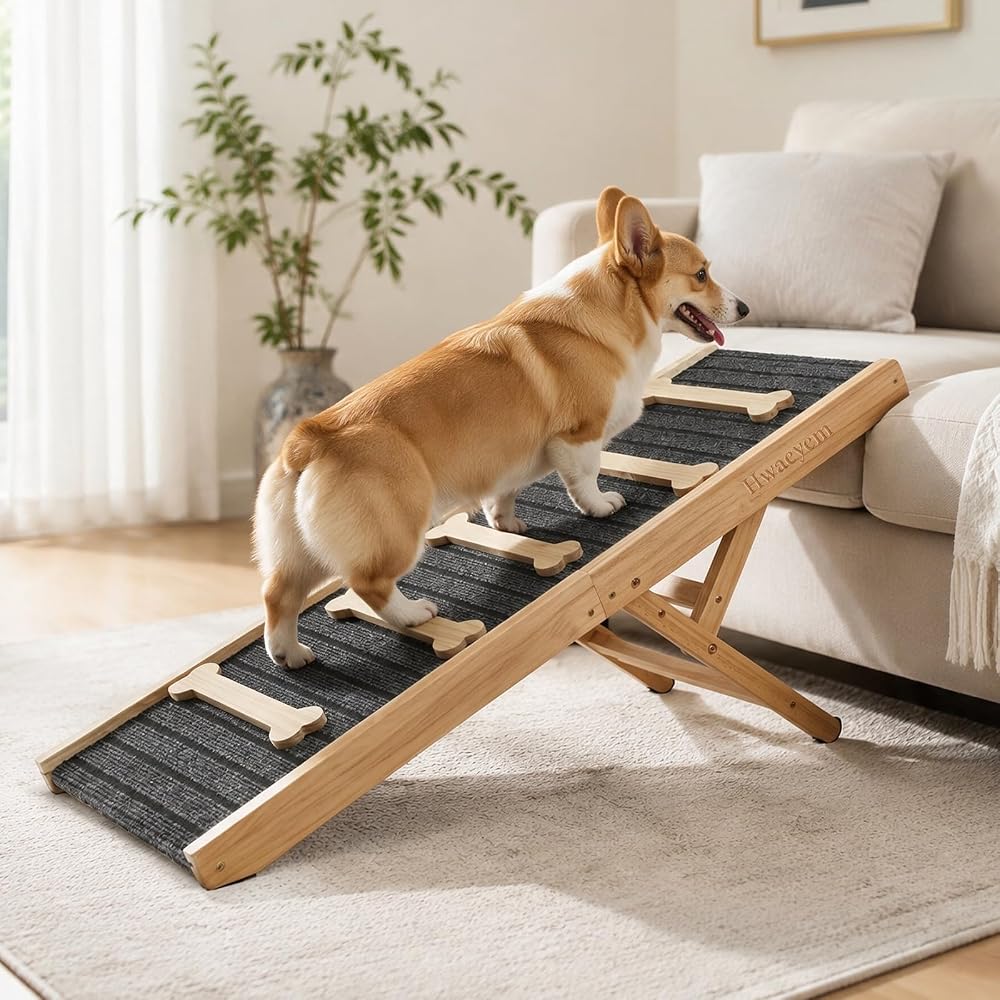
For a small dog that uses the bed, the sofa and the car, one adjustable ramp does the most work. This model folds flat and sets to several heights, so the same ramp stays gentle whether it reaches a low couch or a taller bed. A non-slip surface and a low, steady slope suit short legs and a long back, and it stores away when guests arrive.
2. 64″ Bed Ramp with Side Rails · Best for tall beds
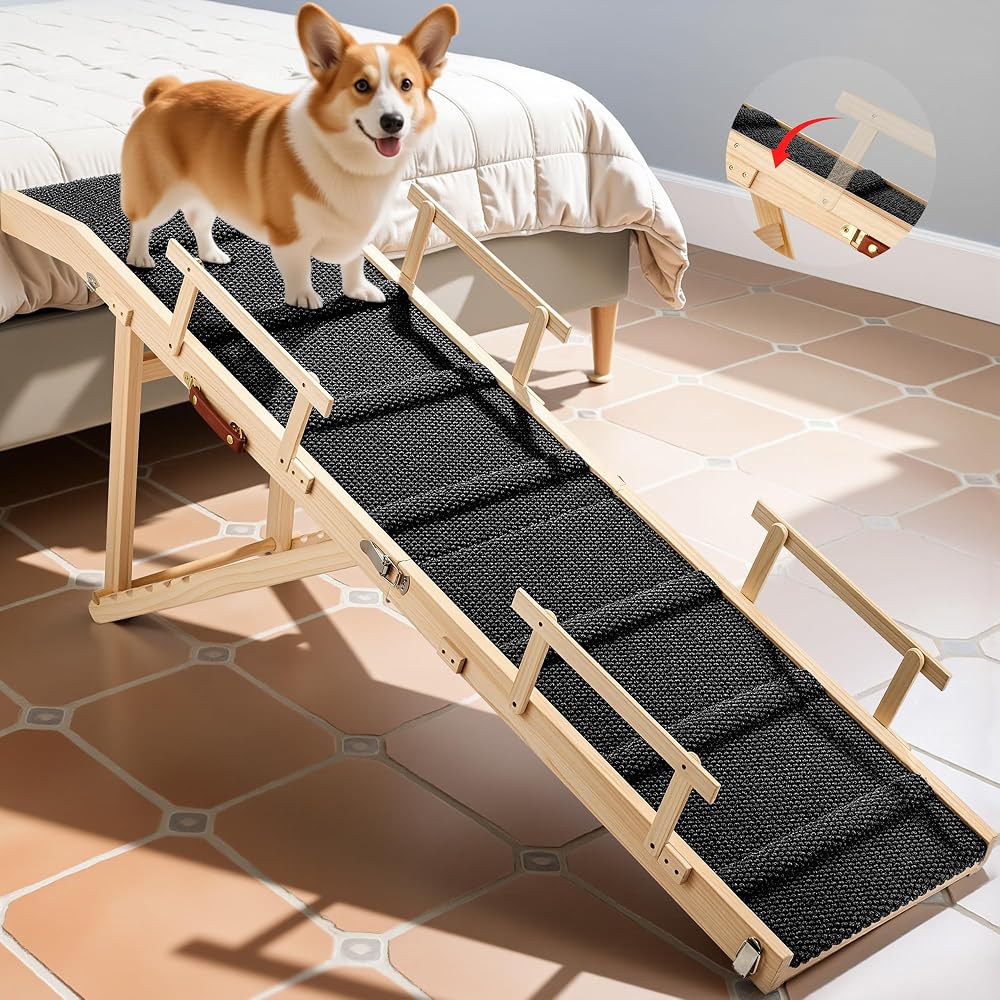
A tall bed is where small dogs most often hurt themselves jumping down. At 64 inches this ramp keeps that descent gentle, and the side rails matter more than they look: they stop a Dachshund or Chihuahua from stepping off the edge and twisting a long spine. It is a larger, pricier piece, so it suits a dog that uses the bed every day.
3. RAYKI Foldable Bed & Couch Ramp · Best budget
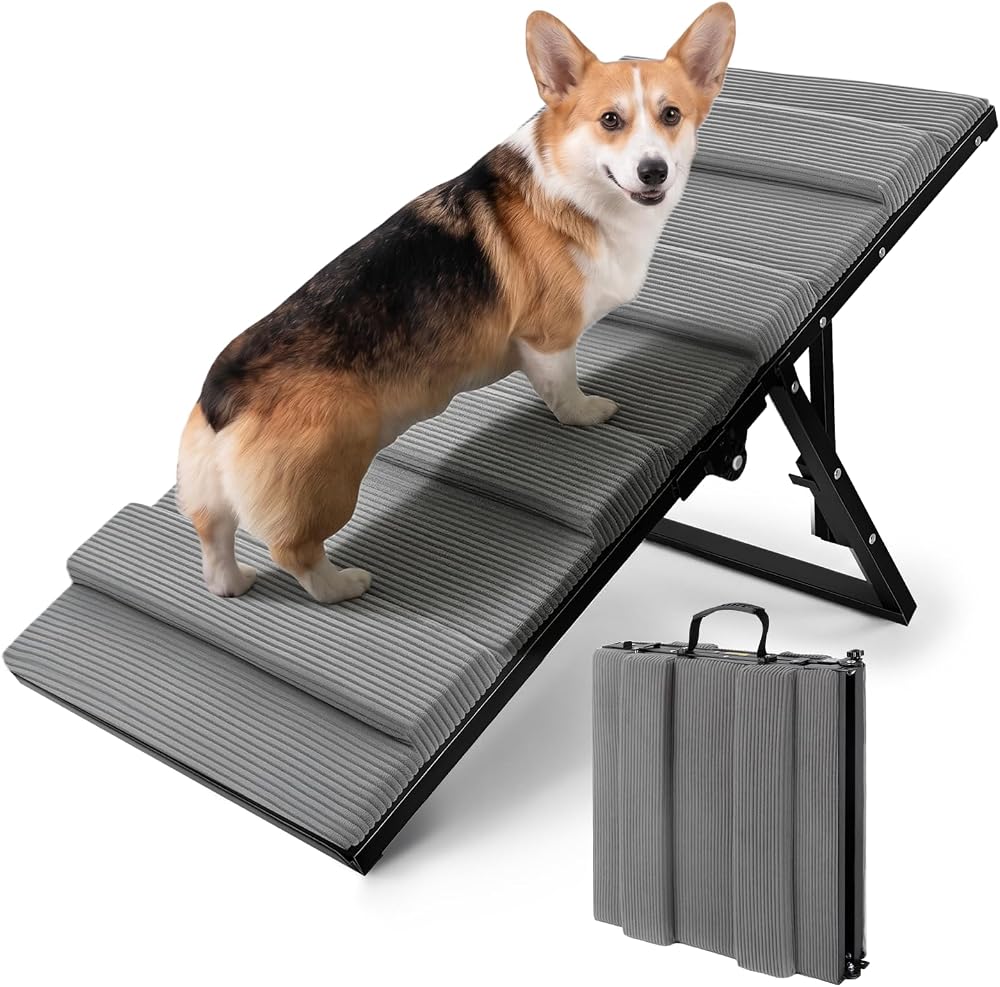
The RAYKI folding ramp covers the essentials for a small dog at a friendly price: a non-slip surface, a low slope and a quick fold for storage. It is a sensible first ramp for a sofa or a lower bed when you want to stop the daily jumping without spending a lot. Check the height it reaches against your furniture before buying.
4. Solid Wood Bed & Couch Ramp · Best sturdy wooden ramp
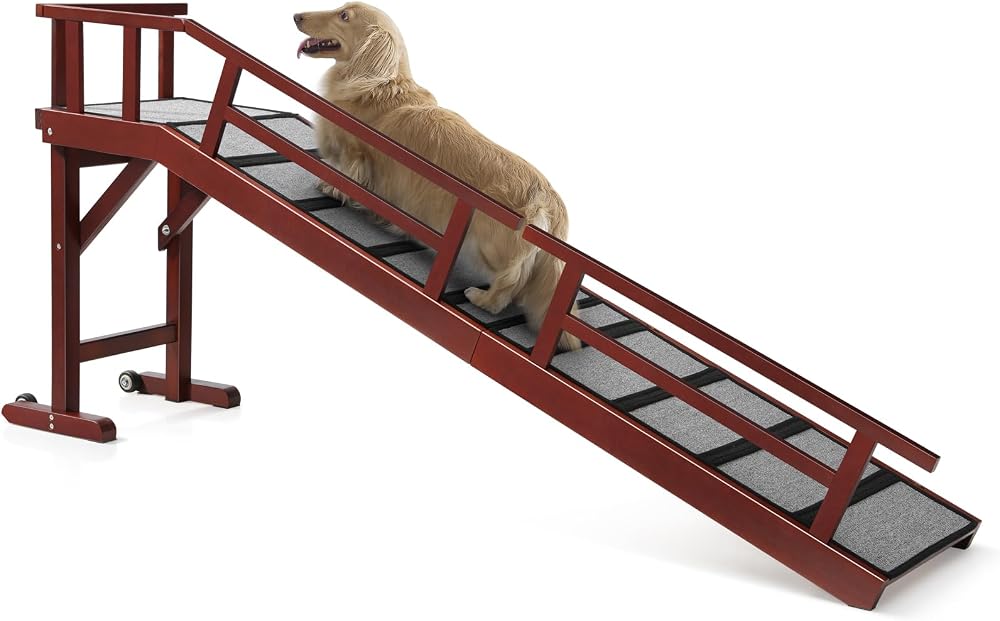
If the ramp is going to live beside the bed, a solid wood frame looks less like pet gear and feels rock steady underfoot, which a cautious small dog appreciates. The wide, carpeted deck gives dependable grip, and the build handles years of daily use. It is heavier and more of a fixture than a folding ramp, which is rather the point.
5. Compact 63″ Car Ramp · Best for the car
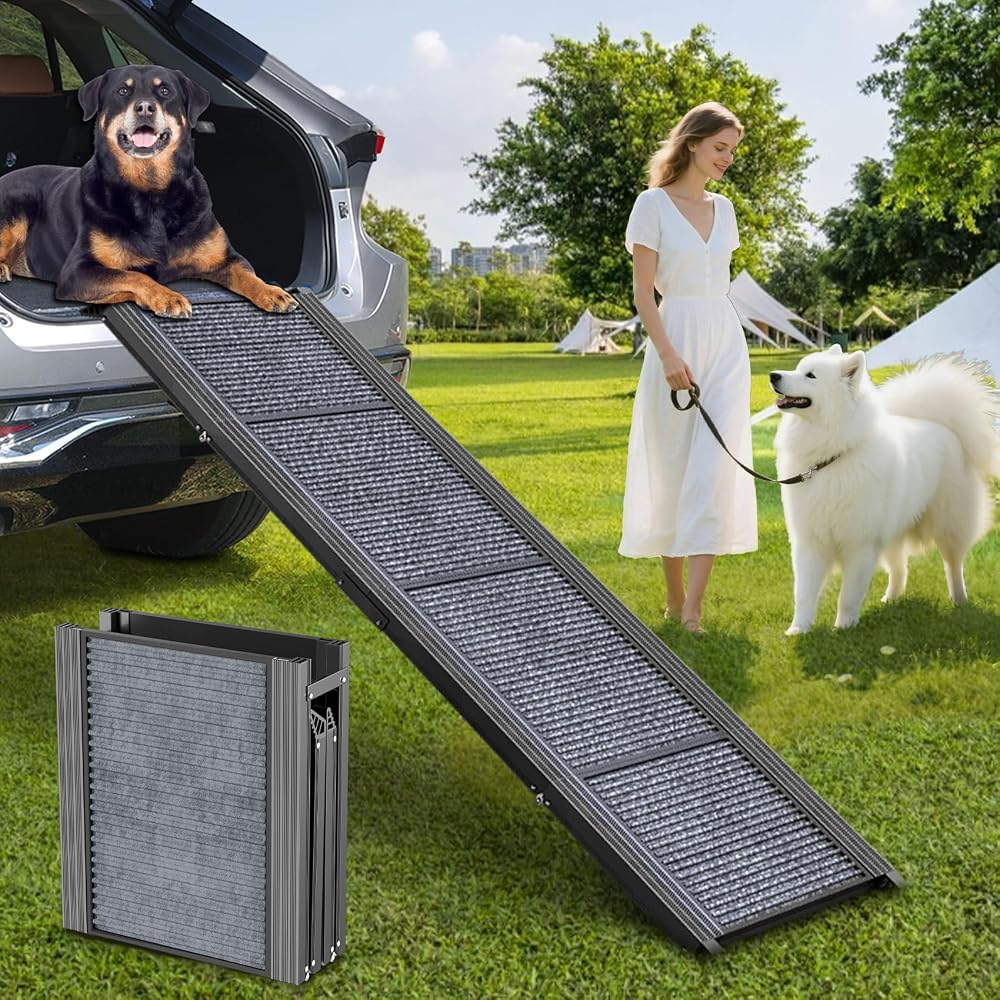
Small dogs still ride in cars, and lifting a long-backed dog in and out is exactly the twisting motion a ramp prevents. At 63 inches this folding ramp is short enough to handle and store, and gentle enough for a low hatchback or sedan. For a tall SUV a small dog is usually better on a longer ramp, so match the length to the vehicle.
Bed ramp or car ramp first?
Most small-dog owners need a furniture ramp first and a car ramp second. Jumping off a bed or a high sofa several times a day does more cumulative damage than the occasional car trip, and a small dog is easy to lift into a car in a pinch. If you buy one ramp, make it the one your dog uses most. If you drive often, add a short, low car ramp so you are not twisting a long back in and out of the boot. To match a ramp to your exact furniture or car height, our dog ramp size calculator does the math for you.
How to introduce a small dog to a ramp
- Place the ramp flat on the floor and let your dog investigate it, rewarding any sniff or step.
- Lure your dog across the flat ramp with a high-value treat, keeping sessions short and calm.
- Raise one end only a little and practise both directions, rewarding a slow, unhurried crossing.
- Put a non-slip mat at the top and bottom so the transitions feel predictable.
- Increase the height gradually to your furniture or car, never lifting or pushing a frightened dog.
- If your dog hesitates or refuses, lower the difficulty and build confidence before trying again.
Safety notes for small dogs
- Keep a non-slip surface at the top and bottom so the step on and off is secure.
- Supervise the descent, which is harder and more dangerous than the climb up.
- Retire any ramp that wobbles, sags or has lost its grip; a nervous small dog will not use it anyway.
- Treat a sudden refusal to climb, a yelp or a change in gait as a reason to call your veterinarian.
- Never force a scared dog onto a ramp; confidence built slowly lasts, pressure does not.
Frequently asked questions
What is the best dog ramp for a Dachshund?
Start with a low, gentle ramp for the furniture your dog uses most, ideally with side rails to keep a long spine straight. An adjustable bed and couch ramp is the most versatile first buy; add a short car ramp if your Dachshund rides often. The goal is to remove the jump down, which is where back injuries usually happen.
At what height does a small dog need a ramp?
There is no single number, but the jump matters more than the height. A drop of even 16 to 24 inches, repeated daily, strains a small dog joints and a long dog spine. If your dog hesitates, misjudges the landing or has a diagnosed back or knee problem, a ramp helps at any height.
Are ramps or stairs better for small dogs?
For a long-backed dog a ramp is usually kinder, because it removes the step-up motion that flexes the spine. Some small, agile dogs prefer compact stairs where floor space is tight. Try what your dog will use calmly, and ask your vet if your dog has an IVDD history.
Can a ramp prevent IVDD in a Dachshund?
A ramp cannot prevent a genetic condition, but reducing repeated jumping is one of the main lifestyle steps vets recommend for at-risk breeds, alongside weight control and careful handling. Use it as part of that plan, not as a cure.
How do I get my small dog to use a ramp?
Start with the ramp flat on the floor, reward any sniff or step, then raise it slowly over several short sessions with treats. Put a non-slip mat at the top and bottom so the transitions feel safe. Never lift or push a frightened dog onto it; let confidence build.
The bottom line
For a small or long-backed dog, the ramp that earns its place is the one your dog uses every day. An adjustable bed and couch ramp suits most homes; a tall bed with a nervous dog is safer with the railed 64-inch ramp; and a short car ramp spares your dog, and your back, the lift in and out of the boot. Introduce it slowly and treat any sudden change in movement as a reason to see your vet. See our best dog ramps for cars and SUVs pillar for larger vehicle ramps, our best dog ramps for senior and arthritic dogs guide for older dogs, and our dog ramp size calculator to match a ramp to your furniture or car height.
Research sources

Olivia Isabella is PetBuyLab’s dog specialist and a lifelong dog owner with hands-on experience caring for senior and large-breed dogs. She researches, compares and lives with the mobility, comfort and everyday-care products she writes about, so she knows the practical details a spec sheet misses: how a ramp’s length sets the real slope a stiff-hipped dog will attempt, why surface grip decides whether a nervous dog commits, and how the wrong pick ends up unused in the garage. Every recommendation is built from manufacturer specifications, documented owner feedback and reputable veterinary sources, and is organised around a specific dog’s needs, never around commission. Her guides are informational and never a substitute for professional veterinary advice.