
Updated October 29, 2026 · Written by Olivia Isabella, PetBuyLab editorial team
A dog gate is one of the simplest ways to keep your dog safe and give yourself some breathing room, blocking off the stairs, keeping a puppy out of the kitchen, or creating a calm zone away from the front door. The trick is matching the gate to the opening and, above all, to where it goes. There is one safety rule that matters more than any other: at the top of the stairs you must use a hardware-mounted gate, never a pressure-fit one. This guide covers the best dog gates for stairs, doorways and wide openings, and helps you pick the right type.
Disclosure: PetBuyLab is reader supported. When you buy through links on this page we may earn a small affiliate commission, at no extra cost to you. It never changes our picks, and we do not take payment for placement. This is general guidance, not veterinary advice.
For most doorways and the bottom of stairs, a pressure-mounted walk-through gate with an auto-close door is the easy, convenient pick. At the top of a staircase, always choose a hardware-mounted gate that screws into the wall, because a pressure gate can be pushed out and fall. For big openings, use an extra-wide gate. Measure your opening first, then use the fit finder below.
- Top of the stairs: hardware-mounted gates only. Never a pressure gate.
- Doorways and bottom of stairs: pressure-mounted walk-through gates are fine.
- Measure the opening at the exact spot the gate will sit before buying.
- Match the gate height to your dog, taller for big or jumpy dogs.
- A pet or cat door lets small pets pass while the dog stays put.
We judge dog gates on how securely they mount, whether they suit the spot they are meant for, the width range they fit, build quality, ease of walking through with your hands full, and how well they hold up to a determined dog. We are clear about where pressure gates are and are not safe, and we cross-check verified owner reviews. We never take payment for placement. PetBuyLab is affiliate supported but editorially independent, and this is general information, not veterinary advice.
Dog Gate Fit Finder
Tell us where the gate goes and how wide the opening is, and this tool recommends the right type and flags the one safety rule you must not skip.
The top-of-stairs safety rule
If you remember one thing from this guide, make it this. At the top of a staircase you must use a hardware-mounted gate, one that screws into the wall studs or the banister, never a pressure-mounted gate. Pressure gates hold themselves in place by pushing against the door frame, and while that is perfectly safe in a doorway, at the top of stairs a determined dog, a stumble, or a child leaning on it can pop the gate loose and send it, and whoever is against it, tumbling down. Child-safety and pet-safety guidance is consistent on this point. Save pressure gates for doorways and the bottom of the stairs, where a gate coming loose does not mean a fall.
The 6 best dog gates
From an easy auto-close walk-through to a hardware gate for the stairs and an extra-wide span, here are strong picks for every spot in the house.

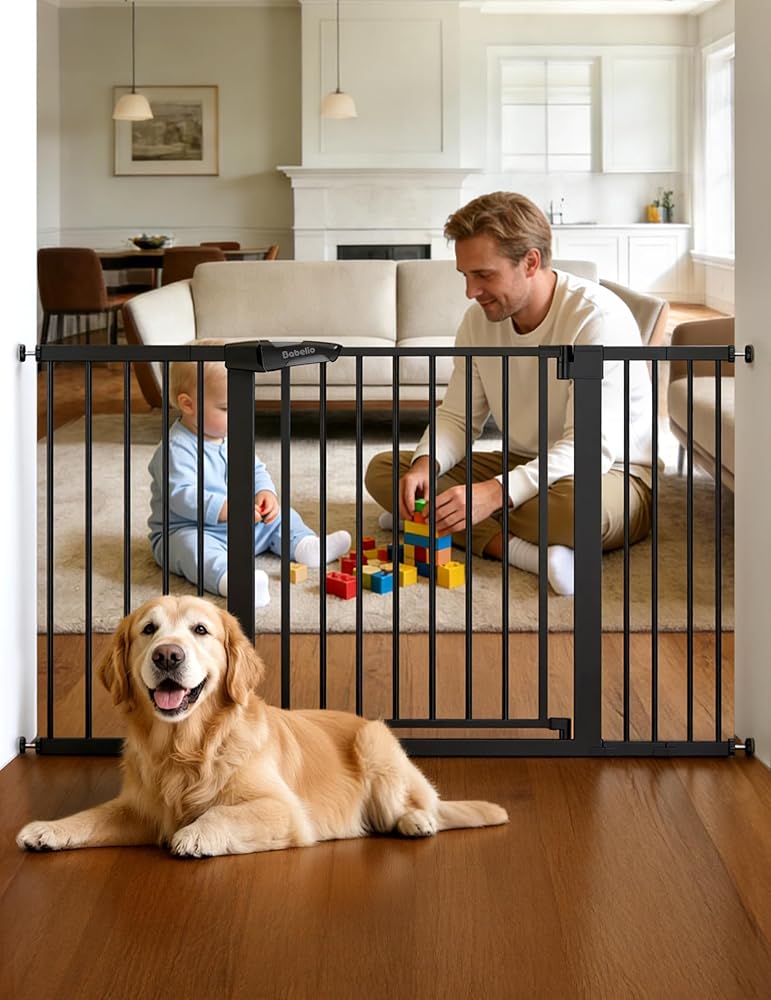
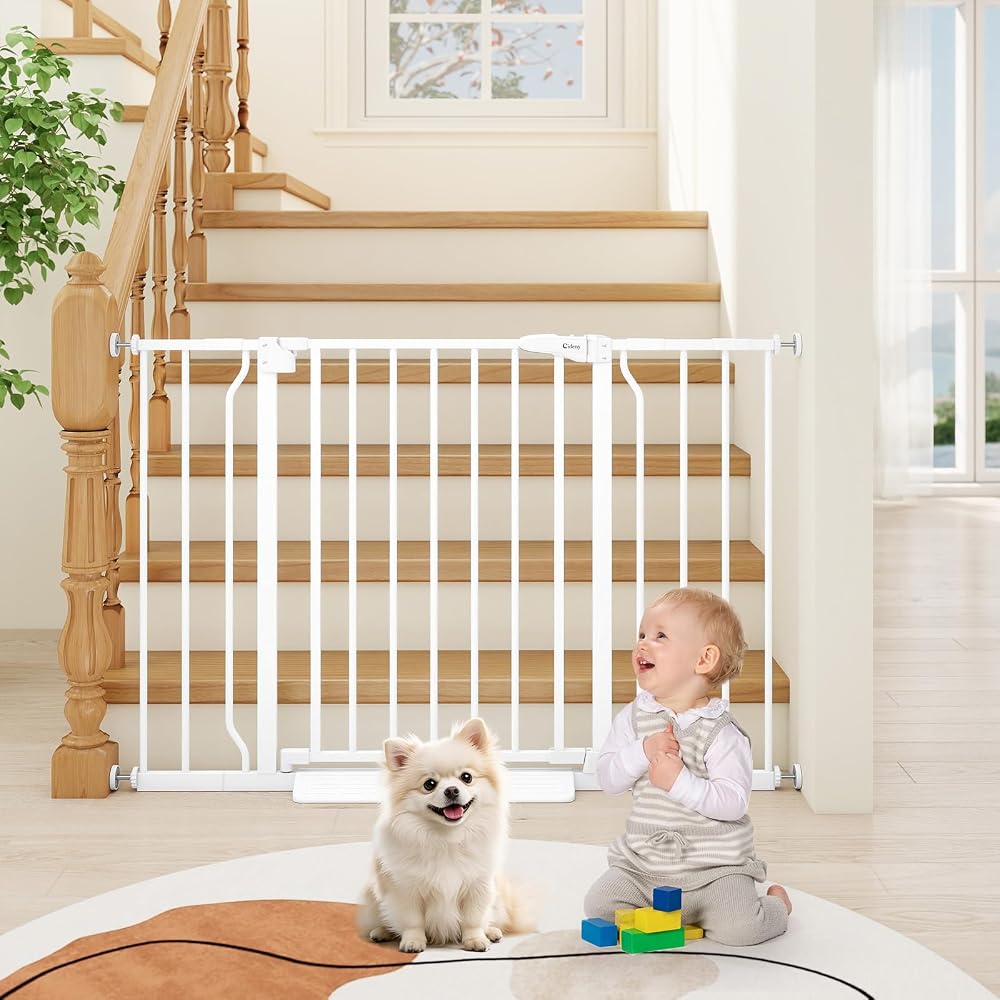
How the dog gates compare
| Gate | Mount | Best for | Why it stands out |
|---|---|---|---|
| Auto-Close Walk-Through | Pressure | Doorways | Self-closing door, easy with full hands |
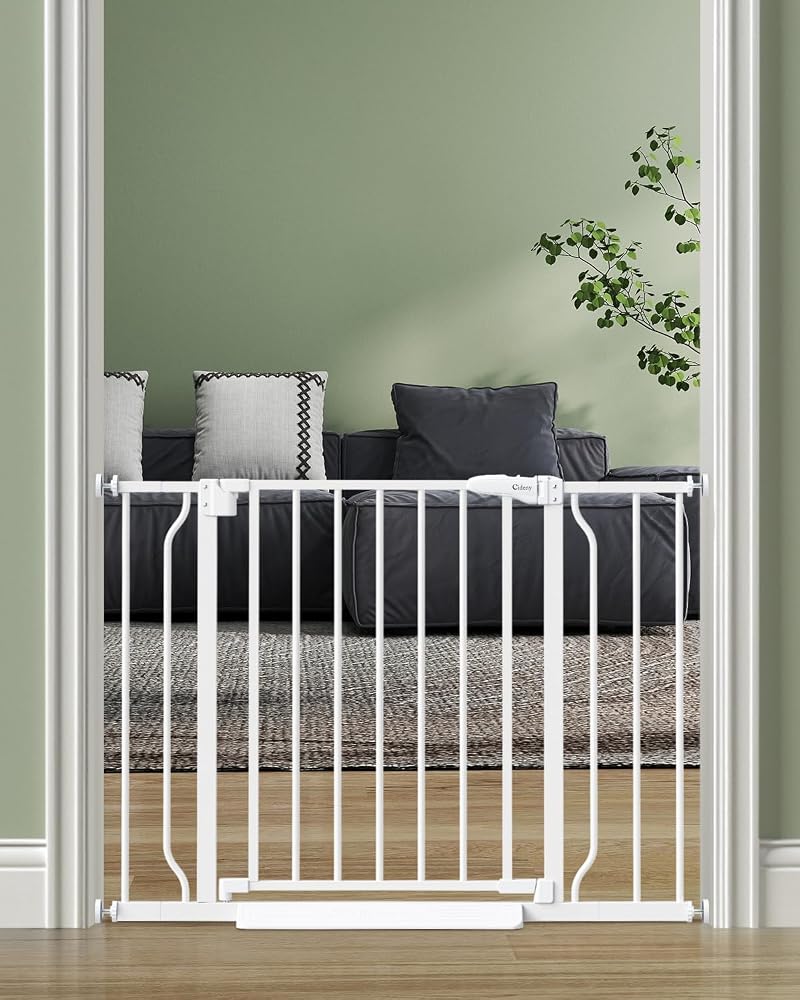
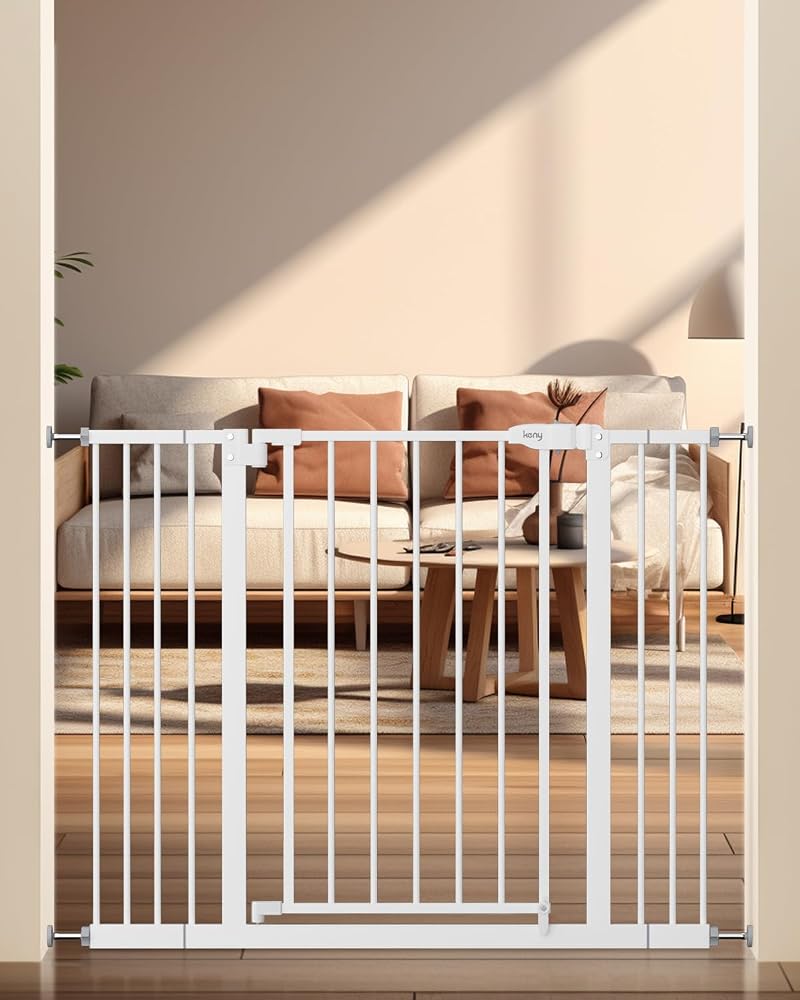
| keny Auto-Close | Hardware | Top of stairs | Screws in for a secure, safe stair gate |
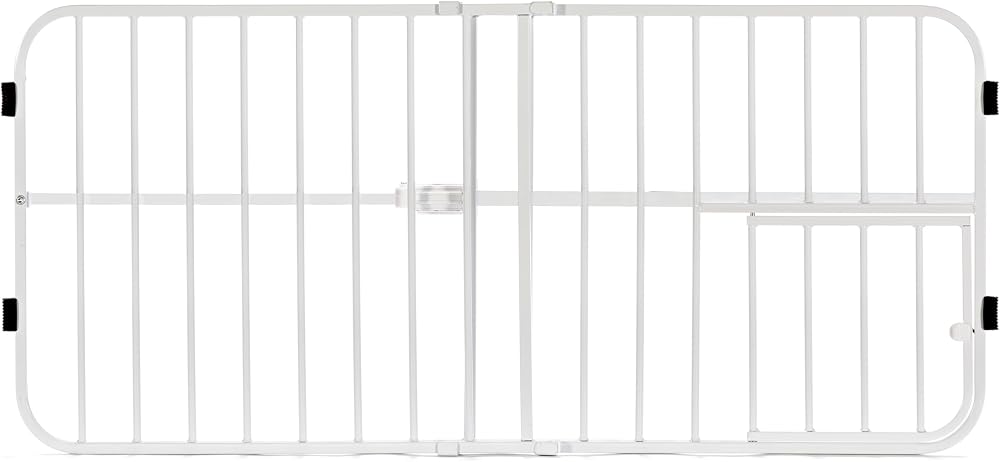
| Carlson Lil Tuffy | Pressure | Small pet door | Lets cats and small pets slip through |
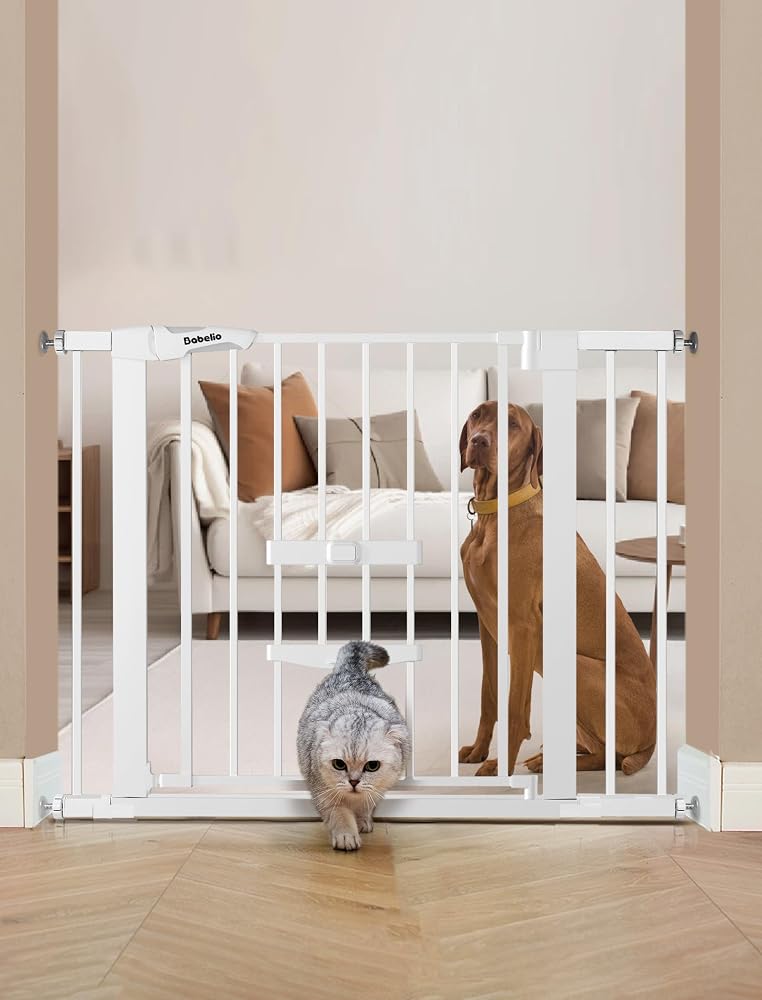
| Babelio Cat Door | Pressure | Multi-pet homes | Adjustable cat door, hugely reviewed |
| Babelio Extra-Wide | Pressure | Wide openings | Spans up to 55 inches with a walk-through door |
| Auto-Close Value | Pressure/Hardware | Budget | Flexible fit, auto-close, low price |
What you get at each price range
Simple pressure gate
A basic pressure-mounted gate for a doorway or the bottom of stairs. Fine for a calm dog. Check the width range and that it locks securely.
Auto-close walk-through
A sturdier gate with a self-closing, walk-through door and a wider fit range. The best balance for everyday use around the home.
Hardware or extra-wide
A hardware-mounted stair gate, an extra-wide span, or a gate with a built-in pet door. For stairs, multi-pet homes, and large openings.
What to look for in a dog gate
- The right mount for the spot. Hardware at the top of stairs, pressure for doorways.
- A width range that comfortably fits your opening, with extensions if needed.
- Enough height for your dog, taller for big dogs or jumpers.
- A walk-through door you can open one-handed, ideally auto-closing.
- A secure, child-proof latch a clever dog cannot nose open.
- A pet or cat door if you want small pets to pass while the dog stays put.
How to measure and fit a dog gate
A gate only keeps your dog safe if it fits the opening properly. Spend five minutes before you buy.
- Measure the width at the exact height the gate will sit, since walls and banisters are rarely perfectly square.
- Check both the minimum and maximum width the gate covers, and buy extensions if your opening is wider.
- For the top of the stairs, pick a hardware gate and locate the studs or a solid banister to screw into.
- Fit the gate level and test that the latch locks firmly and the door swings freely.
- Push on it firmly before trusting it, and re-check pressure gates regularly as they can loosen.
Dog gate mistakes to avoid
- Using a pressure-mounted gate at the top of the stairs. Always hardware-mount there.
- Buying before measuring, then finding the gate is too narrow or too wide.
- Choosing a gate too short for a big or jumpy dog that can leap or climb it.
- Ignoring a loose pressure gate. Re-check and re-tighten it regularly.
- Picking a latch your dog can nudge open, which defeats the whole gate.
What the experts say
Trainers and safety organisations recommend gates both for safety and for giving dogs a calm, defined space, which can reduce stress and unwanted behaviour. The widely shared rule across child and pet safety guidance is that pressure-mounted gates belong in doorways and at the bottom of stairs, while the top of a staircase calls for a hardware-mounted gate that cannot be pushed loose. Gates are also a useful training tool, creating a settle zone away from the front door or the kitchen. Choose a height that suits your dog, keep latches out of a clever dog’s reach, and check the fit often. This is general information, not veterinary advice.
Frequently asked questions
What is the best dog gate?
Can I use a pressure-mounted gate at the top of the stairs?
How tall should a dog gate be?
How do I measure for a dog gate?
What is the difference between a pressure and a hardware gate?
Are dog gates with cat doors worth it?
Can a dog gate help with training?
Will a dog gate damage my walls or door frame?
What width of gate do I need for a wide opening?
How do I stop my dog from jumping the gate?
Are auto-close dog gates better?
Can I use a baby gate as a dog gate?
The verdict
A dog gate buys you safety and sanity, and the right one comes down to where it goes. For doorways and the bottom of the stairs, an auto-close pressure-mounted walk-through gate is convenient and secure. At the top of the stairs, never compromise: use a hardware-mounted gate that screws into the wall. Add a pet door for a multi-pet home, or an extra-wide gate for a big opening. Measure first, mount it properly, and check the fit from time to time.
Keep reading

Olivia Isabella is PetBuyLab’s dog specialist and a lifelong dog owner with hands-on experience caring for senior and large-breed dogs. She researches, compares and lives with the mobility, comfort and everyday-care products she writes about, so she knows the practical details a spec sheet misses: how a ramp’s length sets the real slope a stiff-hipped dog will attempt, why surface grip decides whether a nervous dog commits, and how the wrong pick ends up unused in the garage. Every recommendation is built from manufacturer specifications, documented owner feedback and reputable veterinary sources, and is organised around a specific dog’s needs, never around commission. Her guides are informational and never a substitute for professional veterinary advice.