
Updated September 29, 2026 · Written by Olivia Isabella, PetBuyLab editorial team
Your dog cannot make the jump onto the bed anymore, or you are trying to protect a puppy’s growing joints, and now you face one question: a ramp or a set of stairs? Both solve the same problem, getting your dog up and down safely, but they suit very different dogs, homes, and budgets. This guide breaks down the real differences, shows when each one wins, and points you to specific models worth buying.
Disclosure: PetBuyLab is reader supported. When you buy through links on this page we may earn a small affiliate commission, at no extra cost to you. This never changes which products we recommend.
Choose a ramp for senior dogs, dogs with joint disease or a long back (IVDD risk, like Dachshunds), large or heavy dogs, dogs recovering from surgery, and anything getting into a car or SUV. Choose stairs for small, young, healthy dogs in tight spaces where a full length ramp will not fit. When in doubt, a ramp is the gentler, safer choice because it removes the jumping motion entirely.
- Ramps remove the jump entirely, so they are gentler on the joints and spine. Stairs still add a small hop on every step.
- Vets and the AKC generally favor ramps for senior, arthritic, long backed, large, and post surgery dogs.
- Stairs suit small, young, healthy dogs and tight spaces where a long ramp will not fit.
- For a car or SUV, choose a ramp. Stairs rarely reach vehicle height safely.
- A gentle angle, solid traction, and slow training matter more than which type you pick.
The real difference between a ramp and stairs
A ramp is a single inclined surface. Your dog walks up or down a gentle slope with all four feet in contact the whole time, so there is no jumping and no impact between levels. Stairs are a series of small platforms. On each step your dog makes a little hop up or a small drop down, which is easier on floor space but repeats stress on the joints and spine.
That single distinction drives almost every decision below. If your dog needs help because of age, pain, or a vulnerable back, the goal is to remove impact, and a ramp does that best. If your dog is small, young, and healthy and you are mostly fighting for floor space, stairs can be the smarter fit.
What vets and the AKC say about ramps vs stairs
Most veterinary and canine health sources point the same way: when a dog is at risk, reduce impact. The American Kennel Club notes that ramps are usually the safer choice for dogs with mobility or joint issues, because they avoid the jumping that stairs require. Guidance on osteoarthritis in dogs and managing canine osteoarthritis stresses limiting high impact movement like jumping on and off furniture, which is exactly what a ramp prevents.
For a healthy young dog with no joint concerns, neither option is harmful, and stairs can be the more practical, space saving fit. The point the experts agree on is simple: the goal is protecting the joints and the spine. If your dog is older, long backed, recovering from surgery, or large, lean toward a ramp. This is general information, not veterinary advice, so check with your own vet about your dog’s specific needs.
Dog ramp vs dog stairs at a glance
| Feature | Dog ramp | Dog stairs |
|---|---|---|
| Joint impact | Lowest (gradual, no jumping) | Higher (a hop up and drop down on every step) |
| Best for | Senior, arthritic, long backed, large, post surgery | Small, young, agile, healthy dogs |
| Floor space | Needs more length for a gentle slope | Compact footprint, fits tight corners |
| Learning curve | Some dogs hesitate on an open slope at first | Most dogs read defined steps quickly |
| Portability | Folding ramps travel well (car, SUV, trips) | Usually stays put in one room |
| Traction | Full length non slip surface | Depends on grip built into each step |
| Height it suits | Cars, SUVs, and tall beds with the right length | Lower beds and standard couches |
| Typical price | Budget to premium | Budget to mid range |
| Main watch out | Too short means too steep an angle | Steep, narrow steps can be as hard as jumping |
When a dog ramp is the better choice
- Senior or arthritic dogs. Repeated step downs jar sore joints; a slope removes that impact.
- Dogs recovering from surgery (spay, ACL or CCL repair, back procedures) that need controlled, low impact movement.
- Long backed breeds prone to IVDD such as Dachshunds, Corgis, and Basset Hounds, where jumping is a known spinal risk.
- Large or heavy dogs, where even a normal step drop puts real force through the joints.
- Getting into a car, SUV, or truck. Stairs rarely reach vehicle height safely; a folding ramp is built for it.
- Any dog that already flinches or yelps when landing from a jump.
When dog stairs are the better choice
- Small, young, healthy dogs with no joint or back issues.
- Tight bedrooms where a long ramp simply will not fit against the bed.
- Lower furniture, like a standard couch or a low platform bed.
- Dogs that feel unsure on an open slope but confident on clearly defined steps.
- Homes that want a compact, furniture like piece that blends into the room.
Best pick by situation
| Your situation | Better pick | Why |
|---|---|---|
| Senior dog with stiff hips | Ramp | No repeated step down impact |
| Dachshund or long back (IVDD risk) | Ramp | Keeps the spine level, no jumping |
| Recovering from surgery | Ramp | Controlled, low impact movement |
| Small agile dog, small bedroom | Stairs | Compact footprint saves floor space |
| Getting into an SUV or truck | Ramp | Reaches vehicle height safely |
| Low couch, young small dog | Stairs | Quick to learn, tidy footprint |
| Large or giant breed | Ramp | Handles the weight and spares joints |
| Puppy (protect growing joints) | Ramp | Gentlest on developing joints |
Ramp or stairs for your exact setup
The best pick often comes down to the piece of furniture and the dog in front of it. Here is how the ramp vs stairs question plays out in the most common situations.
Dog ramp vs stairs for a bed
A standard bed is often tall enough that stairs turn steep, which can be as hard on the joints as the jump you were trying to avoid. A small, healthy dog can manage compact stairs, but for a senior or long backed dog a ramp keeps the climb gentle from floor to mattress.
Dog stairs vs ramp for a couch or sofa
A sofa sits lower, so this is where compact stairs shine for small dogs, and they tuck neatly beside the furniture. If your dog has joint problems, a short ramp with a gentle slope is still the kinder choice.
Ramp or stairs for a car or SUV
Choose a ramp every time. Vehicle floors are high, stairs rarely reach that height safely, and a folding ramp is built to bridge the ground to the boot or back seat. See our best dog ramps for cars and SUVs guide for vetted picks.
Ramp or stairs for a very high bed
Go with a long ramp set at a gentle angle. Very tall beds force stairs to be steep, which defeats the purpose. Use our ramp size calculator to confirm the length you need for the height.
Recommended ramps
If your dog fits the ramp column above, these two cover the two most common jobs: reaching furniture indoors, and loading into a vehicle.
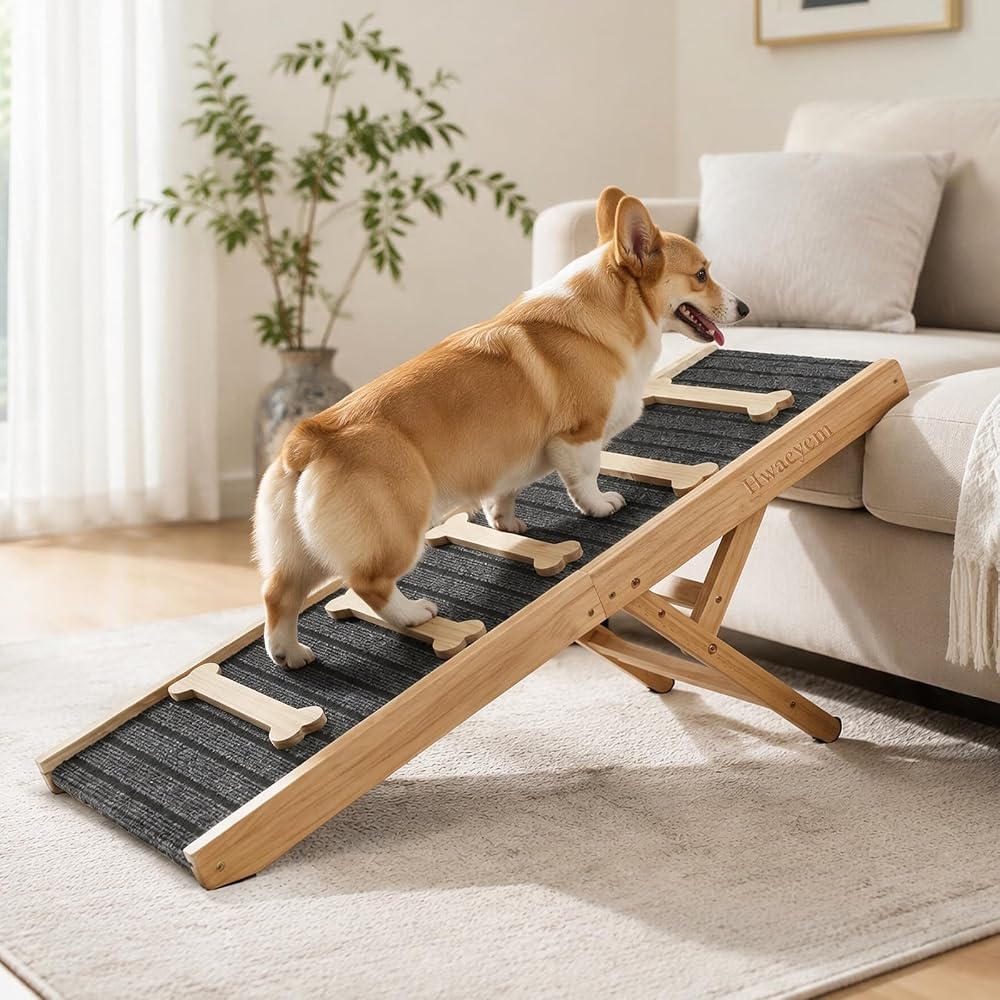
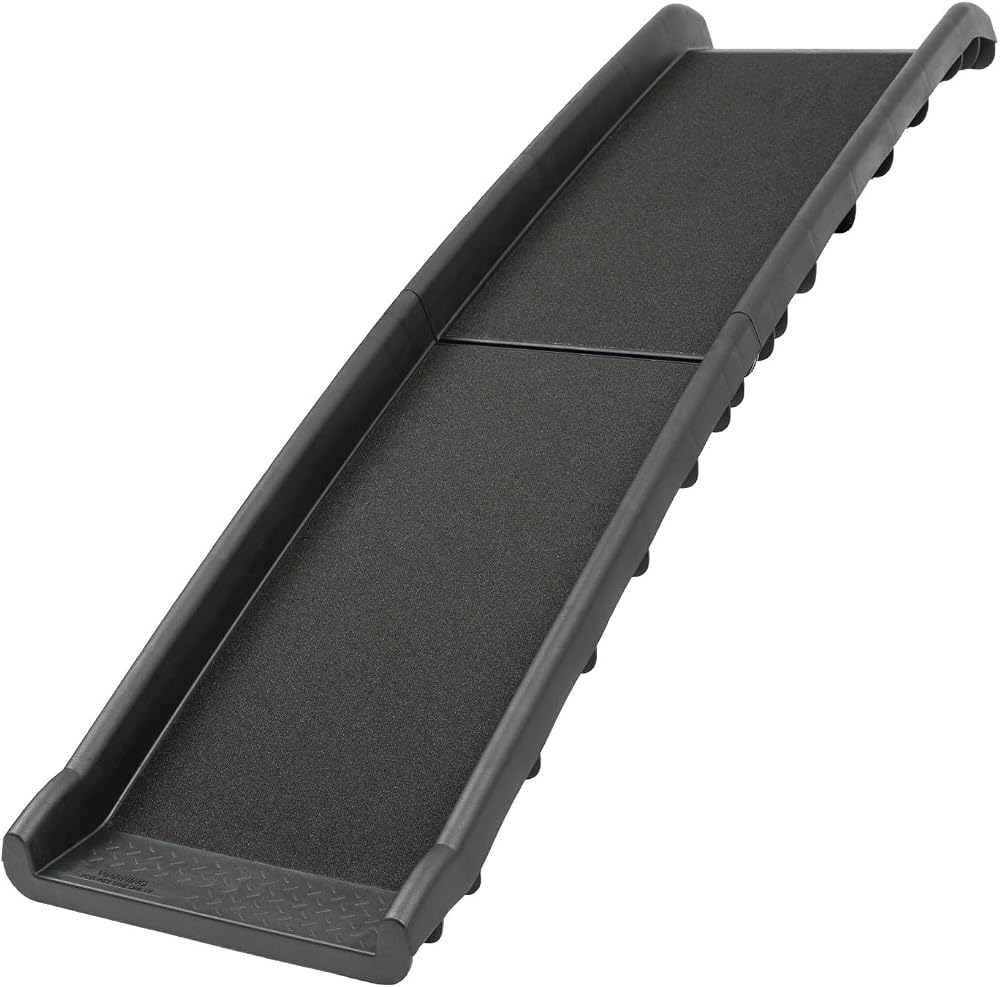
Recommended stairs
If your dog fits the stairs column (small, healthy, tight space), these two are the safest bets: a well padded foam set and a strong value pick.
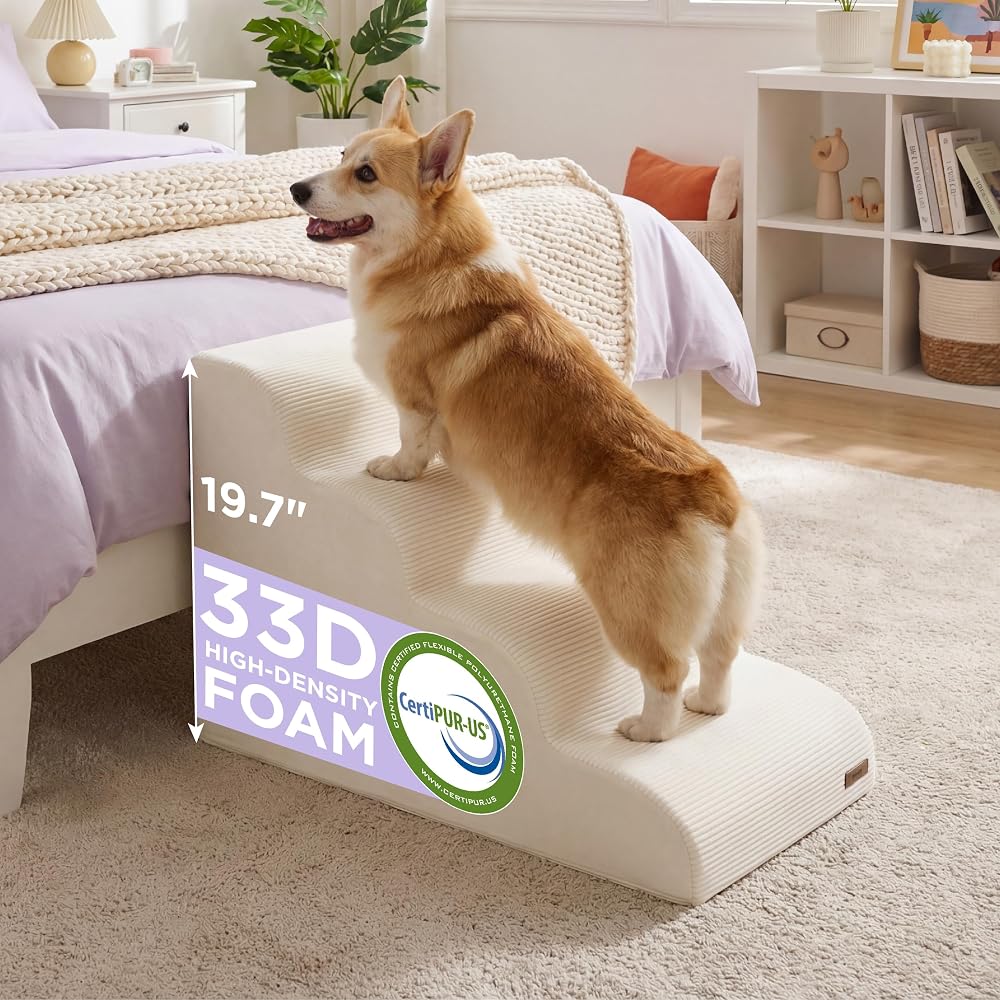

What to look for, whichever you choose
Once you have picked a ramp or stairs, these are the features that separate a safe, long lasting piece from one your dog will refuse to use.
- Traction. A non slip surface is the single most important safety feature. Carpet, rubber, or textured steps stop slips and build confidence.
- Weight capacity. Match it to your dog with a margin to spare, especially for large or giant breeds.
- Stability. It should not wobble. Rubber feet, a wide base, and a locking hinge keep it steady under a nervous dog.
- Angle or step height. Gentler is safer. A lower incline on a ramp, or shorter steps on stairs, protects at risk joints.
- Footprint and folding. Measure your floor space, and check whether it folds flat if you need to store it or travel with it.
- Easy cleaning. Removable, washable covers make a foam ramp or stairs far easier to live with.
How much do dog ramps and stairs cost?
Both come in a wide range. Budget foam stairs and short ramps sit at the low end, mid range folding ramps and sturdier stairs land in the middle, and long, adjustable, or heavy duty vehicle ramps reach the premium end. As a rule, a quality ramp costs a little more than comparable stairs because it uses more material, but for an at risk dog the joint protection is worth the difference. We link to live Amazon prices above rather than list static numbers, which go out of date quickly.
Can you use both a ramp and stairs?
Yes, and plenty of homes do. A common setup is a ramp at the bed for the gentlest nightly climb and compact stairs at a low couch where floor space is tight. If your dog has a serious joint or back condition, use a ramp everywhere it matters most, and keep stairs only where the height is low and your dog is already confident.
How to introduce a ramp or stairs
Whichever you choose, do not expect instant use. A few short, treat based sessions turn a scary new object into a daily habit.
- Set it against the furniture at a gentle angle and make sure it is stable and does not wobble.
- Let your dog sniff and explore it with no pressure.
- Lure them with a treat, one step or a few inches at a time.
- Reward every small success. Never push, drag, or lift them onto it.
- Practice both up and down in short, upbeat sessions.
- Keep it in the same spot so it becomes part of the routine.
Common mistakes to avoid
- Buying a ramp too short for the height, which makes the slope too steep to help.
- Choosing steep, narrow stairs that ask for the same jump you were trying to avoid.
- Skipping traction. Slippery surfaces scare dogs off fast.
- Not securing it, so it shifts underfoot and breaks your dog’s trust.
- Expecting instant use with no training.
What you get at each price range
Compact & folding
Lightweight folding and shorter ramps. Fine for smaller dogs and lower heights, with basic traction and lower weight limits.
The sweet spot
Sturdier, wider ramps with better traction, side rails, and higher weight ratings. The best balance for most dogs.
Tall & heavy duty
Long aluminum, telescoping, or solid hardwood adjustable ramps for tall heights, large dogs, and heavy daily use.
Ramp or stairs? Decide in four questions
Answer these in order and follow the first one that fits your dog.
Frequently asked questions
Are ramps better than stairs for dogs?
Are stairs bad for a dog’s joints?
Which is better for a Dachshund?
Do dogs use ramps or stairs more easily?
What about getting into a car or SUV?
Can I use stairs for a large dog?
My bed is very high. Ramp or stairs?
What if my dog refuses both?
Do vets recommend ramps or stairs for dogs?
Are ramps or stairs better for a dog with a bad back?
Do dogs prefer ramps or stairs?
Are dog ramps worth it?
The verdict
For most dogs that actually need help, a ramp is the safer pick because it removes the jumping motion entirely. Reserve stairs for small, healthy, agile dogs in homes where floor space is tight. Whichever you choose, match it to the height, keep the angle gentle, add traction, and train slowly. Do that and either option will protect your dog for years.
Keep reading
- Best Dog Ramps for Cars and SUVs (the full buyer’s guide)
- Best Dog Ramps for Senior and Arthritic Dogs
- What Size Dog Ramp Do I Need? (with calculator)
- Best Dog Ramps for Dachshunds and Small Dogs

Olivia Isabella is PetBuyLab’s dog specialist and a lifelong dog owner with hands-on experience caring for senior and large-breed dogs. She researches, compares and lives with the mobility, comfort and everyday-care products she writes about, so she knows the practical details a spec sheet misses: how a ramp’s length sets the real slope a stiff-hipped dog will attempt, why surface grip decides whether a nervous dog commits, and how the wrong pick ends up unused in the garage. Every recommendation is built from manufacturer specifications, documented owner feedback and reputable veterinary sources, and is organised around a specific dog’s needs, never around commission. Her guides are informational and never a substitute for professional veterinary advice.