
Updated October 29, 2026 · Written by Olivia Isabella, PetBuyLab editorial team
Dog stairs let a small, senior or short-legged dog reach the sofa or bed without a big jump, and that matters more than it sounds. Jumping up and especially down from furniture puts real strain on joints and spines over time. The right set of steps protects your dog and saves your back from lifting them. There is one honest caveat worth saying up front: for dogs with serious joint problems or very long backs, a gentle ramp is often kinder than stairs. This guide covers the best dog stairs and steps for beds and couches, by height, plus when a ramp is the better call.
Disclosure: PetBuyLab is reader supported. When you buy through links on this page we may earn a small affiliate commission, at no extra cost to you. It never changes our picks, and we do not take payment for placement. This is general guidance, not veterinary advice.
Match the steps to the furniture height: about 3 steps for a sofa, 4 to 5 for a bed, and 5 to 6 for a tall bed. Choose cushioned foam steps for a senior or achy dog, sturdy extra-wide steps for a large dog, and lightweight steps for a small one. If your dog has a very long back or serious joint disease, consider a ramp instead, which is gentler on the spine. Use the height helper below.
- Match the number of steps to the height of the sofa or bed.
- Cushioned foam steps suit seniors and dogs with sore joints.
- Long-backed breeds and severe joint disease often do better with a ramp.
- Steps must be non-slip and stable, placed snug against the furniture.
- Most dogs need a little training to use steps confidently.
We judge dog stairs on the right height and step count for common furniture, stability and a non-slip surface, how gentle the climb is on joints, the weight capacity and width for the dog, and whether the material suits seniors or heavier dogs. We are honest about when a ramp is the better choice, and we cross-check verified owner reviews. We never take payment for placement. PetBuyLab is affiliate supported but editorially independent, and this is general information, not veterinary advice.
Dog Stairs Height Helper
Tell us how high the furniture is and a little about your dog, and this tool recommends how many steps, which material, and whether a ramp might suit your dog better.
Dog stairs or a ramp: which is better?
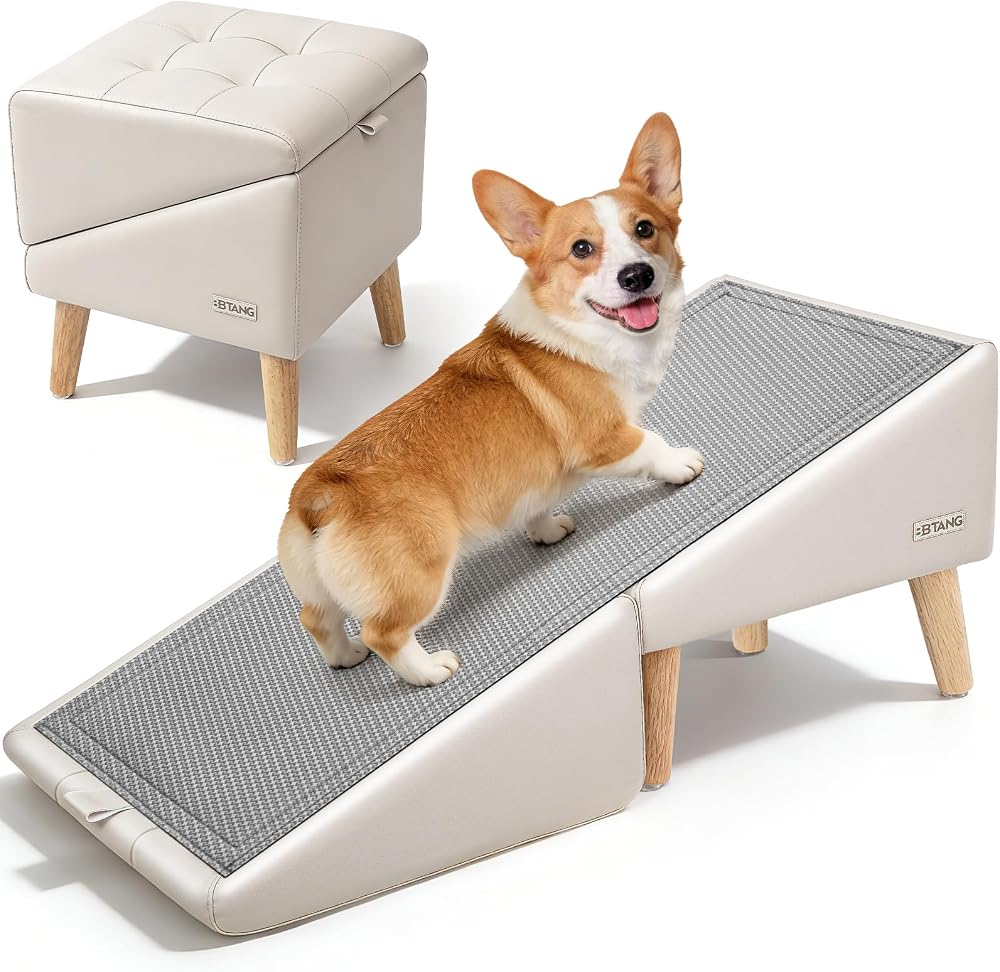
Both help your dog get up and down safely, but they suit different dogs. Stairs take up less floor space, feel natural to most dogs, and are easy to tuck beside a bed or sofa. A ramp gives a continuous, gentle slope with no stepping action, which is easier on the spine and on badly arthritic joints. As a rule of thumb: healthy small and senior dogs usually do fine with well-sized steps, while dogs with serious joint disease or long backs, such as dachshunds, often do better with a ramp. If you are unsure, our ramp versus stairs comparison walks through it, and we have a full guide to the best dog ramps for beds.
The 6 best dog stairs and steps
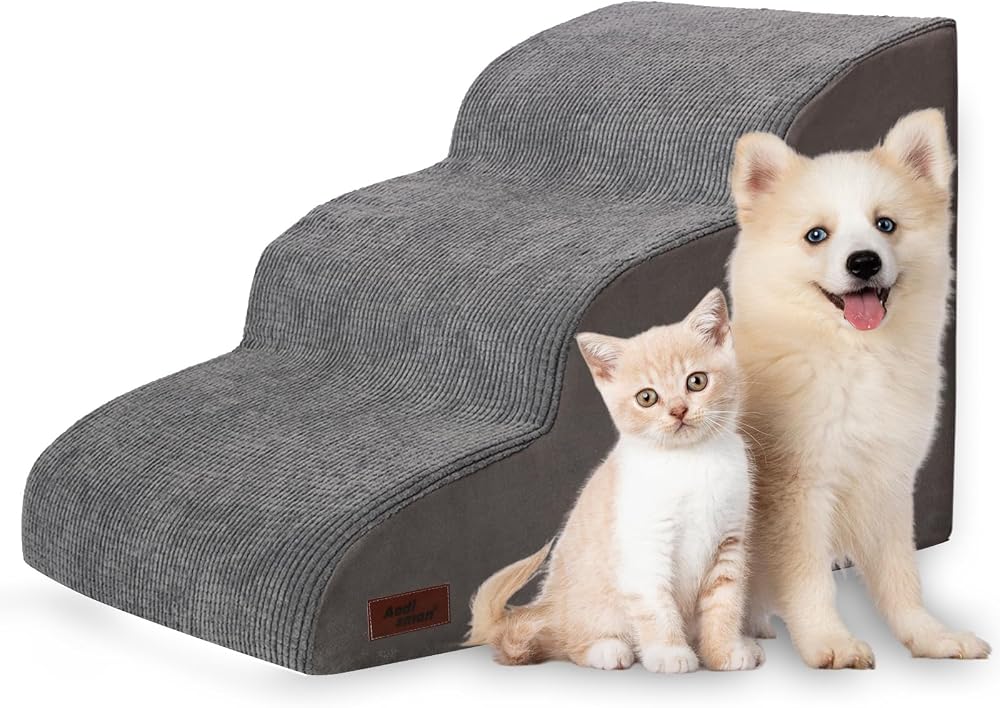
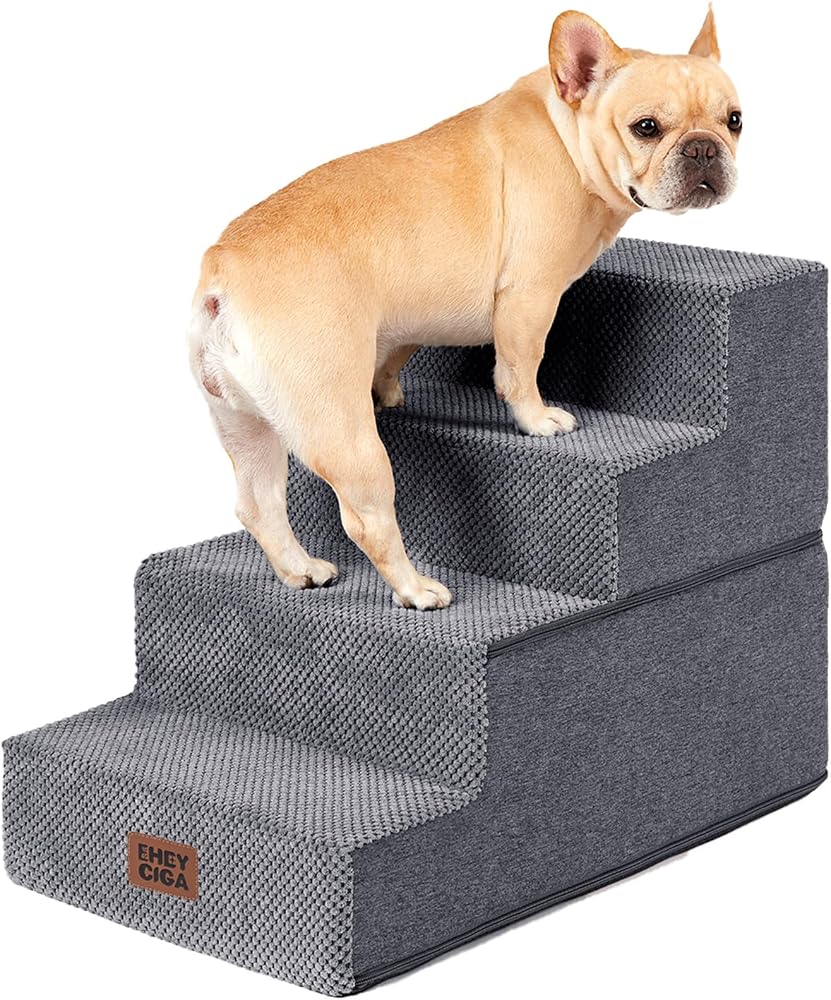
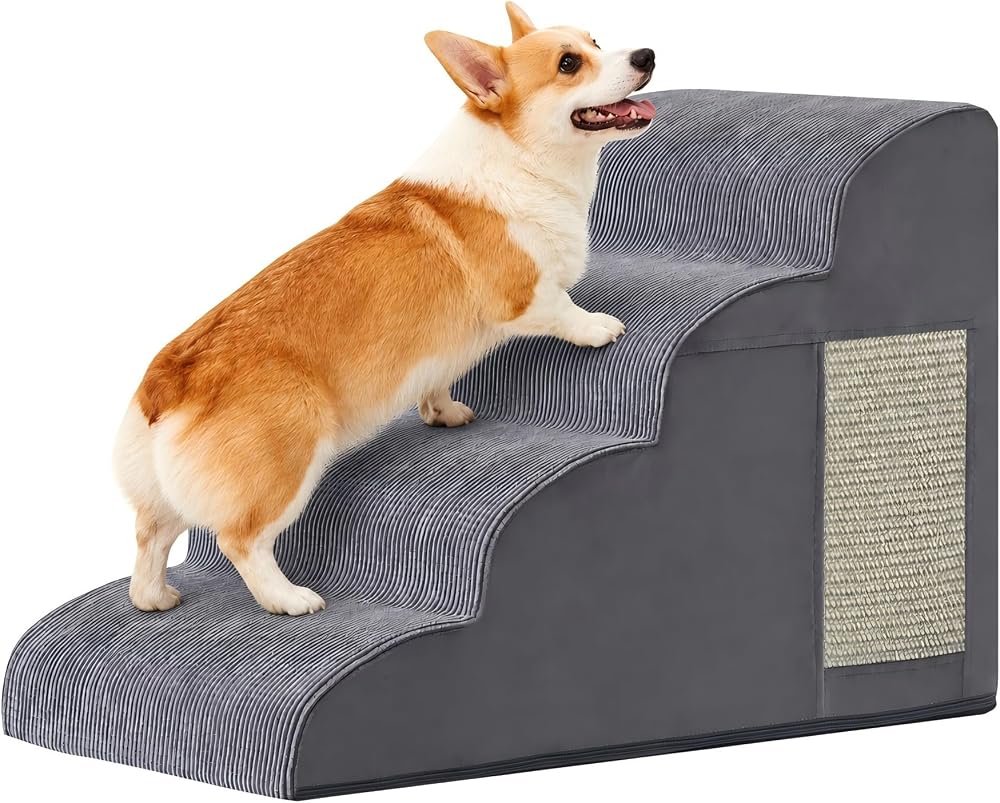
From a do-it-all 3-step set to cushioned foam for seniors and extra-wide steps for big dogs, here are strong picks for every height and dog.



How the dog stairs compare
| Stairs | Height | Best for | Why it stands out |
|---|---|---|---|
| 3-Step Pet Stairs | Sofa | All-rounder | Right height for couches, light and stable |
| EHEYCIGA Foam | Bed (18in) | Seniors | Soft cushioned foam, gentle on sore joints |
| MEJYJEM 5-Step | Tall bed (28in) | High beds | Extra steps for a low, easy rise each time |
| Non-Slip Small | Sofa (16in) | Small dogs & cats | Compact, non-slip, budget-friendly |
| Miorun Extra-Wide | Bed (25in) | Large dogs | Wide, sturdy, high weight capacity |
| Stairs & Ramp Combo | Bed (20in) | Flexibility | Converts between steps and a ramp |
What you get at each price range
Basic small steps
Light, non-slip steps for a small dog reaching a sofa. Easy to move and clean. Check the height suits the furniture and the surface grips.
Foam or taller steps
Cushioned foam steps for seniors, or taller multi-step sets for beds. The sweet spot of comfort, the right height, and a stable base.
Extra-wide or convertible
Wide, high-capacity steps for large dogs, or a stairs-and-ramp combo. For big dogs, tall beds, and homes that want flexibility.
What to look for in dog stairs
- The right total height for the sofa or bed, with enough steps for a low rise each one.
- A non-slip surface on the steps and non-slip feet on the base.
- A stable, sturdy frame that does not wobble or slide when your dog climbs.
- A weight capacity that comfortably exceeds your dog, especially for big dogs.
- Cushioned foam for seniors and achy joints, firm steps for heavy dogs.
- A removable, washable cover since steps get furry and grubby.
How to train your dog to use stairs
Most dogs need a little encouragement before they trust a new set of steps.
- Place the steps snug against the furniture on a non-slip floor so they cannot shift.
- Let your dog sniff and explore the steps with treats, no pressure to climb yet.
- Lure them up and down one step at a time with a treat, rewarding each success.
- Practise short sessions daily until they go up and down confidently on their own.
- Supervise at first, and for a wobbly senior stay close until they are steady.
Dog stairs mistakes to avoid
- Buying steps too short or too tall for the furniture, so the top step is a jump.
- Using slippery steps on a slippery floor, which can cause a fall.
- Choosing light foam steps for a large, heavy dog that needs a sturdy frame.
- Forcing a nervous dog up the steps instead of luring them gently with treats.
- Ignoring a long back or severe arthritis, when a ramp would be kinder.
What vets say
Vets often recommend stairs or ramps to protect dogs from the repeated impact of jumping on and off furniture, which can aggravate joints over years and is a particular risk for small breeds, seniors, and long-backed dogs prone to disc problems. The common guidance is to keep the rise per step low, make sure the surface and base are non-slip, and introduce the steps gradually so your dog uses them willingly. For dogs with diagnosed joint or spinal disease, a gentle ramp is frequently preferred over stairs, and your vet can advise what is best for your dog’s condition. This is general information, not veterinary advice.
Frequently asked questions
What is the best dog stairs for a bed?
How many steps does my dog need?
Are stairs or a ramp better for my dog?
Are dog stairs good for senior dogs?
What are the best dog stairs for small dogs?
Can big dogs use dog stairs?
Are foam dog stairs better than plastic?
How do I stop dog stairs from sliding?
How tall should dog stairs be?
Will my dog actually use the stairs?
Are dog stairs safe for dachshunds?
Can I leave dog stairs by the bed all the time?
The verdict
Dog stairs are a small purchase that protects your dog’s joints for years and saves you lifting them on and off furniture. Match the number of steps to the height, choose cushioned foam for a senior, sturdy extra-wide steps for a big dog, and lightweight non-slip steps for a small one. Place them snug and non-slip, and give your dog a few days to learn them. And if your dog has a long back or serious joint disease, be honest with yourself and choose a gentle ramp instead.
Keep reading

Olivia Isabella is PetBuyLab’s dog specialist and a lifelong dog owner with hands-on experience caring for senior and large-breed dogs. She researches, compares and lives with the mobility, comfort and everyday-care products she writes about, so she knows the practical details a spec sheet misses: how a ramp’s length sets the real slope a stiff-hipped dog will attempt, why surface grip decides whether a nervous dog commits, and how the wrong pick ends up unused in the garage. Every recommendation is built from manufacturer specifications, documented owner feedback and reputable veterinary sources, and is organised around a specific dog’s needs, never around commission. Her guides are informational and never a substitute for professional veterinary advice.