
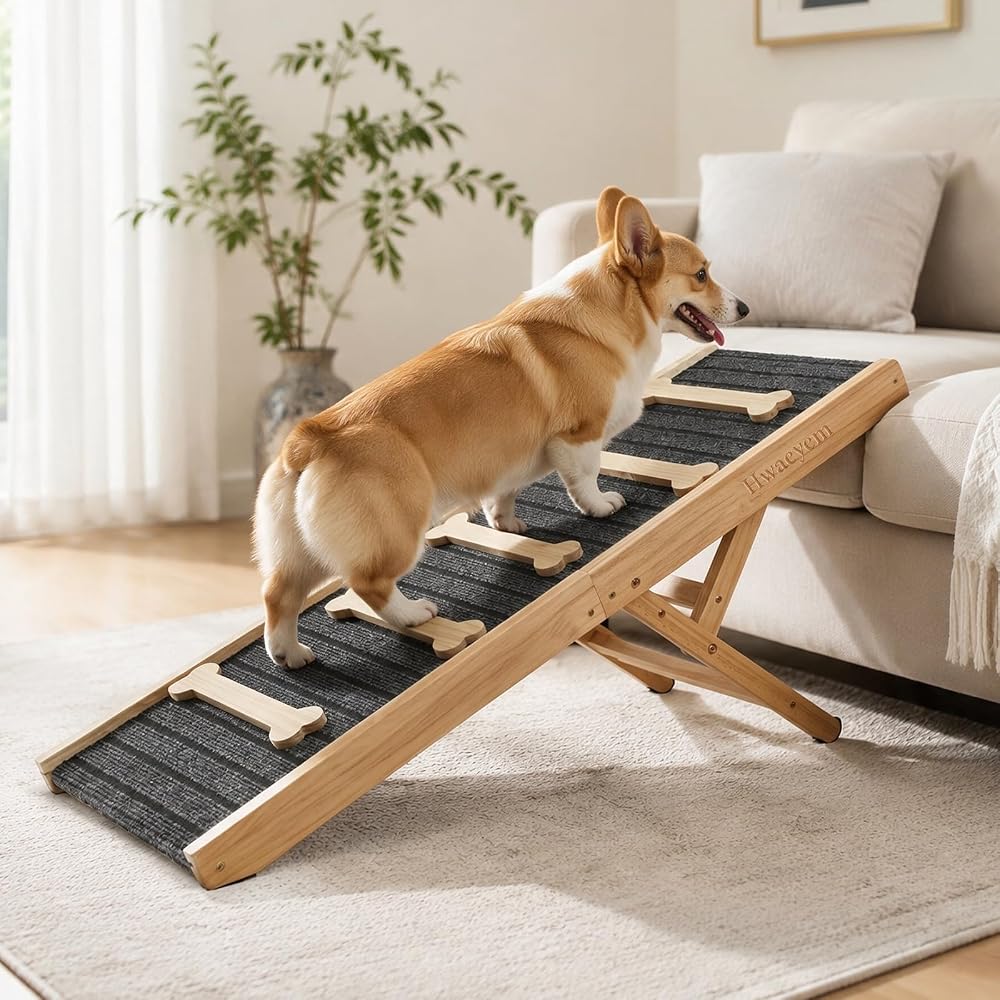
Updated October 10, 2026 · Written by Olivia Isabella, PetBuyLab editorial team
You bought the ramp, and your dog wants nothing to do with it. That is completely normal, and it is almost always fixable. Learning how to get a dog to use a ramp is less about the ramp and more about building trust, one treat and one tiny step at a time. In this guide you will find an interactive diagnoser, a simple 7-day training plan, and specific fixes for a scared, stubborn, senior, or recently spooked dog, so you can turn that ignored ramp into one your dog chooses on their own.
Disclosure: PetBuyLab is reader supported. When you buy through links on this page we may earn a small affiliate commission, at no extra cost to you. This never changes which products we recommend.
To get your dog to use a ramp, lay it flat on the ground first, reward every sniff and step with treats, then raise the angle a little at a time over several short sessions. Never push, carry, or rush them. Most dogs are using a ramp confidently within a few days, and a scared dog just needs smaller steps and more patience.
- Start flat and go slow. The ramp should feel boring and safe long before it is ever set at an angle.
- Treats do the teaching. Reward tiny wins (one paw, then two, then four) so your dog chooses the ramp on their own.
- Coming down is the scary part. Train the descent separately, because that is what most dogs refuse.
- A slip creates lasting fear. Fix traction and lower the angle before you ever ask for more.
- Sometimes it really is the ramp. A wobbly, steep, or slippery ramp is almost impossible to train on.
Quick diagnoser: why won’t my dog use the ramp?
Tap the option that best matches what your dog is doing right now. You will get the most likely cause and the exact fix to try next.
Why dogs refuse a ramp (the real reasons)
Before you can fix the problem, it helps to know what is actually going on in your dog’s head. Refusal is rarely stubbornness. Usually it is one of these:
- It is new and unfamiliar. Dogs are naturally wary of strange objects that appear in their space. This one fades fast with exposure.
- The surface feels wrong. A slick or thin surface that flexes underfoot makes a dog feel unsafe before they even commit their weight.
- A bad first experience. One slip or wobble can teach a dog that the ramp is dangerous, and that lesson sticks.
- The angle is too steep. If the climb feels as hard as the jump it replaced, your dog has no reason to switch.
- Pain. A senior or arthritic dog may want to use the ramp but hurt too much to try, which looks like refusal.
Notice that most of these are about how safe the ramp feels, not about willpower. That is good news, because trust is something you can build quickly.
Set up for success before you train
Training goes far faster when the ramp is working with you, not against you. Run this quick checklist first:
- Make it rock solid. The ramp must not wobble, slide, or flex. Push on the far end and the middle before every session.
- Add grip. A non slip surface is the single biggest confidence booster. Add a rubber mat or carpet runner if the surface is at all slick.
- Start as flat as possible. Begin on the ground, then raise the angle in small steps later.
- Pick a calm, quiet spot. Fewer distractions means a focused, less anxious dog.
- Train a hungry dog. Work before meals, with small, high value treats your dog rarely gets otherwise.
The 7-day dog ramp training plan
This gentle plan suits most dogs. Move faster if your dog is confident, and repeat any day as many times as needed if they are nervous. Keep every session short, two to five minutes, and always end on a win.
- Day 1, make friends with it. Lay the ramp flat where your dog walks daily. Feed meals on it and toss treats nearby. The only goal today is that the ramp becomes boring.
- Day 2, one paw, then two. Reward a single paw on the flat ramp, then both front paws, then all four, without walking anywhere. Lots of treats, no pressure.
- Day 3, walk across the flat. Lure your dog all the way across the flat ramp with a treat held just ahead of their nose. Reward at the far end.
- Day 4, a gentle rise. Raise one end a few inches, like onto a low step. Practice up and down at this easy angle until it is routine.
- Day 5, raise it again. Add a little more height. Stay beside the ramp for support and keep the treats flowing, especially on the way down.
- Day 6, the real thing. Set the ramp at its real angle against the bed, couch, or car. Lure one step of progress at a time and reward generously.
- Day 7, fade the lure. Switch from a treat in your hand to an open hand, then add a cue like “up” or “ramp.” Reward after your dog commits, not before.
Teaching the scary part: coming down
Here is what most guides skip: for the majority of dogs, going up is easy and coming down is terrifying. The descent puts their weight onto the front legs and the ground looks far away. So train it as its own skill. Start with the ramp as low as it will go, and lure your dog down from the bottom up, rewarding the moment all four feet reach the floor. Keep the angle gentle for longer than you think you need to. If your dog rushes or scrambles down, the ramp is too steep, so lower it and slow the whole thing back down.
Training by situation
Getting a dog to use a car ramp
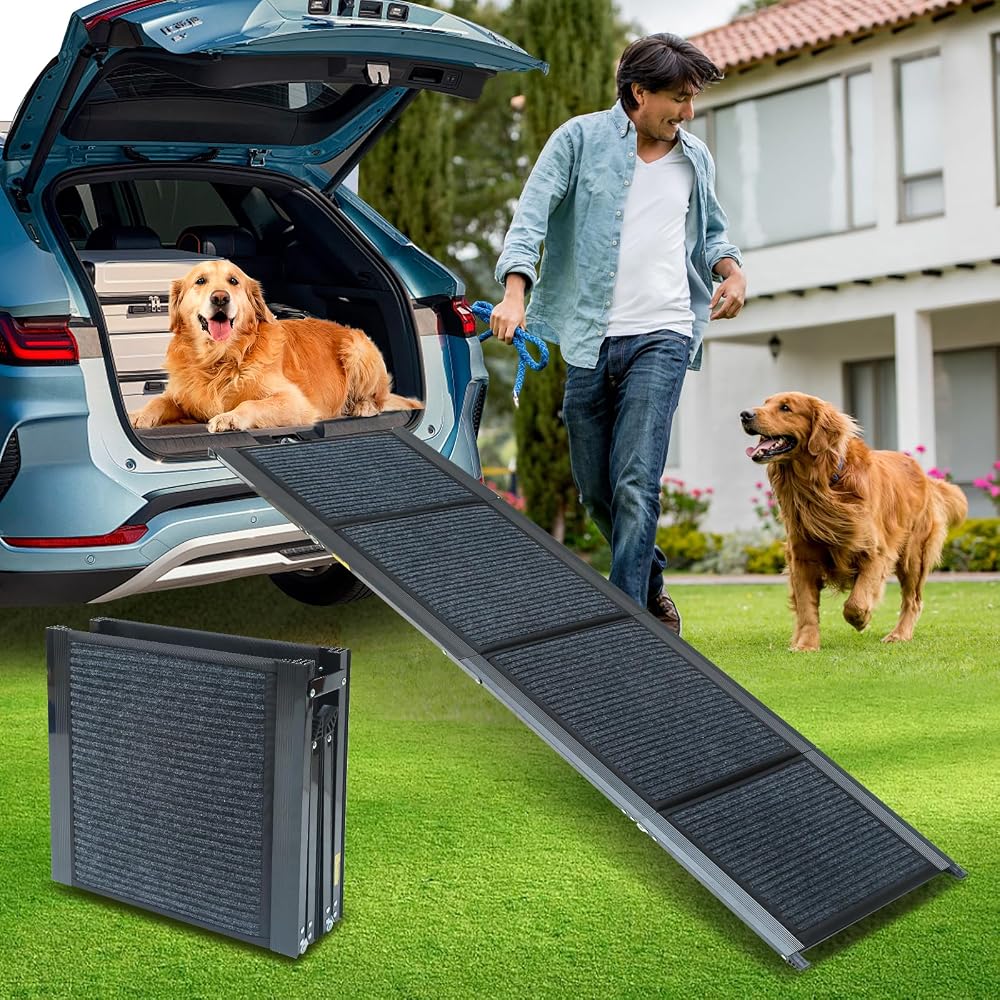
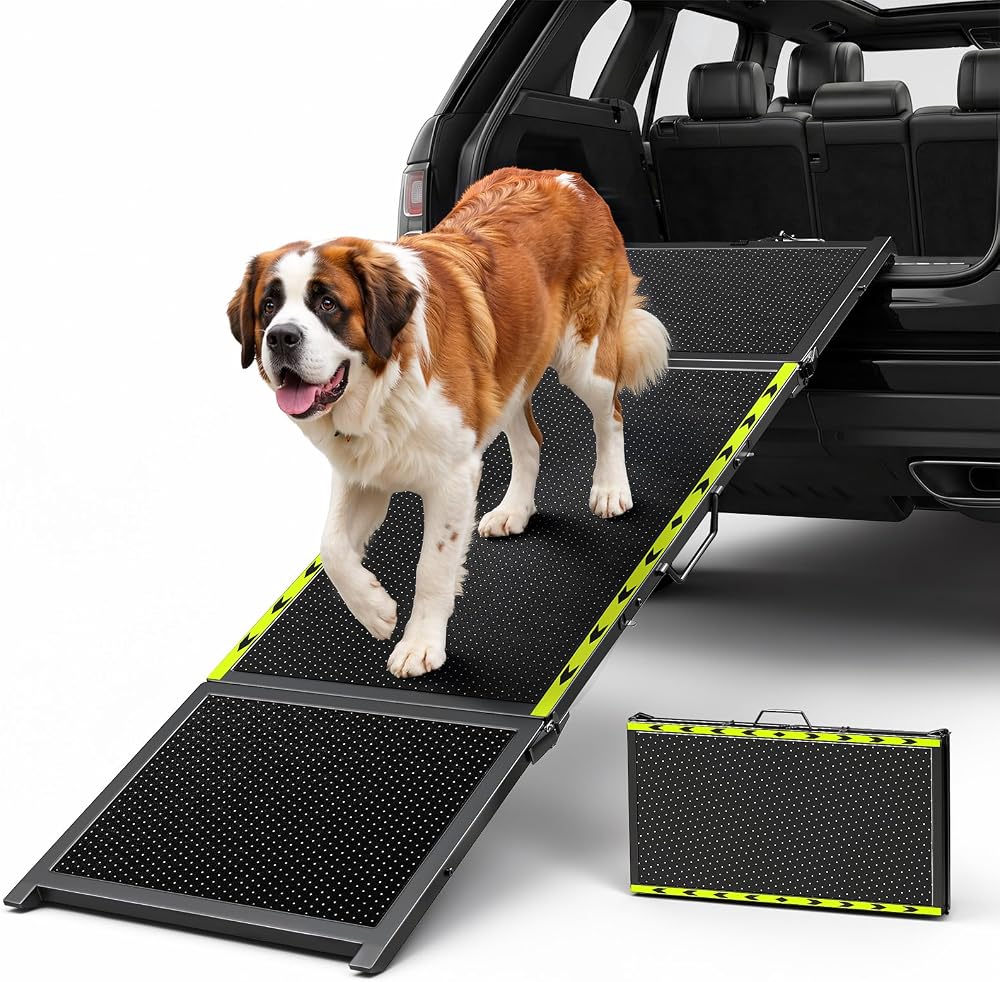
Practice indoors on the flat first, then move to the car. Park on level ground, brace the ramp so it cannot shift, and keep the angle as gentle as the vehicle allows. See our best dog ramps for cars and SUVs for models with a walkable incline.
Getting a dog to use a bed or couch ramp
Indoor ramps are lower, which makes them a great place to build confidence. Keep the ramp in the same spot so it becomes part of the routine. Our best dog ramps for beds guide covers gentle, low-angle options.
Training a senior or arthritic dog
Go slower and watch for pain, not just fear. A senior dog may need an extra gentle slope and a few more days. If they seem to want to try but cannot, talk to your vet. Our senior dog ramp guide focuses on the gentlest options.
Training a stubborn dog
A “stubborn” dog is usually an unconvinced one. Raise the value of your treats, shrink the steps, and make sure there is zero pressure. Most stubborn dogs cave the moment the reward is worth it and the ramp feels safe.
Retraining after a slip or a scare
Go all the way back to the flat ramp and rebuild from there, with extra traction and a lower angle. This is textbook desensitization, and it works, but it takes patience. Do not rush to the step that caused the scare.
Troubleshooting: my dog does this
| Your dog… | Likely cause | What to do |
|---|---|---|
| Won’t approach the ramp | Unfamiliar object or past scare | Leave it flat, feed meals on it, let them approach on their own |
| Steps on with front paws only | Unsure of the far end or a wobble | Check for wobble, lure forward an inch at a time |
| Goes up but not down | The descent feels steep and scary | Train down separately, lowest angle, reward at the bottom |
| Freezes or panics midway | Height or instability | Lower the incline, add grip, go back a step, shorten sessions |
| Slips or scrambles | Not enough traction, or too steep | Add a non slip runner, lower the angle, re-check the ramp |
| Rushes down out of control | Angle too steep | Lower it until your dog can walk down calmly |
| Suddenly refuses after using it | A slip, or new pain | Rule out pain with your vet, then retrain from an earlier step |
Is it the dog, or is it the ramp?
Sometimes no amount of patience helps, because the ramp itself is working against you. A ramp that wobbles, sits too steep, feels slick, or is too narrow for your dog to balance on is almost impossible to train on, and it can undo the trust you build. If your dog keeps slipping or refusing even after a careful, gradual plan, it is worth switching to a ramp that is easier to learn on: a gentle, adjustable slope, a genuinely non slip surface, and enough width to feel stable.

Mistakes that set training back
- Forcing, carrying, or dragging your dog onto the ramp. This builds fear, not confidence.
- Going straight to the full angle instead of starting flat.
- Training on a slick or wobbly ramp, so a slip undoes your progress.
- Long, repetitive sessions that let nervousness build. Keep them short and upbeat.
- Skipping the descent, then wondering why your dog freezes at the top.
What vets and trainers say
The gentle, treat-led approach in this guide is not just folk wisdom. It is a form of desensitization and counterconditioning, the standard, vet-backed way to help a dog feel safe around something that worries them: expose them gradually, pair it with good things, and never flood them with too much at once. Trainers and the American Kennel Club also favor ramps in the first place, noting that ramps are generally the safer way for dogs to get up and down than stairs or jumping. One more thing worth saying plainly: a sudden refusal can be pain, not defiance. If an older dog stops using a ramp they had mastered, rule out joint pain such as osteoarthritis with your vet before you assume it is behavioral. This is general information, not veterinary advice.
Frequently asked questions
How do I get my dog to use a ramp?
How long does it take to train a dog to use a ramp?
Why won’t my dog use the ramp?
How do I get a scared dog to use a ramp?
How do I get my dog to come down the ramp?
My dog goes up the ramp but not down. Why?
How do I get my dog to use a car ramp?
How do I get an old dog to use a ramp?
Should I put food or treats on the ramp?
Can I just carry my dog onto the ramp to show them?
What if my dog still refuses after training?
Is it better to use a ramp or stairs for my dog?
The verdict
Getting your dog to use a ramp comes down to two things: make the ramp feel safe, and let your dog choose it on their own. Start flat, reward every tiny step, raise the angle slowly, and give the descent the extra patience it needs. If your dog is scared, shrink the steps; if they are senior, rule out pain; and if the ramp itself is wobbly or slick, switch to one that is easier to learn on. Do that, and the ramp you almost gave up on becomes the one your dog trots up without a second thought.
Keep reading

Olivia Isabella is PetBuyLab’s dog specialist and a lifelong dog owner with hands-on experience caring for senior and large-breed dogs. She researches, compares and lives with the mobility, comfort and everyday-care products she writes about, so she knows the practical details a spec sheet misses: how a ramp’s length sets the real slope a stiff-hipped dog will attempt, why surface grip decides whether a nervous dog commits, and how the wrong pick ends up unused in the garage. Every recommendation is built from manufacturer specifications, documented owner feedback and reputable veterinary sources, and is organised around a specific dog’s needs, never around commission. Her guides are informational and never a substitute for professional veterinary advice.